Quick answer
For automotive assembly work that keeps a worker's arms raised for long stretches, the Levitate Technologies AIRFRAME is a passive shoulder-support exoskeleton rated at 60 N assist force, 10 Nm assist torque and 1.5 kg device weight, with an indicative price from 2,950 USD. It carries CE marking and is listed for North America only. Buyers should treat it as a shoulder-elevation tool, not a lifting device: the listed lift support is 5 kg and the unit has zero powered degrees of freedom.
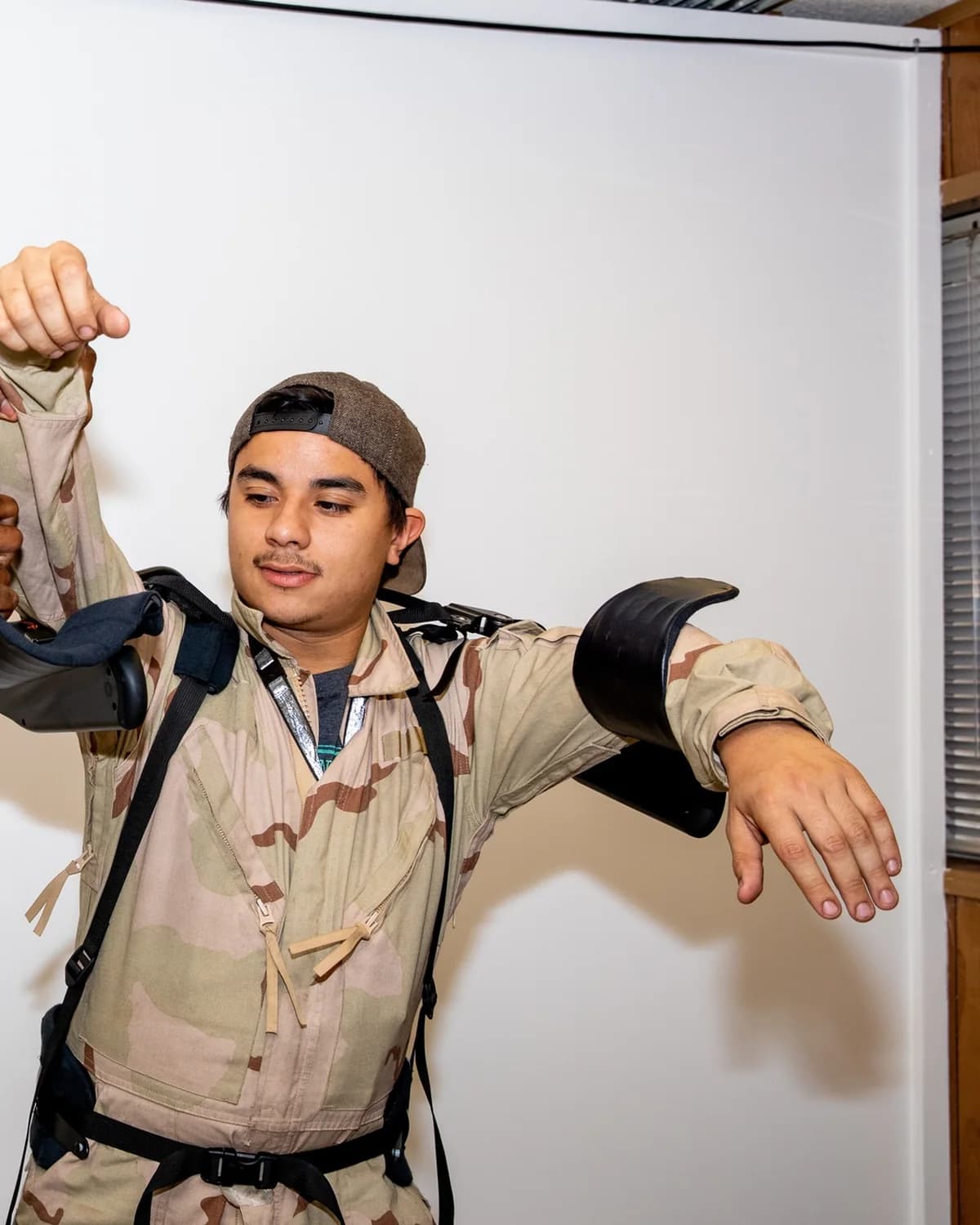
Automotive assembly lines are where overhead and sustained-elevation tasks concentrate: underbody fastening, headliner and harness routing, sealer application above shoulder height. The AIRFRAME targets exactly that posture, and its 60 N assist force is delivered mechanically with no battery, sensors or software. That simplicity is the commercial argument. The procurement risk sits elsewhere, in the parameters Levitate has not published.
Key takeaways
- AIRFRAME is the lightest shoulder-support unit in the ExoSelect industrial set at 1.5 kg, against 1.6 kg for Skelex 360 and 4.2 kg for MATE-XT.
- Assist force of 60 N sits below Skelex 360 (70 N) and MATE-XT (100 N) but above nothing in the shoulder class — it is the lowest of the three.
- Height range 157–198 cm and user weight limit 113 kg are documented; both are wider on the user-weight axis than MATE-XT (100 kg).
- Warranty, referenced standards and clinical evidence are all listed as unknown in the database.
- Regional availability is North America only, which matters for plants in Mexico, Europe or Asia-Pacific.
Where AIRFRAME fits on an automotive line
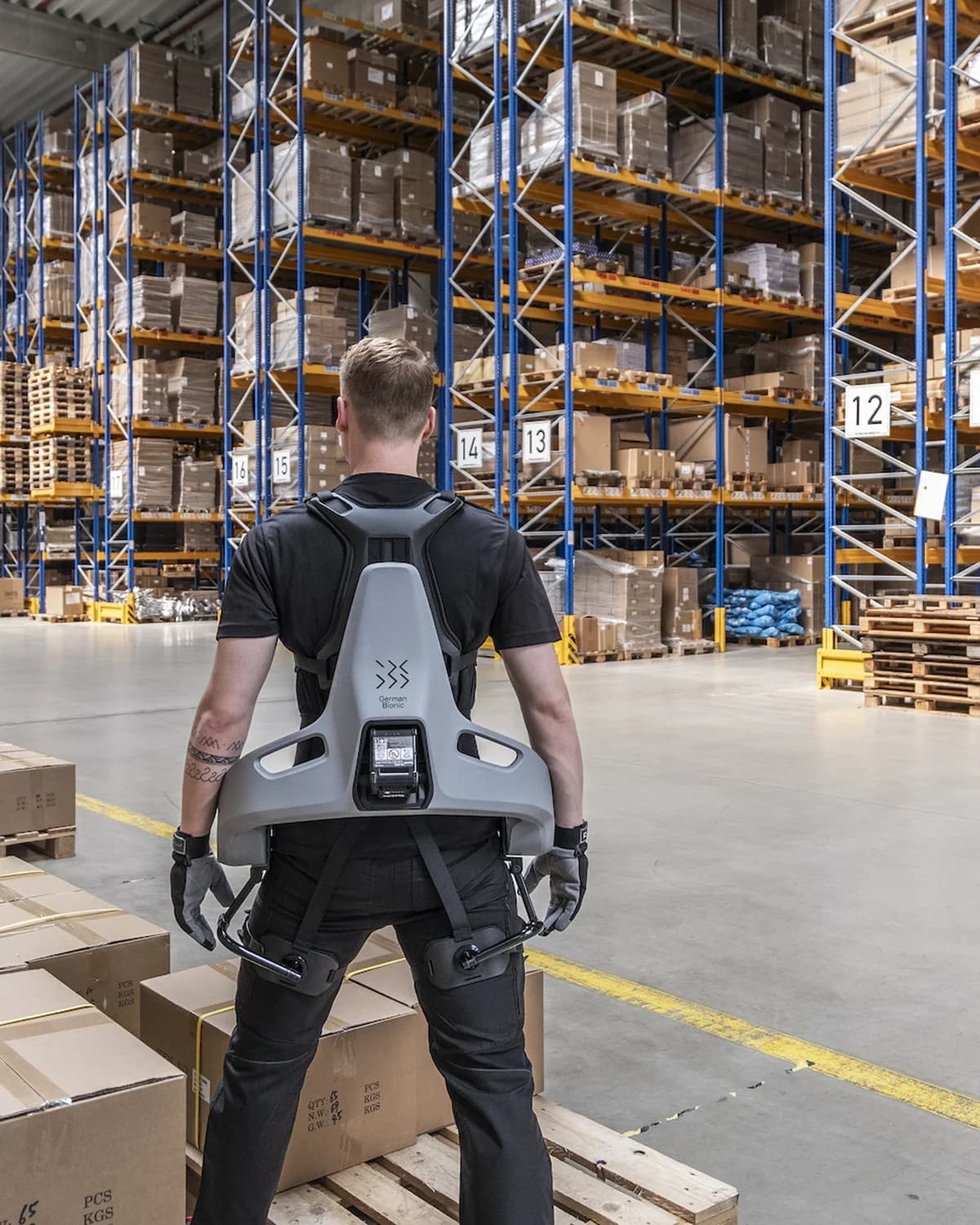
The AIRFRAME is a passive shoulder exoskeleton with an aluminium and composite frame, adjustable sizing, and a passive mechanical control mode. There are no sensors and no connectivity, so it produces no telemetry. For a plant that wants per-worker usage data to justify a fleet rollout, that is a hard limit — the Cray X from German Bionic offers IMU, load sensors and a cloud fleet dashboard, but it is a powered back system at 7.6 kg, not a shoulder unit.
The relevant comparison set for automotive shoulder work is the passive trio: AIRFRAME, Skelex 360 and MATE-XT. All three are CE-marked, all three are passive, and all three list 5 kg lift support. The differences are weight, assist force and regional footprint.
Documented specification comparison
| Parameter | AIRFRAME (Levitate) | Skelex 360 (Skelex) | MATE-XT (Comau) |
|---|
| Drive | Passive | Passive | Passive |
| Weight | 1.5 kg | 1.6 kg | 4.2 kg |
| Assist force | 60 N | 70 N | 100 N |
| Assist torque | 10 Nm | 12 Nm | 15 Nm |
| Lift support | 5 kg | 5 kg | 5 kg |
| Height range | 157–198 cm | 160–195 cm | 155–195 cm |
| User weight | 113 kg | 110 kg | 100 kg |
| Certifications | CE | CE | CE, ISO 13482 |
| Standards referenced | Unknown | ISO 13482 | ISO 13482 |
| Warranty | Unknown | 24 months | Undisclosed |
| Regions | North America | Europe, North America | Europe, North America, Asia-Pacific |
| Lead time | Contact maker | Contact maker | 4–8 weeks |
| Indicative price | 2,950 USD | 4,900 USD | 5,900 USD |
All figures above are as recorded in the ExoSelect database. Prices are indicative and not a substitute for a formal quote. Full side-by-side detail is on the comparison tool.
What the datasheet doesn't tell you
Referenced standards are unknown. AIRFRAME lists CE but not the harmonised standards behind it. Skelex 360 and MATE-XT both name ISO 13482, the safety standard for personal care robots. For an automotive OEM with a machinery-safety gate review (EN ISO 12100 risk assessment, EN 614-1 ergonomics), a CE mark without a stated standard is a documentation gap you will have to close with Levitate directly. The Cray X, by contrast, lists both ISO 13482 and EN 614-1.
Warranty is unknown. Skelex publishes 24 months; AIRFRAME does not publish a term in the database. On a multi-shift assembly line, warranty length drives the maintenance line of the total-cost model as much as unit price does. A 2,950 USD unit with no stated warranty is not automatically cheaper than a 4,900 USD unit with 24 months.
Clinical evidence is unknown. None of the passive shoulder units in this set carry published clinical evidence in the database. That does not mean none exists; it means a buyer cannot cite it in an internal business case without requesting it. Do not let a sales deck substitute for a document.
Lead time is not disclosed — the record says "contact maker". MATE-XT states 4–8 weeks. If your line trial is tied to a model-year changeover, an open lead time is a scheduling risk, not a footnote.
Regional availability is the real constraint
AIRFRAME is listed for North America only. If your assembly plant is in Mexico, this is workable; if it is in Spain, Slovakia or Thailand, the Skelex 360 (Europe, North America) or MATE-XT (Europe, North America, Asia-Pacific) is the more defensible shortlist entry. Cross-border service, spare parts and training all follow the region of sale. Do not assume a North American quote extends to a European plant without written confirmation.
The weight-versus-force trade-off
AIRFRAME is 1.5 kg with 60 N. MATE-XT is 4.2 kg with 100 N. On a sustained-elevation task, more assist force reduces shoulder load but adds mass on the torso and hips, which changes the wearer's fatigue profile over an eight-hour shift. The database does not record wear-time limits or comfort ratings for any of these units, so the trade-off cannot be resolved from paper. It can only be resolved by a structured on-line trial with the same task, the same workers and a documented discomfort log. Treat the 60 N versus 100 N gap as a hypothesis to test, not a specification to rank.
Who should not choose this
Do not shortlist AIRFRAME if any of the following is true. First, your plant sits outside North America and you need local service and spares — the regional listing does not support that. Second, your safety gate requires a named harmonised standard before trial approval; the database records standards as unknown, so you would be requesting that document before you can even schedule a pilot. Third, your business case depends on usage telemetry to justify fleet expansion; AIRFRAME has no sensors and no connectivity, so the Cray X is the only connected option in this set, albeit for back and lifting tasks rather than shoulder elevation. Fourth, your task is lifting rather than sustained arm elevation — a 5 kg lift support and 60 N assist force are not a substitute for a back exoskeleton with a 20–30 kg lift support rating.
If none of those apply, AIRFRAME is a credible low-cost entry point for a shoulder-elevation pilot, and its 1.5 kg mass is the strongest documented argument in its favour.
FAQ
Is AIRFRAME active or passive?
Passive. It uses mechanical support with no battery, sensors or software, and has zero powered degrees of freedom.
How much does AIRFRAME cost?
The database records an indicative price from 2,950 USD. This is not a formal quote; configuration and quantity affect the final figure.
Can AIRFRAME be used for lifting tasks in automotive assembly?
Only marginally. Its listed lift support is 5 kg and assist force is 60 N, which is suited to sustained arm elevation rather than repeated lifting of heavy components.
Next step
Before any trial, request two documents from Levitate Technologies: the declaration of conformity naming the harmonised standards behind the CE mark, and the written warranty term. Then run the same request against Skelex 360 and MATE-XT so the shortlist is compared on identical paperwork. If you want the desk to structure that comparison, use the selection desk or browse the full industrial exoskeleton category.
Sources: Levitate Technologies official site (levitatetech.com); Comau MATE-XT product page; Skelex official site. All specifications as recorded in the ExoSelect database.
 ExoSelect research