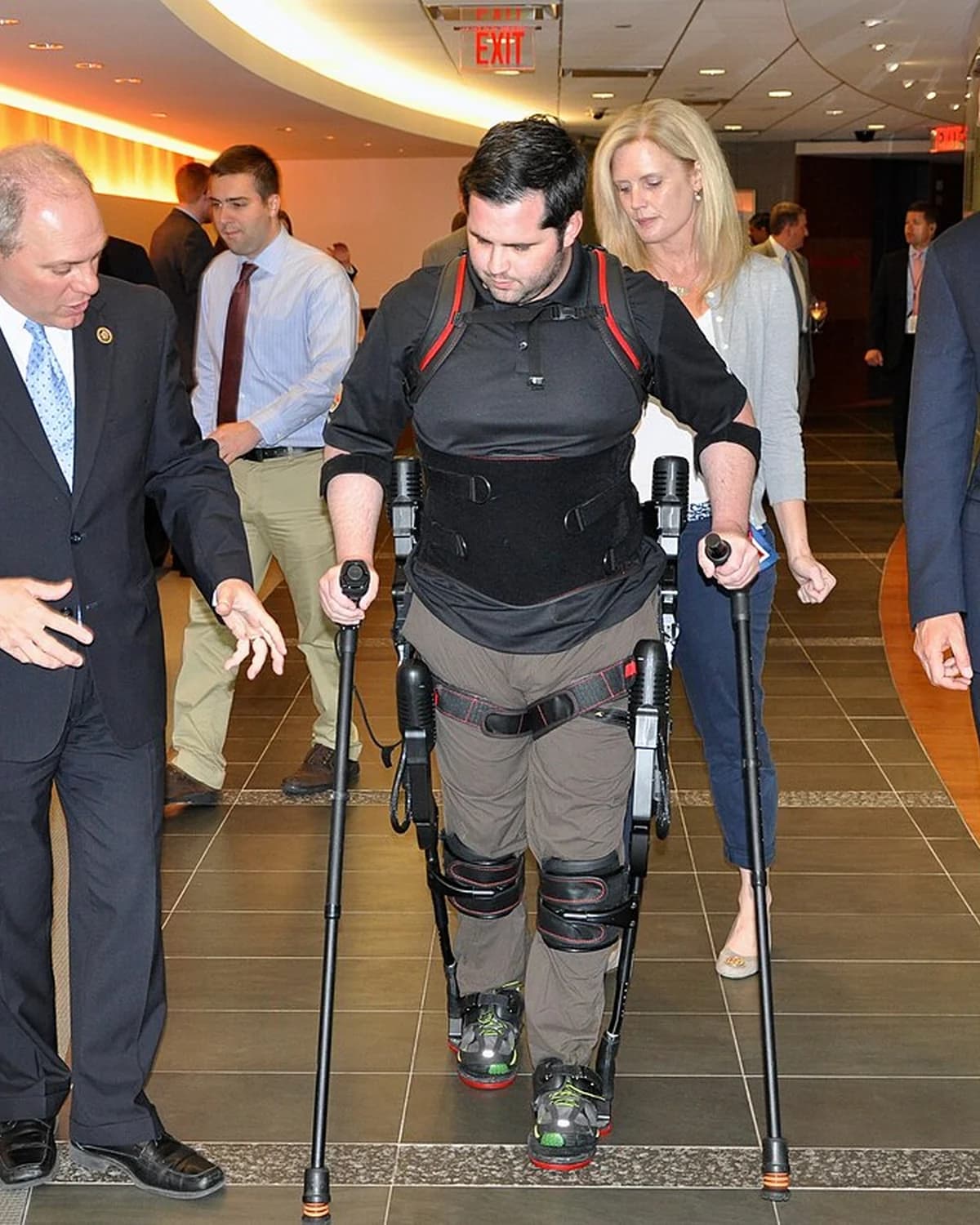
Quick answer: For cerebral palsy gait, the Indego (Parker Hannifin) is a modular, active lower-limb exoskeleton with 4 degrees of freedom, a 12.3 kg weight, and FDA/CE certification, making it a candidate for clinical gait training. However, its peak assist force and indicative price are not disclosed in the manufacturer datasheet, so buyers must request these parameters directly before procurement.
Indego is the lightest active medical exoskeleton in our database at 12.3 kg, which matters for CP patients who often have lower body weight and tolerance. But the absence of published assist force and torque figures means you cannot verify whether it meets the specific joint torque needs of spastic gait without a clinical trial.
Key takeaways
- Indego offers 4 DOF, 2 km/h speed, and 4-hour battery life—sufficient for typical therapy sessions.
- Peak assist force and torque are undisclosed, a critical gap for CP gait because spasticity varies widely.
- Indego is FDA and CE certified and available in North America and Europe.
- Competitors like EksoNR and HAL Lower Limb disclose 40 Nm assist torque, giving more transparency for procurement.
- Price is undisclosed for all systems; reimbursement and configuration drive final cost.
Why Indego stands out for CP gait
Cerebral palsy gait is heterogeneous: some patients need hip flexion assistance, others knee extension or ankle control. Indego’s modular hip, thigh, and shank sizes allow fitting across a height range of 155–195 cm and user weight up to 113 kg. Its control modes include intuitive movement and therapist-controlled gait, which can be useful for progressive training. The 4 DOF (likely hip and knee flexion/extension) provide basic sagittal plane support, but CP often involves transverse plane issues like internal rotation—Indego’s DOF count suggests it does not address those.
Parker Hannifin lists peer-reviewed gait training studies as clinical evidence, but none are specific to cerebral palsy in the database. That means you cannot assume CP-specific efficacy without reviewing the published literature yourself.
Comparison table: Indego vs. other medical exoskeletons
| Spec | Indego | EksoNR | HAL Lower Limb | Atalante X | ExoMotus M4 |
|---|
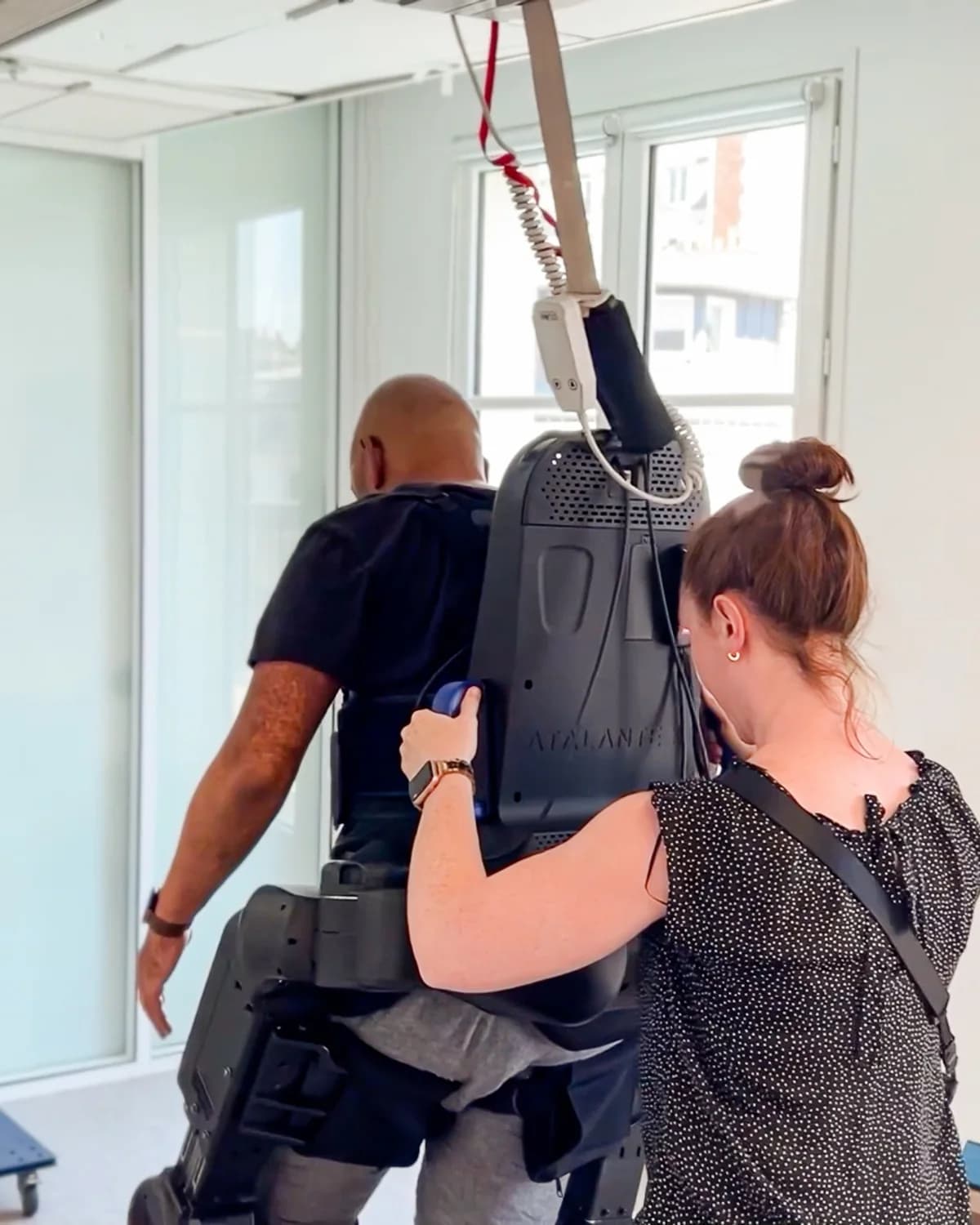
| Weight | 12.3 kg | 23.6 kg | 17 kg | 65 kg | 23.5 kg |
| DOF | 4 | 4 | 2 | 12 | 4 |
| Assist torque | Unknown | 40 Nm | 40 Nm | Unknown | Unknown |
| Speed | 2 km/h | 1.1 km/h | 1.5 km/h | 2.5 km/h | 1.2 km/h |
| Battery life | 4 h | 4 h | 3 h | 4 h | 3 h |
| User weight max | 113 kg | 100 kg | 100 kg | 100 kg | 100 kg |
| Certifications | FDA, CE | FDA, CE | CE medical, ISO 13485 | CE medical | NMPA, CE |
Only supplied specs shown. “Unknown” means the database does not disclose the value.
What the datasheet doesn't tell you
Peak assist force (undisclosed): For CP gait, assist force determines how much the device can overcome spasticity or weakness. Without it, you cannot match the exoskeleton to a patient’s torque requirements. Ask Parker Hannifin for measured assist force at the hip and knee across walking speeds.
Peak assist torque (unknown): Torque is the rotational equivalent; it directly affects knee extension during stance. EksoNR and HAL disclose 40 Nm, so Indego’s omission is a competitive disadvantage. Request torque curves or a clinical study reporting joint moments.
Indicative price (undisclosed): Budgeting is impossible without a price range. The note says regional reimbursement and configuration determine final price, but that is not a number. Ask for a quote including training, service, and warranty extension.
CP-specific clinical evidence: The database lists “peer-reviewed gait training studies” but does not specify conditions. You need to verify whether any study enrolled cerebral palsy patients and what outcomes were measured (e.g., gait speed, GMFM).
Who should not choose this
Do not choose Indego if your CP patient population includes children or adolescents under 155 cm height or over 113 kg—the device will not fit. Also avoid it if you require documented assist torque above 40 Nm, because Indego does not disclose its torque and may be underpowered for severe spasticity. Finally, if you need a system with published CP-specific randomized controlled trials, Indego is not the safest bet; EksoNR has broader neurorehabilitation evidence (stroke, SCI) but still lacks CP-specific data in our database.
Procurement checklist for CP gait exoskeletons
- Request peak assist force and torque curves from the maker.
- Confirm height and weight limits against your patient demographics.
- Ask for CP-specific clinical evidence or case studies.
- Clarify total cost of ownership: training, service, battery replacement, and warranty extension.
- Verify regional availability and lead time (Indego: contact regional distributor).
FAQ
Is Indego FDA cleared for cerebral palsy?
The database lists FDA and CE certifications, but the specific indications are not disclosed. You must check the FDA 510(k) summary or contact Parker Hannifin to confirm CP is a cleared indication.
What is the maximum user weight for Indego?
113 kg, according to the supplied specifications.
Can Indego climb stairs?
The datasheet states “Sit-to-stand and level walking; clinical assessment required for stairs.” So stair use is not routinely supported and requires clinical assessment.
Next step
Compare Indego side-by-side with EksoNR on our comparison page, or request the missing assist force and torque data directly from Parker Hannifin via our inquiry form. For a broader view of medical exoskeletons, see the medical category.
Sources: Parker Hannifin Indego official page: https://www.parker.com/us/en/industries/medical/indego.html
 ExoSelect research