Quick answer
Levitate Technologies' AIRFRAME is a passive shoulder-support exoskeleton for sustained arm elevation, listed at an indicative $2,950 with a 1.5 kg weight, 60 N assist force and CE marking. It is sold in North America on inquiry, and the database does not disclose its warranty, referenced standards or clinical evidence — three gaps to close before a pilot.
What the AIRFRAME is — and what it is not
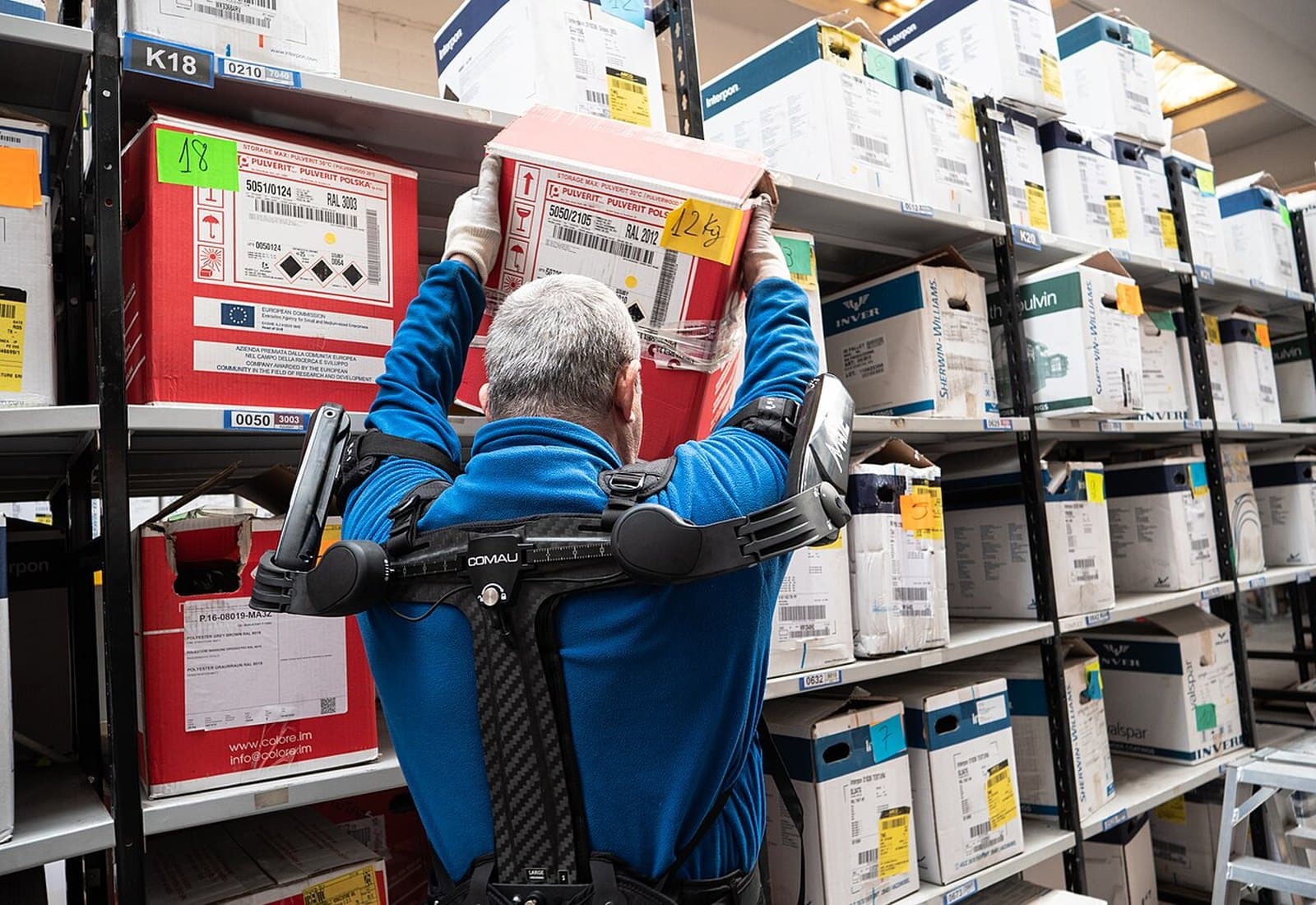
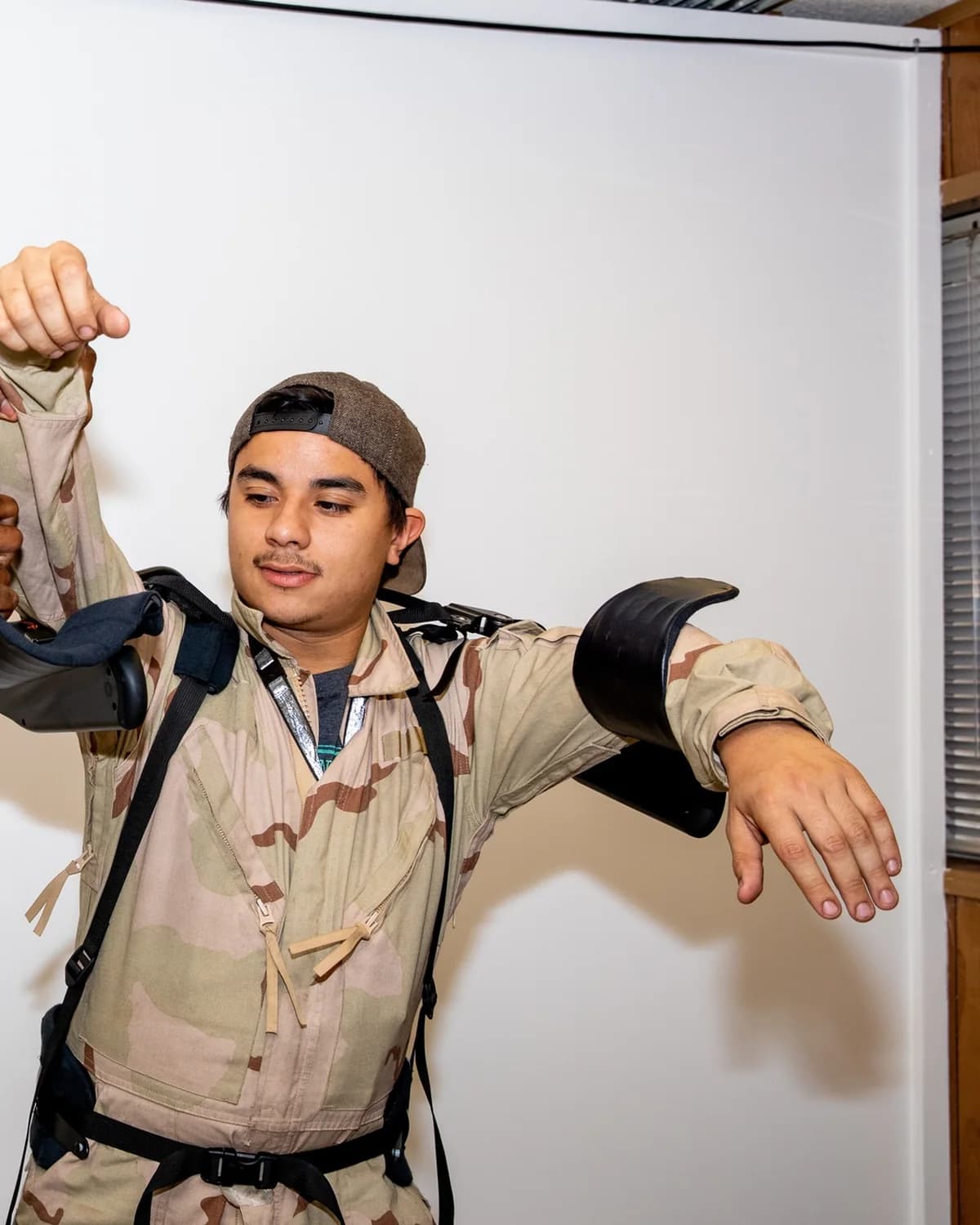
AIRFRAME is a passive mechanical shoulder-assist device from Levitate Technologies, built to hold the arms up during sustained overhead work rather than to lift loads. The database lists 60 N of assist force and 10 Nm of assist torque, with a 5 kg lift-support rating and zero powered degrees of freedom. It has no sensors, no battery and no connectivity, so it is not a data-collecting system and cannot feed a fleet dashboard. Buyers comparing it with the MATE-XT or Skelex 360 should treat it as a direct passive shoulder competitor, not as a back or hip device. The maker's official page is levitatetech.com.
Specifications that matter for selection
The 1.5 kg weight is the lightest of the three passive shoulder systems in this dataset, which matters for wear-time tolerance and for workers who rotate between tasks. The height range of 157–198 cm and user-weight limit of 113 kg are the widest in the shoulder group here, so AIRFRAME covers a larger share of a mixed workforce without size variants. The frame is aluminium and composite, adjustable, and the drive is purely passive. CE is the only certification listed; no ISO 13482 reference appears in the AIRFRAME record, unlike the Skelex 360 and MATE-XT entries.
Assist force is 60 N, below the Skelex 360's 70 N and the MATE-XT's 100 N. That is not automatically a weakness — lower assist can suit precision tasks where too much upward push disturbs the hand — but it is the number to match against your task torque profile. The 10 Nm assist torque is the lowest of the three shoulder systems here.
Comparison table: AIRFRAME against documented shoulder alternatives
| Spec | AIRFRAME (Levitate Technologies) | Skelex 360 (Skelex) | MATE-XT (Comau) |
|---|
| Drive | Passive | Passive | Passive |
| Weight | 1.5 kg | 1.6 kg | 4.2 kg |
| Assist force | 60 N | 70 N | 100 N |
| Assist torque | 10 Nm | 12 Nm | 15 Nm |
| Height range | 157–198 cm | 160–195 cm | 155–195 cm |
| User weight limit | 113 kg | 110 kg | 100 kg |
| Certifications | CE | CE | CE, ISO 13482 |
| Standards referenced | Unknown | ISO 13482 | ISO 13482 |
| Warranty | Unknown | 24 months | Not disclosed |
| Indicative price | $2,950 | $4,900 | $5,900 |
| Regions | North America | Europe, North America | Europe, North America, Asia-Pacific |
All figures are from the ExoSelect database; prices are indicative and not quotes. Use the compare tool to line up additional parameters.
What the datasheet doesn't tell you
Three parameters are missing from the AIRFRAME record and each changes the procurement case. First, warranty is unknown. For a device worn daily, warranty length drives total cost of ownership as much as the $2,950 list price; the Skelex 360 carries 24 months, and AIRFRAME's equivalent is not disclosed. Second, referenced standards are unknown. CE marking is listed, but the harmonised standards behind it are not, so a safety reviewer cannot confirm whether the device was assessed against ISO 13482 or another framework without asking Levitate directly. Third, clinical evidence is unknown. There is no published study in this record, which matters if your ergonomics committee requires peer-reviewed support before a pilot. None of these gaps is a defect — they are questions for the maker.
Deployment constraints buyers miss
AIRFRAME is listed for North America only. European sites cannot assume availability, local service or spare-parts logistics even though the device carries CE marking; the two facts are separate. Lead time is listed as "contact maker", so a pilot cannot be scheduled against a published delivery window the way it can with the MATE-XT (4–8 weeks) or Apex 2 (2–4 weeks). Availability is "on inquiry", which usually signals build-to-order rather than stock. For a multi-site rollout, that single-region footprint is a harder constraint than the assist-force gap.
Total cost of ownership: the $2,950 headline is not the budget
The indicative price is the lowest in this shoulder group, roughly 40% below the Skelex 360 and half the MATE-XT. But price-per-unit is only one line. Training, fitting time across the 157–198 cm range, spare parts and the unknown warranty all sit outside the $2,950 figure. Because AIRFRAME has no sensors or connectivity, it also cannot generate usage data to justify renewal or redeployment — a hidden cost if your business case depends on measured utilisation. Buyers who need telemetry should look at powered systems such as the Cray X, which is a different category and a different budget.
Who should not choose this
Do not choose AIRFRAME if your safety file requires a documented ISO 13482 reference at tender stage — the database does not show one, and the Skelex 360 and MATE-XT both list it. Do not choose it for European or Asia-Pacific sites until Levitate confirms regional availability, service and lead time; the record covers North America only. Do not choose it if your tasks need more than 60 N of shoulder assist or more than 10 Nm of torque, because the MATE-XT documents 100 N and 15 Nm. And do not choose it if you need usage telemetry to prove ROI: it has no sensors and no connectivity, by design.
When AIRFRAME is the right shortlist entry
AIRFRAME earns a place when the workforce is tall or heavy — its 198 cm and 113 kg limits are the widest here — when device weight is the dominant ergonomic concern at 1.5 kg, and when the task is sustained arm elevation rather than lifting. It is also the lowest-cost entry point into passive shoulder support at the indicative price, which suits a first pilot before a fleet decision. Pair it against the Skelex 360 for a like-for-like passive shoulder comparison, and against the MATE-XT only if higher assist force is required.
Key takeaways
- AIRFRAME is a 1.5 kg passive shoulder exoskeleton with 60 N assist and 10 Nm torque, listed at an indicative $2,950.
- It has the widest height (157–198 cm) and user-weight (113 kg) range among the passive shoulder systems in this dataset.
- CE is listed, but referenced standards, warranty and clinical evidence are unknown — request them in writing.
- Availability is North America only, with lead time "contact maker"; this constrains multi-region rollouts.
- No sensors or connectivity means no usage data for ROI reporting.
Next step
Before any pilot, send Levitate Technologies a written request for three documents: the declaration of conformity with referenced standards, the warranty terms, and any clinical or field evidence. Then run the AIRFRAME against the Skelex 360 in the ExoSelect comparison tool, and contact the selection desk if you need the same gap analysis for a shortlist of three or more systems.
FAQ
Is AIRFRAME powered?
No. It is a passive mechanical shoulder-support exoskeleton with no battery, sensors or connectivity.
What is the AIRFRAME price?
The database lists an indicative price of $2,950, which is not a substitute for a formal quote from Levitate Technologies.
Does AIRFRAME carry ISO 13482?
The record lists CE only; referenced standards are unknown, so ISO 13482 certification cannot be confirmed from the datasheet.
 ExoSelect research