Quick answer: For warehouse lifting, the best back exoskeleton depends on whether you need active assistance or a passive, lower-cost solution. Based on disclosed data, the
Verve Motion SafeBoost is the most transparent active option with 80 N assist force and 15 kg lift support, while the
ULS Robotics H-WULF is a passive waist-assist device with 30 kg lift support at a listed price of 3600 USD. The
LG Electronics CLOi SuitBot offers active lower-body assistance but has incomplete specification disclosure.
Procurement teams evaluating back exoskeletons for warehouse lifting face a fragmented market where disclosed specifications vary widely. This comparison focuses on three systems with logistics categorisation: the Verve Motion SafeBoost, the ULS Robotics H-WULF and the LG Electronics CLOi SuitBot. We assess them strictly on the numerical data available in the ExoSelect database, highlighting where information is missing rather than inferring performance.
Key takeaways
- Drive type matters: SafeBoost and CLOi SuitBot are active systems; H-WULF is passive.
- Lift support: H-WULF and CLOi SuitBot both claim 30 kg lift support; SafeBoost claims 15 kg.
- Assist force: Only SafeBoost discloses assist force at 80 N. H-WULF and CLOi SuitBot do not disclose this metric.
- Weight: SafeBoost is lightest at 2.2 kg; H-WULF is 3.8 kg; CLOi SuitBot is 5.5 kg.
- Battery: SafeBoost offers 8 h battery life; CLOi SuitBot offers 4 h. H-WULF is passive and requires no battery.
- Price: Only H-WULF has a disclosed price (3600 USD). SafeBoost and CLOi SuitBot prices are not disclosed.
- Data transparency: SafeBoost has the highest completeness score (88), followed by H-WULF (72) and CLOi SuitBot (64).
Comparison table: disclosed specifications
| Specification | Verve Motion SafeBoost | ULS Robotics H-WULF | LG Electronics CLOi SuitBot |
|---|
| Drive type | Active | Passive | Active |
| Weight | 2.2 kg | 3.8 kg | 5.5 kg |
| Lift support | 15 kg | 30 kg | 30 kg |
| Assist force | 80 N | Not disclosed | Not disclosed |
| Assist torque | Not disclosed | Not disclosed | 25 Nm |
| Battery life | 8 h | Not applicable (passive) | 4 h |
| Charge time | 2 h | Not applicable | 2 h |
| Swappable battery | Yes | Not applicable | Yes |
| Height range | 155–195 cm | 160–190 cm | Not disclosed |
| User weight limit | 115 kg | 100 kg | 100 kg |
| Sizes | S–XL | Adjustable | Adjustable |
| Materials | Technical textile, flexible actuators | Aluminium, steel | Aluminium, polymer |
| Degrees of freedom | 1 | 0 | 2 |
| Control modes | Sensor-triggered hip assistance | Passive waist assistance | Walking assist, standing assist |
| Sensors | IMU, motion sensors | None | Joint sensors, IMU |
| Connectivity | Cloud dashboard, fleet telemetry, Bluetooth | Not disclosed | Not disclosed |
| Certifications | CE | CE | Not disclosed |
| Standards | ISO 13482 | Not disclosed | Not disclosed |
| Warranty | 12 months | Not disclosed | Not disclosed |
| Price | Not disclosed | 3600 USD | Not disclosed |
| Availability | Subscription programme | Available on inquiry | Limited availability |
| Regions | North America, Europe | Asia-Pacific | Asia-Pacific |
| Lead time | Programme-dependent | Not disclosed | Not disclosed |
| Data completeness score | 88 | 72 | 64 |
Active vs passive: what the data says for warehouse lifting
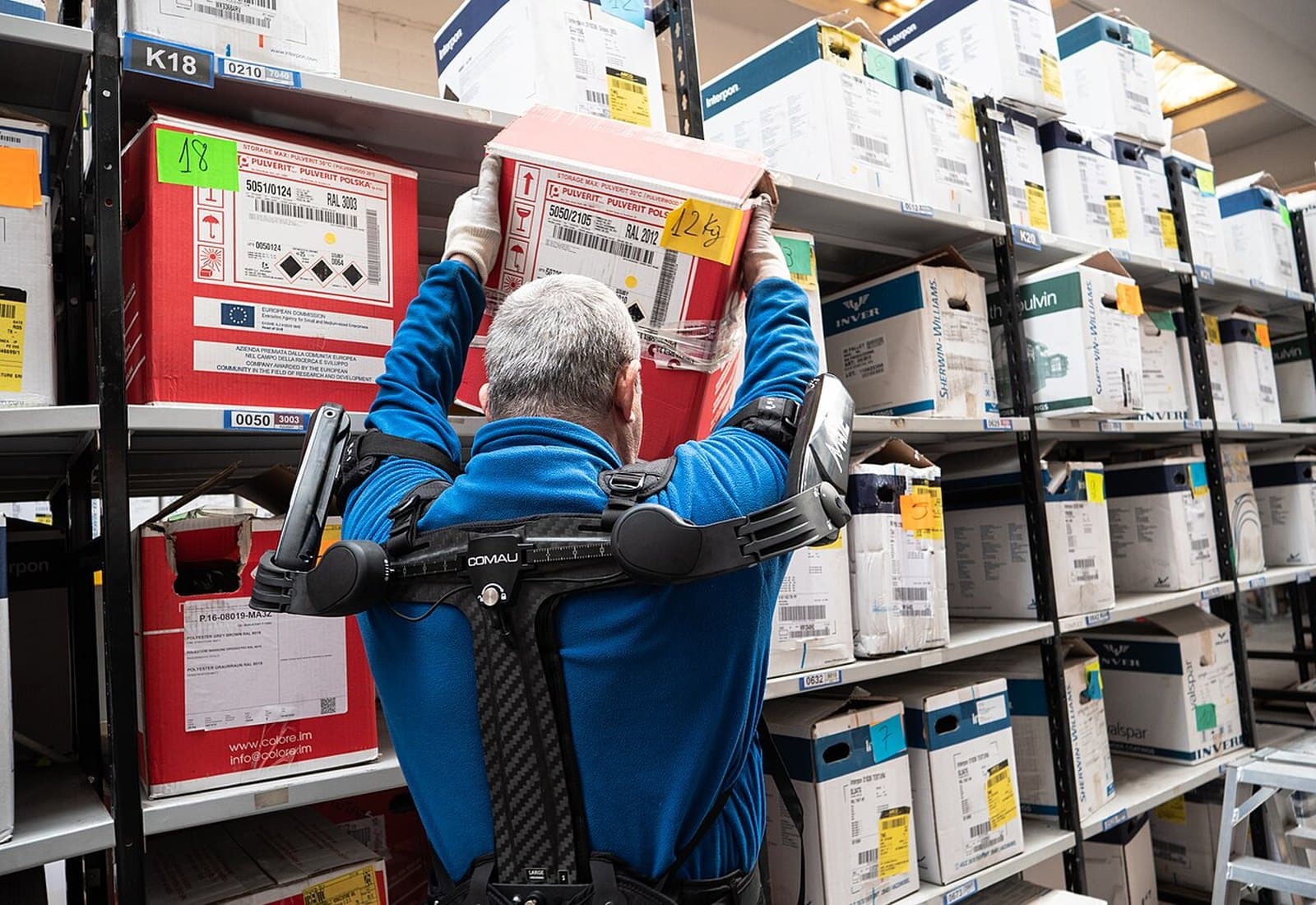
The SafeBoost is an active soft exosuit that assists hip extension during frequent lifting. It uses flexible actuators and a technical textile construction, weighs 2.2 kg and provides 80 N assist force with 15 kg lift support. Its sensor-triggered hip assistance relies on IMU and motion sensors, and it offers cloud dashboard and fleet telemetry connectivity. The system is available via a subscription programme in North America and Europe, with a 12-month warranty and ISO 13482 compliance.
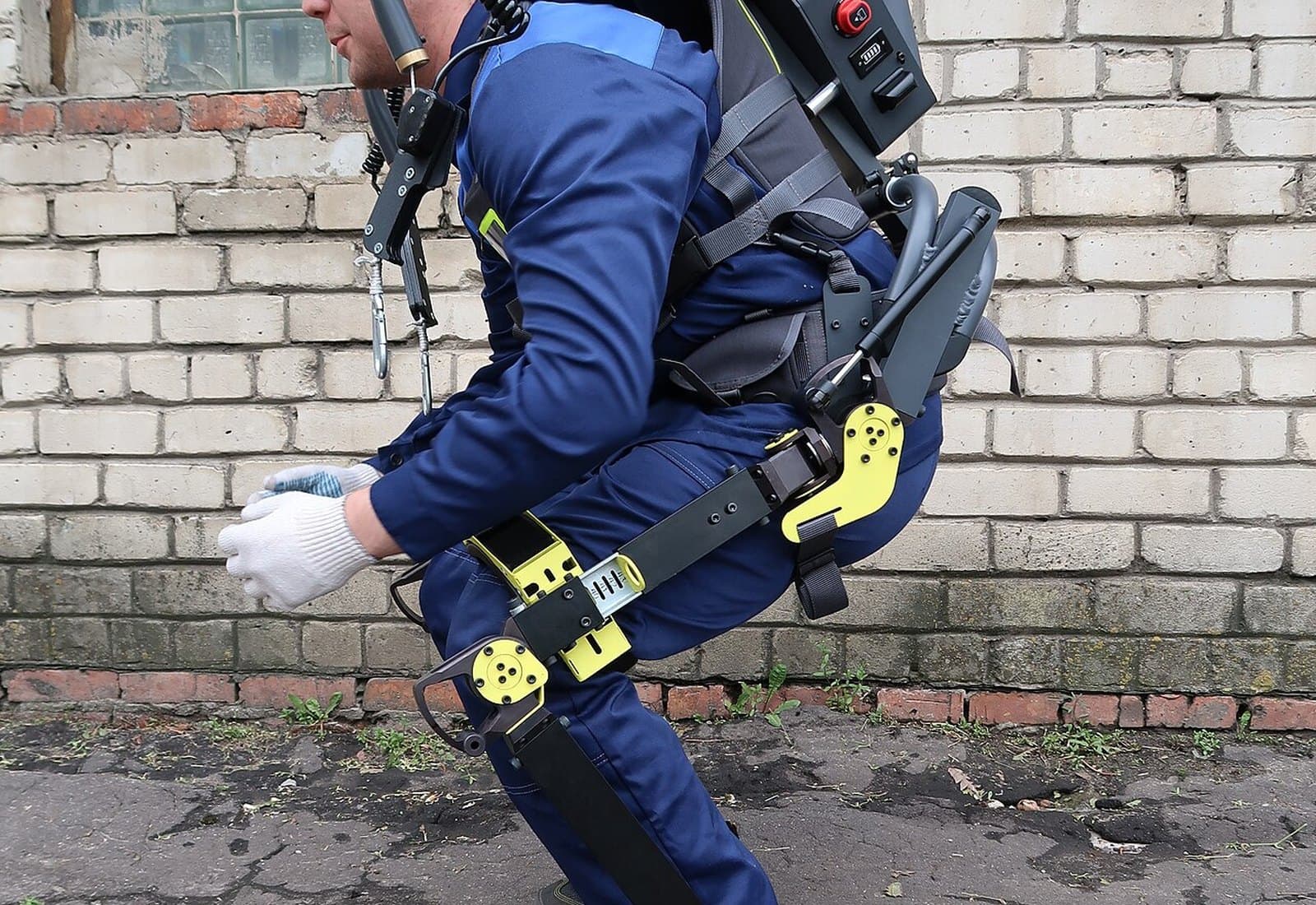
The H-WULF is a passive waist-assist exoskeleton built from aluminium and steel. It has no sensors, no battery and zero degrees of freedom, relying on passive waist assistance to support lifts up to 30 kg. It is priced at 3600 USD and available on inquiry in the Asia-Pacific region. Its heavier weight (3.8 kg) and lack of connectivity reflect its simpler, mechanical design.
The CLOi SuitBot is an active lower-body assist robot with 2 degrees of freedom, 25 Nm assist torque and 30 kg lift support. It weighs 5.5 kg, offers 4 h battery life and includes joint sensors and an IMU. Control modes cover walking assist and standing assist. LG Electronics lists it as limited availability in Asia-Pacific, with no disclosed certifications or price.
Data transparency and procurement risk
ExoSelect assigns a completeness score based on the proportion of key specifications disclosed. SafeBoost leads with 88, meaning most parameters are available for engineering evaluation. H-WULF scores 72, with gaps in assist force, sensors, connectivity, certifications beyond CE, warranty and lead time. CLOi SuitBot scores 64, with missing height range, certifications, standards, warranty, price and connectivity. For procurement, lower completeness means greater reliance on direct supplier engagement and potentially higher integration risk. Buyers should request the missing data before committing to a pilot.
Use-case fit: which system for which warehouse task?
For frequent, repetitive lifting where workers need active hip extension assistance and fleet-level monitoring, the SafeBoost offers the most complete data package and a subscription model that may reduce capital outlay. Its 15 kg lift support and 80 N assist force are disclosed, but the suitability for specific load weights depends on task analysis.
For operations in Asia-Pacific seeking a lower-cost, passive solution with higher stated lift support (30 kg) and no battery management, the H-WULF is a candidate. However, its passive nature means no active assistance and no sensor-driven adaptation. The 3600 USD price is the only disclosed price in this comparison.
The CLOi SuitBot provides active lower-body assistance with 25 Nm torque and 30 kg lift support, but its 4 h battery life and limited availability may constrain multi-shift use. Its walking and standing assist modes suggest suitability for mobility-heavy tasks in addition to lifting.
Total cost of ownership considerations
Only H-WULF has a disclosed purchase price. SafeBoost is offered via subscription, so cost depends on programme terms. CLOi SuitBot pricing is not disclosed. Battery replacement, maintenance and training costs are not disclosed for any system. Procurement teams should request total cost of ownership breakdowns, including battery lifecycle for active systems and warranty extensions. The compare page allows side-by-side specification checks, and for custom requirements, use the inquiry form.
Regulatory and certification status
SafeBoost holds CE certification and lists ISO 13482, the safety standard for personal care robots. H-WULF holds CE certification but does not disclose compliance with ISO 13482 or other standards. CLOi SuitBot does not disclose any certifications or standards. Buyers in regulated environments should verify certification evidence directly with suppliers. The absence of disclosed standards does not imply non-compliance, but it increases due diligence burden.
FAQ
Which back exoskeleton is best for warehouse lifting?
There is no single best system; the choice depends on drive type, lift support, regional availability and data transparency. SafeBoost offers the most disclosed specifications for active assistance, H-WULF provides a passive option with a listed price, and CLOi SuitBot offers active lower-body assistance with limited availability.
What is the difference between active and passive back exoskeletons?
Active exoskeletons use powered actuators and sensors to provide assistance, such as the SafeBoost and CLOi SuitBot. Passive exoskeletons use mechanical structures without power, like the H-WULF, which relies on springs or counterbalances. Active systems typically require batteries and offer adjustable assistance, while passive systems are lighter on maintenance but lack sensor-driven adaptation.
Are prices available for these exoskeletons?
Only the ULS Robotics H-WULF has a disclosed price of 3600 USD. Verve Motion SafeBoost is offered via a subscription programme with programme-dependent pricing, and LG Electronics CLOi SuitBot pricing is not disclosed. Buyers should contact suppliers for quotes.
For a broader view of exoskeleton categories, see the logistics exoskeleton category page. To explore other products, visit the SafeBoost product page, H-WULF product page or CLOi SuitBot product page.
 ExoSelect research