Quick answer: The Comau MATE-XT is a passive upper-limb exoskeleton that provides up to 100 N of assist force and 15 Nm of torque to support overhead, repetitive and precision work. It weighs 4.2 kg, fits users 155–195 cm tall, is certified to ISO 13482, and has an indicative list price of 5,900 USD. Buyers should treat the undisclosed warranty and the absence of usage telemetry as key procurement risks.
What the MATE-XT is — and what it is not
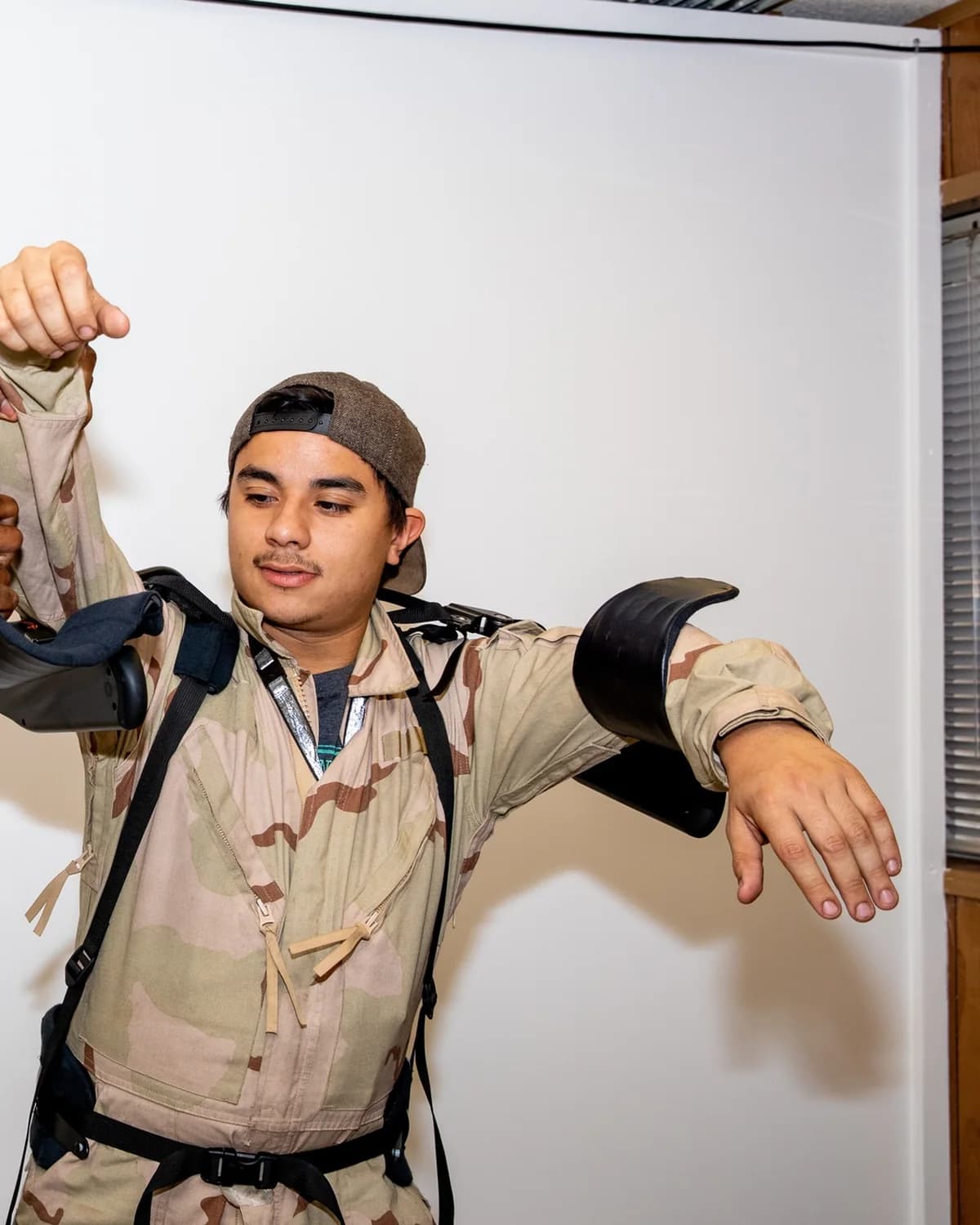
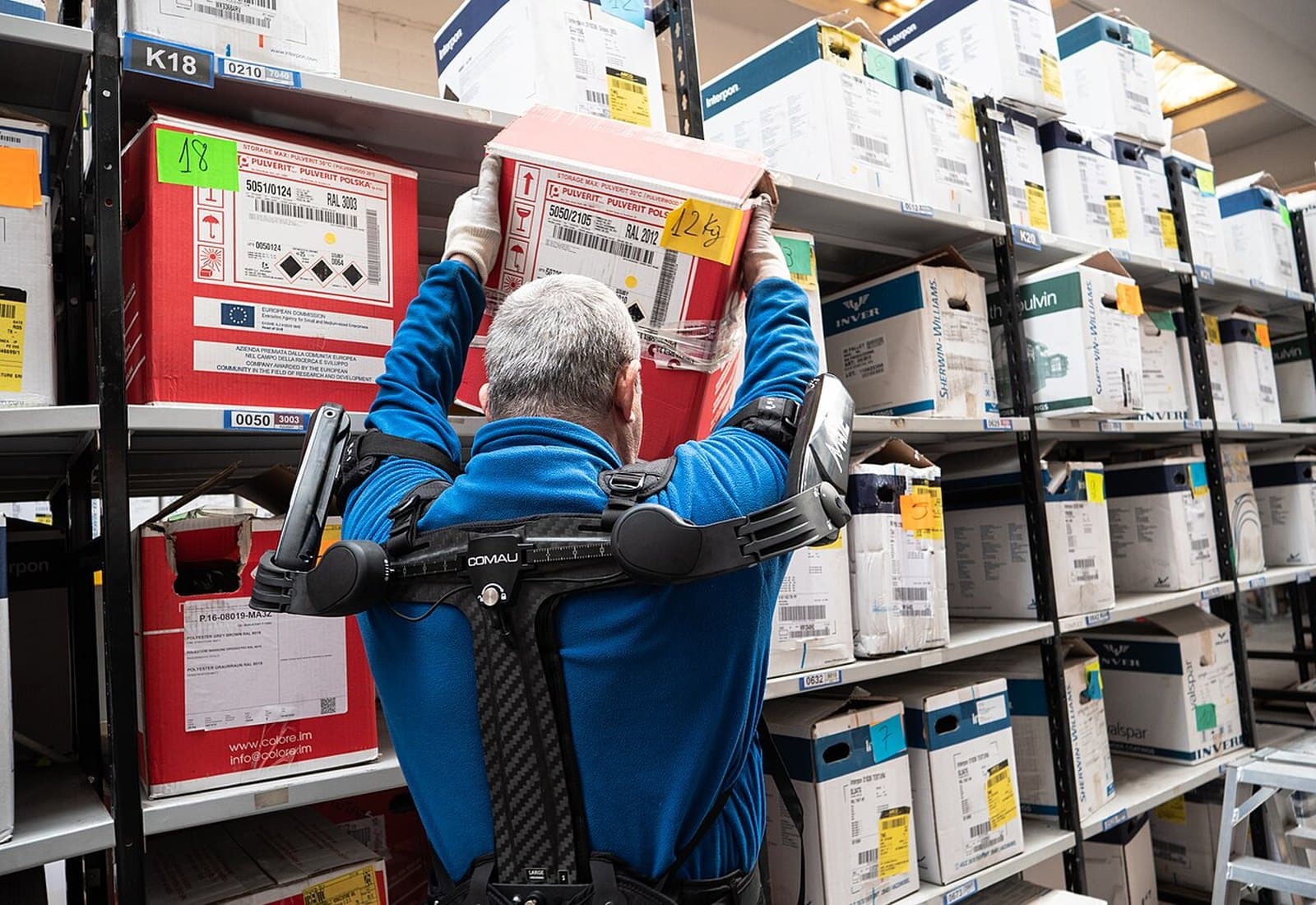
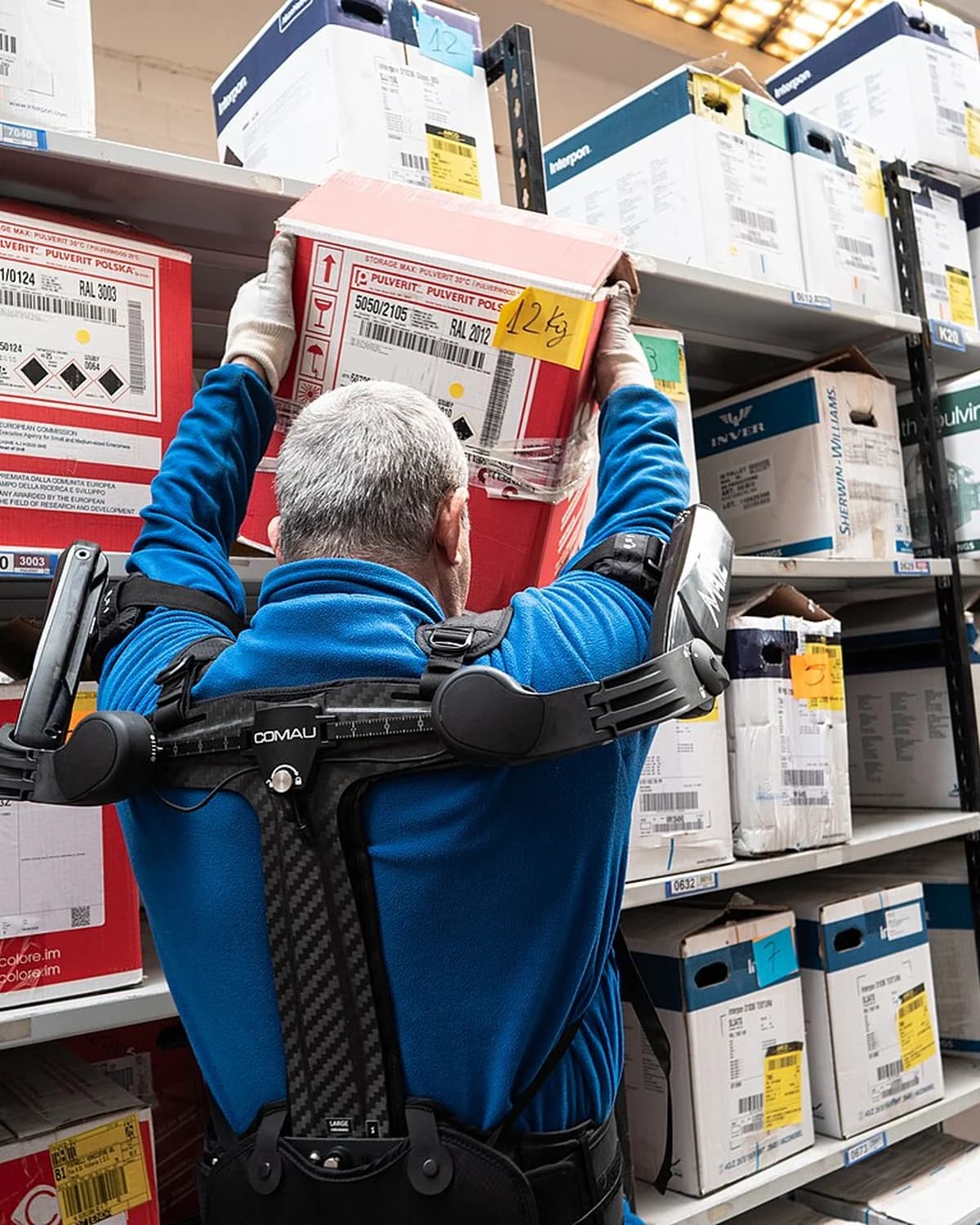
The MATE-XT is a passive, mechanical-spring upper-limb exoskeleton made by Comau. It is designed to assist the shoulder and arm during sustained elevation, not to lift loads or support the back. Its datasheet lists an assist force of 100 N and an assist torque of 15 Nm, which places it among the higher-force passive shoulder devices in our database. It is not a powered system: there are no batteries, sensors or connectivity, so runtime, charge time and data logging are not applicable.
Unlike back exoskeletons such as the Cray X or Apex 2, the MATE-XT does not support hip extension or lifting. Its lift support is listed as 5 kg, which is modest and should not be read as a general load-handling rating. The device is built from aluminium and technical polymer, weighs 4.2 kg, and uses an adjustable one-size frame covering 155–195 cm. It is available in Europe, North America and Asia-Pacific with a lead time of 4–8 weeks.
Key specifications at a glance
- Maker: Comau
- Drive: Passive (mechanical spring)
- Assist force: 100 N
- Assist torque: 15 Nm
- Weight: 4.2 kg
- Height range: 155–195 cm
- User weight limit: 100 kg
- Certifications: CE, ISO 13482
- Price (indicative): 5,900 USD
- Lead time: 4–8 weeks
How the MATE-XT compares to other passive upper-limb systems
The table below uses only supplied specifications. The MATE-XT offers the highest assist force and torque among the passive shoulder devices listed, but it is also the heaviest and has the lowest user weight limit.
| System | Assist force | Assist torque | Weight | User weight limit | Price (USD) | Certifications |
|---|
| MATE-XT (Comau) | 100 N | 15 Nm | 4.2 kg | 100 kg | 5,900 | CE, ISO 13482 |
| Skelex 360 (Skelex) | 70 N | 12 Nm | 1.6 kg | 110 kg | 4,900 | CE |
| AIRFRAME (Levitate Technologies) | 60 N | 10 Nm | 1.5 kg | 113 kg | 2,950 | CE |
For a broader comparison, see our comparison tool.
What the datasheet doesn't tell you
Three parameters are missing or undisclosed, and each matters to a buyer.
Warranty: The MATE-XT datasheet does not disclose a warranty period. This is a critical total-cost variable: passive exoskeletons are subject to wear at joints and springs, and a short or absent warranty shifts repair costs to the buyer. Without a stated warranty, you cannot calculate a multi-year cost of ownership or compare it with the 24-month warranty offered on the Skelex 360.
Usage telemetry and connectivity: The MATE-XT has no sensors and no connectivity. That means no usage data, no compliance tracking and no fleet management. For a pilot program, you will need manual observation or third-party wearables to measure adoption and dose. This is a deliberate design choice for simplicity, but it limits the evidence you can generate for a business case.
Task-specific validation: The datasheet provides assist force and torque, but not the support profile across the range of motion, nor any task-specific performance data. The control modes are listed as mechanical spring assistance with an adjustable support profile, but the adjustment range and the force curve are not disclosed. Buyers should request this from Comau, because the 100 N peak may not be available at the specific arm elevation angles used in your process.
Who should not choose this
Do not choose the MATE-XT if your workforce includes users above 100 kg. The user weight limit is the lowest in this comparison, and it is a hard constraint. Also avoid it if you need usage data for a pilot or for return-on-investment tracking: the absence of sensors and connectivity means you will have to build a manual measurement program. Finally, if your primary need is back or hip assistance during lifting, the MATE-XT is the wrong category; consider the Cray X or Apex 2 instead.
For overhead work where maximum assist force is the priority and users are within the weight limit, the MATE-XT is a credible option. But the 4.2 kg weight is more than double that of the Skelex 360 and AIRFRAME, so wearer comfort over a full shift must be validated in a trial.
Procurement checklist for the MATE-XT
- Confirm the warranty period in writing before purchase.
- Request the force curve and adjustment range for the support profile.
- Verify that all users are within the 100 kg limit and 155–195 cm height range.
- Plan a manual observation protocol if you need usage data.
- Check that ISO 13482 certification covers your specific configuration.
- Obtain a formal quote: the 5,900 USD price is indicative and may vary with configuration and quantity.
Total cost of ownership considerations
The MATE-XT's list price of 5,900 USD is higher than the Skelex 360 (4,900 USD) and AIRFRAME (2,950 USD), but lower than the powered Cray X (9,900 USD). Because it is passive, there are no battery, charging or software subscription costs. However, the undisclosed warranty means you should budget for potential repairs after the implied warranty period. Training and fitting are not included in the list price and should be quoted separately. For a detailed cost model, see our inquiry desk.
FAQ
What is the assist force of the MATE-XT?
The MATE-XT provides up to 100 N of assist force and 15 Nm of assist torque, according to the manufacturer's specifications.
Is the MATE-XT certified for industrial use?
Yes, it is CE marked and certified to ISO 13482, the standard for personal care robots. This is the same standard referenced for the Cray X and Skelex 360.
Does the MATE-XT have a warranty?
The warranty period is not disclosed in the available datasheet. Buyers must request this information from Comau or an authorized distributor.
Next step
Before committing to a pilot, request the warranty terms and the support-profile force curve from Comau. Then compare the MATE-XT side-by-side with the Skelex 360 and AIRFRAME using our comparison tool, or contact our selection desk for a tailored shortlist.
Sources: Comau MATE-XT official product page (https://www.comau.com/en/our-offering/products/mate-xt/); ISO 13482 standard.
 ExoSelect research