Quick answer: For military logistics load carriage, the Lockheed Martin ONYX is the only system in this dataset with disclosed endurance (8 h battery) and lift support (45 kg). The Sarcos Guardian XT is a teleoperated mobile manipulator, not a wearable exoskeleton, and is better suited to remote material handling in hazardous zones. Industrial exoskeletons like Cray X and Apex 2 offer documented commercial pricing and certifications but have no disclosed defense-specific validation.
Key takeaways
- ONYX is the only wearable in this comparison with a stated 8-hour runtime and 45 kg lift support, making it the default reference for dismounted load carriage.
- Guardian XT is a teleoperated system with a 55 kg weight and 14 degrees of freedom; it is not worn by the operator and has no user height or weight limits because those parameters are not applicable.
- Industrial exoskeletons (Cray X, Skelex 360, Apex 2) have public list prices and CE/ISO 13482 certifications, but none disclose military testing, environmental hardening, or defense procurement availability.
- Critical procurement parameters—peak assist force, torque, walking speed, certifications, and warranty—are unknown for both defense systems.
- No system in this dataset has a public price; defense programmes are enterprise or programme-dependent, while industrial units range from $1,195 to $9,900.
Comparison table: defense vs industrial exoskeletons for logistics
| System | Maker | Drive | Weight | Lift support | Battery life | Price | Certifications | Availability |
|---|
| Guardian XT | Sarcos | Active | 55 kg | 45 kg | Unknown | Undisclosed | Unknown | Enterprise programme (North America) |
| ONYX | Lockheed Martin | Active | 6.3 kg | 45 kg | 8 h | Undisclosed | Unknown | Defense programme (North America) |
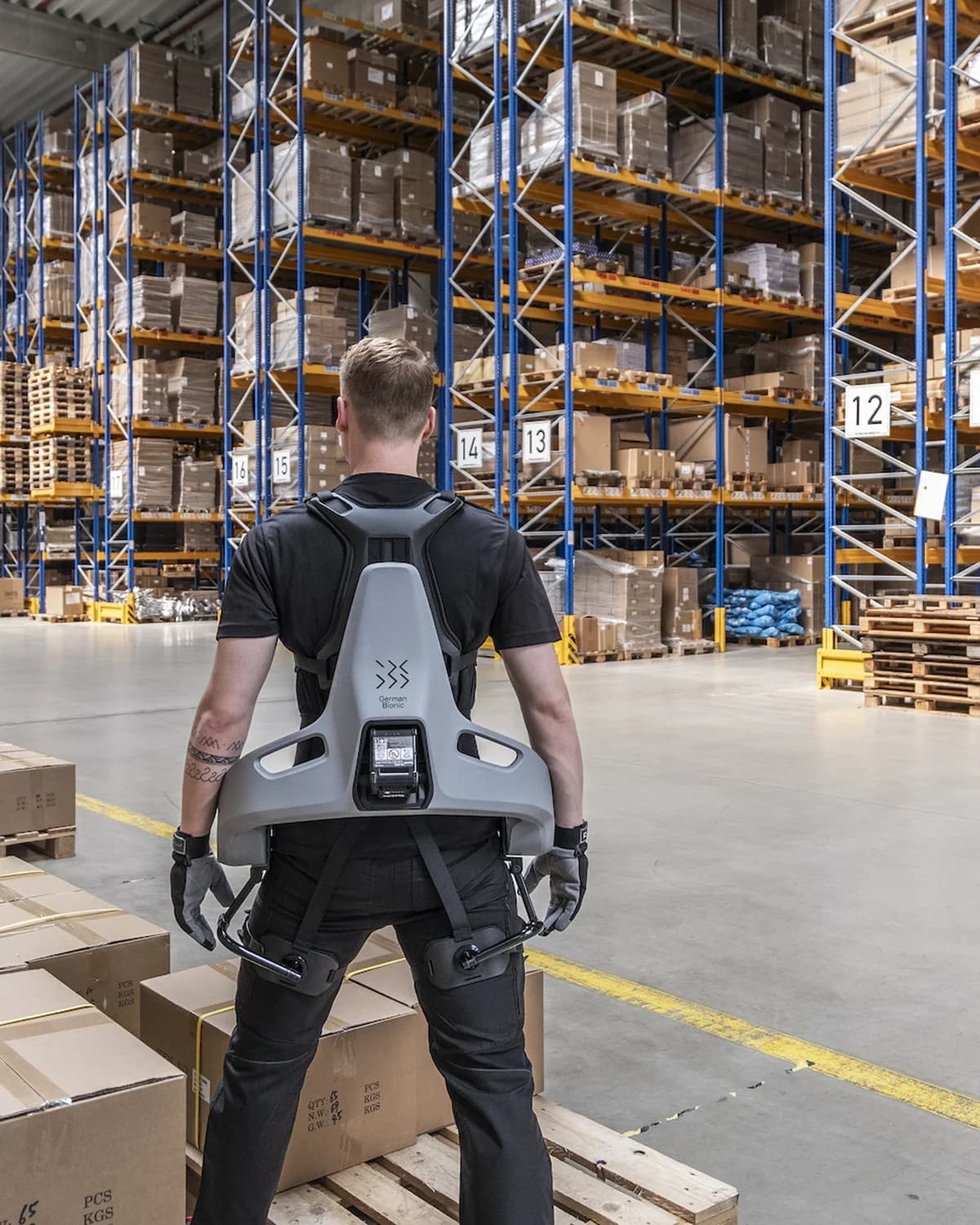
| Cray X | German Bionic | Active | 7.6 kg | 30 kg | 8 h | 9,900 USD | CE, ISO 13482 | Available (Europe, North America) |
| Skelex 360 | Skelex | Passive | 1.6 kg | 5 kg | Not applicable | 4,900 USD | CE | Available on inquiry (Europe, North America) |
| Apex 2 | HeroWear | Passive | 1.2 kg | 20 kg | Not applicable | 1,195 USD | CE | Available (North America, Europe) |
All specifications from ExoSelect database. Unknown = not disclosed by maker.
ONYX: the only wearable with disclosed endurance
Lockheed Martin's ONYX is a powered lower-body exoskeleton designed for load carriage and fatigue reduction. It is the only defense system in this dataset with a stated battery life of 8 hours and a lift support of 45 kg. At 6.3 kg, it is light enough for dismounted patrols, and its adjustable sizing and 90 kg user weight limit cover a broad operator population. The 2 degrees of freedom suggest a focus on hip assistance rather than full lower-limb articulation, which aligns with load-carriage tasks. However, peak assist force and torque are unknown, so buyers cannot quantify the actual offloading benefit. The system is available only through a defense programme in North America, with programme-dependent lead time.
Guardian XT: teleoperated manipulator, not a wearable
The Sarcos Guardian XT is a different class of system. It is a teleoperated dexterous robotic system with a mobile base, 14 degrees of freedom, and a 55 kg weight. It is not worn by an operator, so user height and weight ranges are not applicable. Its 45 kg lift support and force-feedback sensors make it suitable for remote material handling in hazardous environments—for example, loading cargo in contaminated zones or handling unexploded ordnance. But it is not a solution for dismounted logistics where a soldier must carry supplies over terrain. The Guardian XT requires a mobile base and is terrain-dependent; its runtime and certifications are unknown. It is available only via enterprise programme in North America.
Industrial exoskeletons: documented specs, no defense validation
Industrial systems like the German Bionic Cray X, Skelex 360, and HeroWear Apex 2 offer transparent commercial data: list prices, certifications (CE, ISO 13482), and warranty terms. The Cray X, for instance, provides 300 N assist force, 30 Nm torque, and 8-hour hot-swappable battery for $9,900. The Apex 2 is a passive exosuit at $1,195 with 220 N assist force. These systems are available now and could be trialed in garrison or warehouse logistics. However, none disclose military-specific testing, environmental hardening (e.g., sand, dust, shock), or defense procurement channels. Their certifications are for industrial use, not military standards. For a defense buyer, the lack of MIL-STD compliance or ruggedization data is a significant gap.
What the datasheet doesn't tell you
Several critical parameters are missing from the defense systems' datasheets, and each matters for procurement:
- Peak assist force and torque (ONYX, Guardian XT): Without these, you cannot calculate the actual load offloading or compare against industrial systems. The Cray X discloses 300 N and 30 Nm; ONYX and Guardian XT do not.
- Runtime and charge time (Guardian XT): The Guardian XT's battery life is unknown, making it impossible to plan operational sorties. ONYX states 8 hours but charge time is unknown.
- Certifications and standards (ONYX, Guardian XT): No defense-specific certifications (e.g., MIL-STD-810) are disclosed. This affects airworthiness, electromagnetic compatibility, and safety approval.
- Warranty (all systems): Unknown for ONYX and Guardian XT; undisclosed for Cray X. Warranty terms affect total cost of ownership and sustainment planning.
- User height range (ONYX): Unknown, despite adjustable sizing. This could limit operator eligibility.
- Sensor suite and connectivity (ONYX): Unknown, which affects data logging, fleet management, and after-action review.
These unknowns are not trivial. A defense procurement without assist force data cannot verify whether the system meets load-carriage requirements. Without certifications, integration into existing platforms is risky. Buyers should request these parameters directly from the maker before committing to a programme.
Who should not choose this
If your requirement is dismounted load carriage for foot patrols, do not choose the Guardian XT—it is a teleoperated base-mounted system, not a wearable. If you need a commercially available exoskeleton with transparent pricing and certifications for garrison logistics, do not choose ONYX or Guardian XT; their defense-programme-only availability and undisclosed pricing make them unsuitable for rapid, low-risk trials. Instead, consider the Cray X for its documented 8-hour battery and 300 N assist, or the Apex 2 for low-cost passive assistance. However, if you require a system already in defense service with disclosed endurance, ONYX is the only option in this dataset—but be prepared to accept unknown assist force and certifications.
Total cost and compliance gaps
Defense exoskeletons have no public price, so total cost of ownership cannot be modeled. Industrial systems have list prices but may require additional training, maintenance, and integration. For defense buyers, the lack of MIL-STD certifications means additional testing and qualification costs. Regional availability also differs: ONYX and Guardian XT are North America only, while industrial systems are available in Europe and North America. If you operate outside North America, defense systems may not be exportable or supported.
Next step
Request the missing parameters—peak assist force, torque, certifications, and warranty—from Lockheed Martin and Sarcos. Then compare ONYX against the Cray X using our comparison tool to see the trade-off between defense-specific design and commercial transparency. For a tailored selection, contact our selection desk.
FAQ
Is the Guardian XT a wearable exoskeleton?
No. The Guardian XT is a teleoperated mobile manipulator with a 55 kg weight and 14 degrees of freedom. It is not worn by the operator; user height and weight ranges are not applicable.
What is the battery life of the ONYX?
Lockheed Martin ONYX has a disclosed battery life of 8 hours. Charge time is unknown.
Can I buy a defense exoskeleton commercially?
No. Both ONYX and Guardian XT are available only through defense or enterprise programmes, with no public list price and programme-dependent lead times. Industrial exoskeletons like Cray X are commercially available.
Sources: Sarcos official website (sarcos.com); Lockheed Martin official website (lockheedmartin.com); German Bionic official website (germanbionic.com); HeroWear Apex 2 page (herowearexo.com/apex-2/); Skelex official website (skelex.com).
 ExoSelect research