Quick answer
Liability for an exoskeleton in the workplace generally sits with the employer as the party controlling the task, the training and the risk assessment, not with the device alone. CE marking and ISO 13482 indicate conformity with a machinery-adjacent safety standard, but they do not transfer injury liability to the maker, and no supplied datasheet states an insurance rating, an indemnity limit or a product-liability period.
If you are buying an industrial exoskeleton, your insurer will ask three things: what standard the device is certified to, what the manufacturer warrants, and what your risk assessment says about residual risk. The database answers the first for most systems and leaves the second and third largely undisclosed. That gap, not the hardware, is where procurement risk lives.
Key takeaways
- CE and ISO 13482 appear on Cray X, Skelex 360 and MATE-XT; Apex 2 lists CE only, and AIRFRAME lists CE with its referenced standards unknown.
- Warranty is disclosed only for Skelex 360 (24 months) and Apex 2 (12 months); it is undisclosed for Cray X and MATE-XT and unknown for AIRFRAME.
- No system in the database discloses a product-liability insurance limit, an indemnity clause or a named insurer.
- Active systems such as Cray X add battery, software and telemetry to the liability perimeter; passive systems reduce the failure surface but not the ergonomic risk.
- Your employer's liability policy, not the device certification, is the primary cover in most industrial deployments.
What CE and ISO 13482 actually cover
ISO 13482 is the ISO standard for personal care robots, and it is the standard most often cited for wearable exoskeletons in industrial settings. German Bionic lists Cray X against ISO 13482 and EN 614-1, alongside CE. Comau lists MATE-XT against ISO 13482 and CE. Skelex lists Skelex 360 against ISO 13482 and CE. HeroWear lists Apex 2 with CE but its referenced standards are unknown in the database. Levitate Technologies lists AIRFRAME with CE, and its standards are also unknown.
What this means for liability is narrower than buyers assume. A CE mark is a declaration that the product meets applicable EU directives; ISO 13482 conformity supports a safety argument but is not a guarantee against injury claims. Neither transfers responsibility for task design, wear-time limits or training to the manufacturer. If a worker is injured while wearing a device that is CE-marked, the employer's risk assessment and supervision records become the central evidence.
Comparison table: documented safety and warranty fields
| System | Maker | Drive | Certifications | Standards | Warranty | Price from |
|---|
| Cray X | German Bionic | Active | CE, ISO 13482 | ISO 13482, EN 614-1 | Undisclosed | 9,900 USD |
| Skelex 360 | Skelex | Passive | CE | ISO 13482 | 24 months | 4,900 USD |
| MATE-XT | Comau | Passive | CE, ISO 13482 | ISO 13482 | Undisclosed | 5,900 USD |
| Apex 2 | HeroWear | Passive | CE | Unknown | 12 months | 1,195 USD |
| AIRFRAME | Levitate Technologies | Passive | CE | Unknown | Unknown | 2,950 USD |
Only two of five systems disclose a warranty period. That is the first number an insurer or a finance team will ask for, and it is missing from the majority of the dataset. For a wider view of certified systems, see the industrial exoskeleton category.
What the datasheet doesn't tell you
Warranty terms. Cray X and MATE-XT list warranty as undisclosed; AIRFRAME lists it as unknown. A warranty defines who pays for repair and, in some contracts, who bears the cost of a device failure during a shift. Without it, you cannot model total cost of ownership or negotiate a service-level agreement. The Cray X product page shows the full disclosed spec set; warranty is not in it.
Product-liability insurance limits. No system in the database discloses an insurance limit, an indemnity cap or a named insurer. This matters because a serious injury claim can exceed the price of the device by orders of magnitude. Ask the maker for a certificate of insurance before you sign, and expect some to decline.
Software and telemetry liability. Cray X includes IMU, load sensors, usage telemetry, Bluetooth and a cloud fleet dashboard. That adds a data-protection and software-failure dimension that passive systems such as Skelex 360, MATE-XT, Apex 2 and AIRFRAME do not carry. The database does not disclose Cray X's data-retention terms, cyber-insurance status or software warranty. For a connected device, those are material omissions.
Clinical evidence. Skelex 360 and AIRFRAME list clinical evidence as unknown; the other three list it as not applicable. If your insurer or occupational health team asks for injury-reduction evidence, the database cannot supply it for any system here. That is a documented gap, not a hidden one.
Active vs passive: the liability perimeter shifts
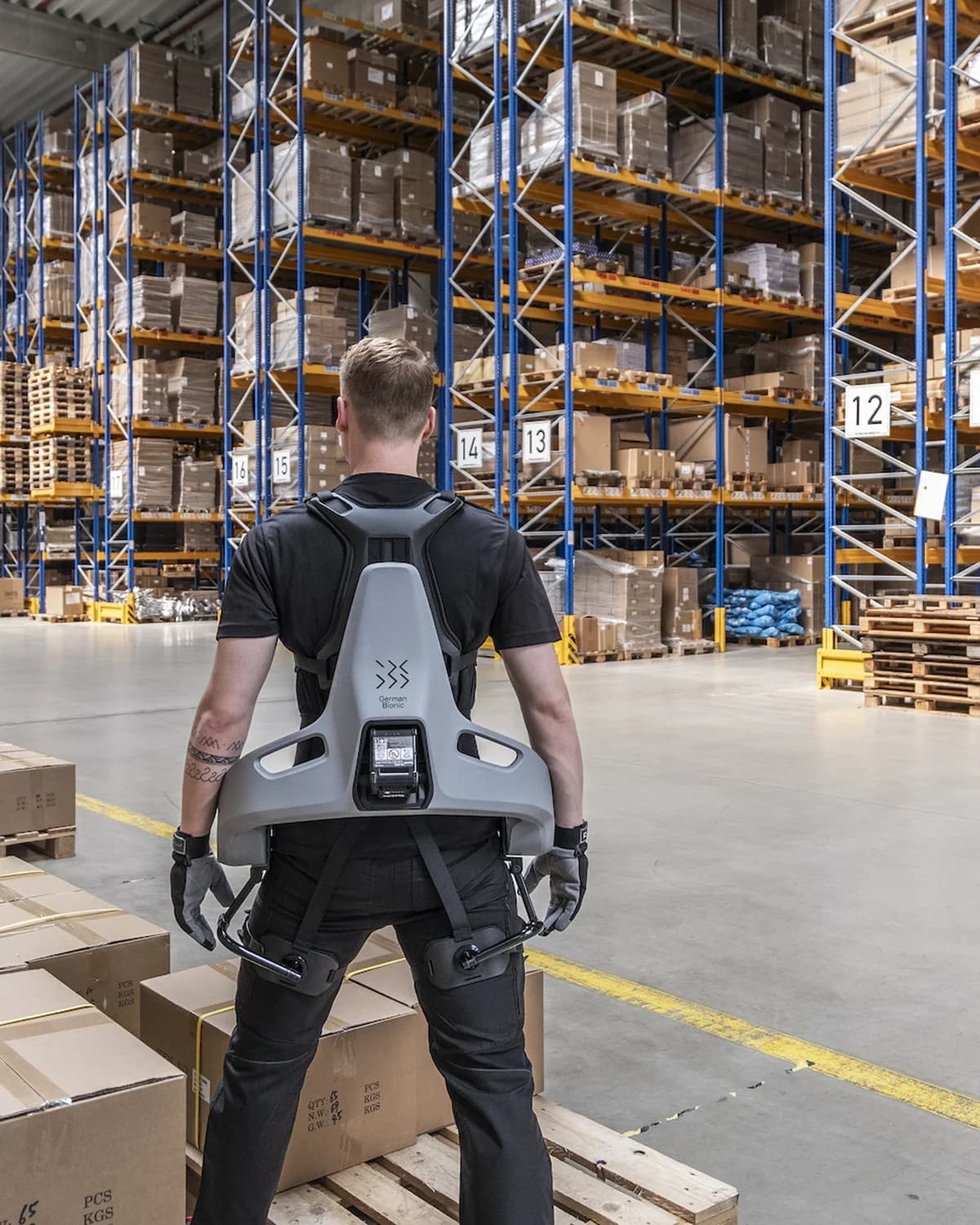
An active system such as Cray X brings a battery, a control mode and a software layer into the risk assessment. The hot-swappable lithium-ion battery and 8 h runtime are operational advantages, but they also mean the device has failure modes that a passive spring system does not. A passive system such as MATE-XT or Skelex 360 has no sensors and no connectivity, which simplifies the insurance conversation: fewer subsystems, fewer questions.
The trade-off is documented in the specs. Cray X offers 300 N assist force and 30 Nm torque with adaptive lift assistance; MATE-XT offers 100 N and 15 Nm; Skelex 360 offers 70 N and 12 Nm; Apex 2 offers 220 N and 22 Nm; AIRFRAME offers 60 N and 10 Nm. Higher assist can change the ergonomic risk profile, and your risk assessment should reflect the specific force level, not the category. Compare the full field set on the comparison tool.
Who should not choose this
If your insurer requires a disclosed product-liability insurance limit and a disclosed warranty before cover is bound, do not select Cray X, MATE-XT or AIRFRAME on the current data. Cray X and MATE-XT leave warranty undisclosed; AIRFRAME leaves both warranty and standards unknown. Skelex 360 is the only system in this dataset with a disclosed 24-month warranty and a disclosed ISO 13482 reference, which makes it the easier first conversation with an underwriter. Apex 2 discloses a 12-month warranty but its standards are unknown, so it is a second choice for a liability-sensitive pilot.
If you need clinical evidence of injury reduction to satisfy an insurer or a works council, none of the five systems supplies it in this database. Do not treat a CE mark as a substitute for that evidence.
What to ask before you bind cover
Request four documents from the maker: the declaration of conformity, the warranty terms, a certificate of product-liability insurance, and the risk-assessment template the maker recommends. German Bionic publishes its product information at germanbionic.com; Comau publishes MATE-XT documentation at comau.com; HeroWear publishes Apex 2 information at herowearexo.com. Where a document is not published, ask for it in writing and record the answer in your procurement file.
For a structured first step, use the ExoSelect inquiry desk to request the missing warranty and insurance fields for Cray X, MATE-XT and AIRFRAME, and to compare them against Skelex 360 and Apex 2.
FAQ
Does CE marking transfer injury liability to the exoskeleton maker?
No. CE marking is a conformity declaration, not an indemnity. The employer's risk assessment and supervision records remain central in an injury claim, and no system in this database discloses a product-liability insurance limit.
Which exoskeleton in this database has the clearest warranty position?
Skelex 360, with a disclosed 24-month warranty and an ISO 13482 reference. Apex 2 discloses 12 months but its referenced standards are unknown. Cray X and MATE-XT leave warranty undisclosed; AIRFRAME leaves it unknown.
Does an active exoskeleton create more liability than a passive one?
It adds liability surface. Cray X includes a hot-swappable lithium-ion battery, sensors, Bluetooth and a cloud fleet dashboard, so software failure and data protection enter the risk assessment. Passive systems such as MATE-XT and Skelex 360 have no sensors or connectivity, which narrows the insurance conversation.
 ExoSelect research