Quick answer
An exoskeleton maintenance schedule is the documented set of inspection, cleaning, part-replacement and battery-service intervals that keeps a device inside its certified condition. For industrial fleets, the schedule should be built from the manufacturer's service manual and the device's own telemetry, not from a generic calendar. In this dataset, only Cray X exposes usage telemetry and a hot-swappable battery; the passive systems disclose no connectivity, so their schedules must be paper-based.
Maintenance is where exoskeleton total cost of ownership is decided. A passive shoulder unit at 4,900 USD with no sensors and no data link depends on supervisor discipline; a powered back unit at 9,900 USD depends on battery rotation and software health. The two schedules are not the same document.
Key takeaways
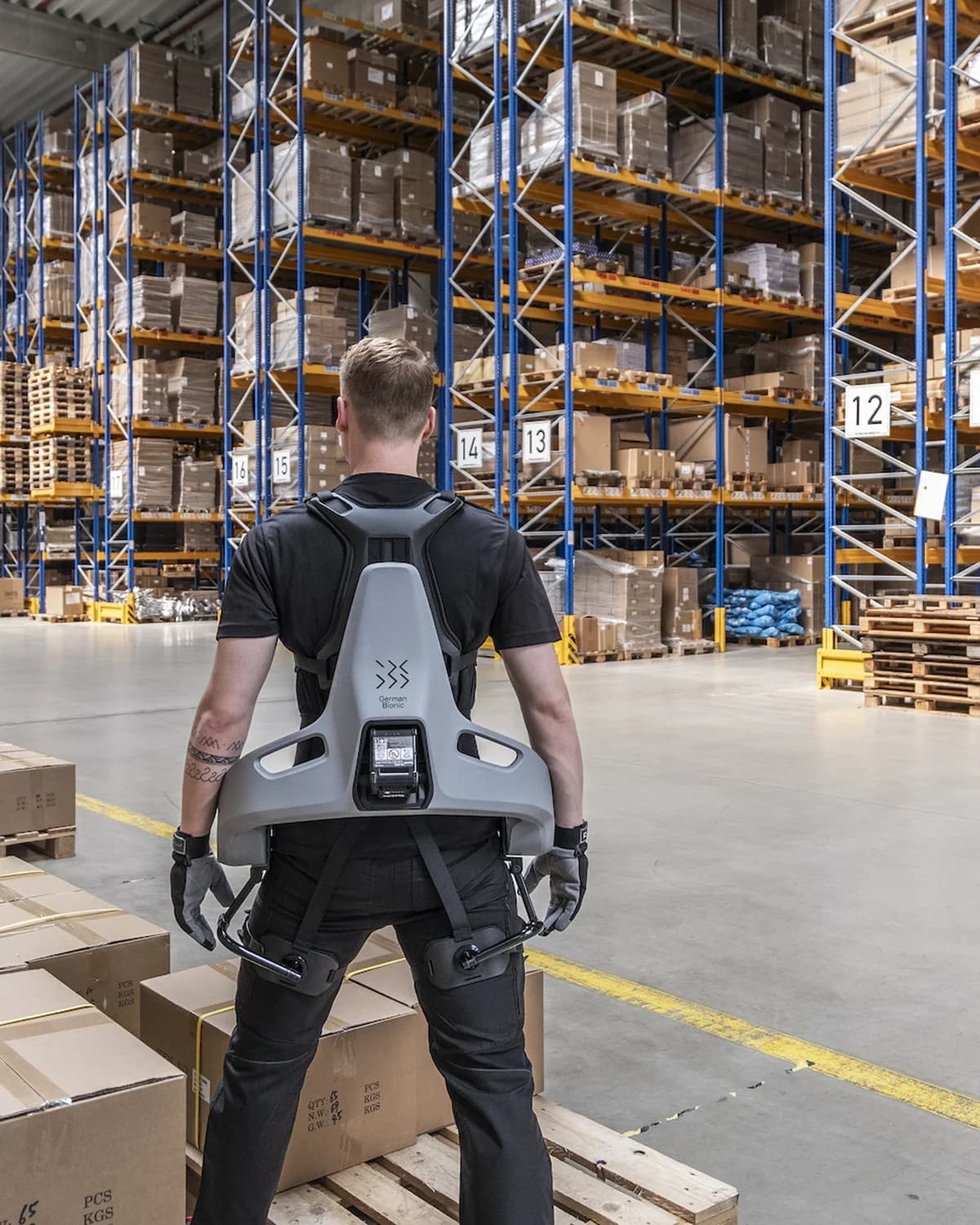
- Only one system in this dataset, Cray X (German Bionic), publishes a battery life of 8 h, a 2 h charge time and a hot-swappable lithium-ion pack — the only powered unit here.
- Passive systems (Skelex 360, MATE-XT, Apex 2, AIRFRAME) have no battery or connectivity schedule, but textile and spring components still need inspection.
- Warranty is disclosed for Skelex 360 (24 months) and Apex 2 (12 months); it is undisclosed for Cray X and MATE-XT and unknown for AIRFRAME.
- No system in this dataset discloses a service interval, spare-part price or calibration procedure. Those are procurement gaps, not buyer assumptions.
What a maintenance schedule actually covers
A schedule has four layers: daily pre-use checks, periodic inspection, consumable replacement and annual recertification. For passive exoskeletons the consumables are textiles, springs, straps and pads. For powered units they include the battery pack, charger, sensors and firmware. The schedule should name who performs each task, what evidence is recorded, and what takes the unit out of service.
ISO 13482, the safety standard for personal care robots, is referenced by Cray X, Skelex 360 and MATE-XT. It is a design and risk-assessment standard, not a maintenance interval table. Buyers who treat the CE mark as a maintenance plan are confusing conformity with serviceability.
Comparison table: maintenance-relevant specs
| System | Drive | Weight | Battery / runtime | Connectivity | Warranty | Certifications |
|---|
| Cray X (German Bionic) | Active | 7.6 kg | Lithium-ion, hot-swappable, 8 h, 2 h charge | Cray Visor app, cloud fleet dashboard, Bluetooth | Undisclosed | CE, ISO 13482 |
| Skelex 360 (Skelex) | Passive | 1.6 kg | Not applicable | Not applicable | 24 months | CE |
| MATE-XT (Comau) | Passive | 4.2 kg | Not applicable | Not applicable | Undisclosed | CE, ISO 13482 |
| Apex 2 (HeroWear) | Passive | 1.2 kg | Not applicable | Not applicable | 12 months | CE |
| AIRFRAME (Levitate Technologies) | Passive | 1.5 kg | Not applicable | Not applicable | Unknown | CE |
Only Cray X has a battery schedule to write. Its 8 h runtime and 2 h charge time imply a rotation plan if the site runs more than one shift. The passive units have no runtime parameter because they have no power source; their maintenance burden sits in mechanical wear and hygiene.
Building the schedule by system type
Powered back exoskeleton: Cray X
Cray X is the only active unit in this dataset. Its maintenance schedule must cover battery rotation (hot-swappable lithium-ion, 8 h runtime, 2 h charge), charger inspection, sensor and IMU function checks, firmware updates through the Cray Visor app, and cloud dashboard review. The 7.6 kg weight and carbon-fibre/aluminium frame mean frame inspection is a structural task, not a wipe-down. Because warranty is undisclosed, the buyer should request the warranty terms and the recommended service interval in writing before purchase.
Passive shoulder systems: Skelex 360, MATE-XT, AIRFRAME
These units carry no battery and no sensors. The schedule is visual inspection of springs, straps, pads and adjustment mechanisms, plus cleaning. Skelex 360 publishes a 24-month warranty; MATE-XT does not disclose one; AIRFRAME lists warranty as unknown. That difference matters because a 24-month warranty sets a floor for the replacement-parts budget, while an unknown warranty leaves the buyer exposed.
Passive exosuit: Apex 2
Apex 2 is a textile-based exosuit at 1.2 kg with a 12-month warranty. Its maintenance schedule is dominated by fabric and elastic-band inspection, sizing checks across XS–XXL, and replacement of worn bands. It has no connectivity, so usage cannot be logged automatically. A paper log per unit is the only defensible record.
What the datasheet doesn't tell you
The missing parameters are the schedule. No system in this dataset discloses a service interval, a spare-part price, a calibration procedure or a mean time between failures. Cray X lists warranty as undisclosed; MATE-XT lists warranty as undisclosed; AIRFRAME lists warranty as unknown. Apex 2 does not disclose its referenced standards, and AIRFRAME lists standards as unknown. These gaps matter because a maintenance schedule without a warranty term and a parts price is a wish list. The buyer cannot budget replacement batteries, straps or springs, and cannot compare a 12-month warranty against a 24-month warranty on a like-for-like basis. The absence of connectivity on all four passive units also means the manufacturer cannot remotely diagnose wear; every fault is found by a person.
Who should not choose this
Do not choose a passive exoskeleton if your site cannot sustain a paper-based inspection regime. Skelex 360, MATE-XT, Apex 2 and AIRFRAME have no sensors and no connectivity; their maintenance depends on supervisor discipline. If you need automatic usage logs, battery health data or remote diagnostics, only Cray X in this dataset offers them, and even Cray X does not disclose its warranty or service interval. Do not choose Cray X if you cannot support a 2 h charge cycle and a hot-swap process across shifts, or if you require a published warranty before signing. And do not choose any of these systems if your procurement rule requires a disclosed spare-part price list; none is supplied here.
Procurement checklist
- Request the written service manual and recommended inspection interval for the exact configuration.
- Request warranty terms in writing for Cray X, MATE-XT and AIRFRAME, where the dataset shows undisclosed or unknown.
- For Cray X, confirm battery rotation plan against the 8 h runtime and 2 h charge time.
- For passive units, define a paper log and name the person who signs it.
- Ask for spare-part pricing for straps, pads, springs and batteries before award.
Use the compare tool to put Cray X against Skelex 360 and MATE-XT on the disclosed specs, and the industrial category page for the full set. For a documented parameter request, contact the selection desk.
FAQ
How often should an exoskeleton be serviced?
The dataset does not disclose service intervals for any system. The schedule must come from the manufacturer's service manual; buyers should request it in writing before purchase.
Do passive exoskeletons need maintenance?
Yes. Skelex 360, MATE-XT, Apex 2 and AIRFRAME have no battery, but springs, straps, pads and textile components wear and must be inspected and replaced.
Which system has the longest disclosed warranty?
Skelex 360 discloses 24 months, the longest in this dataset. Apex 2 discloses 12 months; Cray X and MATE-XT are undisclosed; AIRFRAME is unknown.
Sources: manufacturer pages for German Bionic, Skelex, Comau, HeroWear and Levitate Technologies; ISO 13482 standard reference. All specifications from the ExoSelect database; undisclosed and unknown parameters are stated as such.
 ExoSelect research