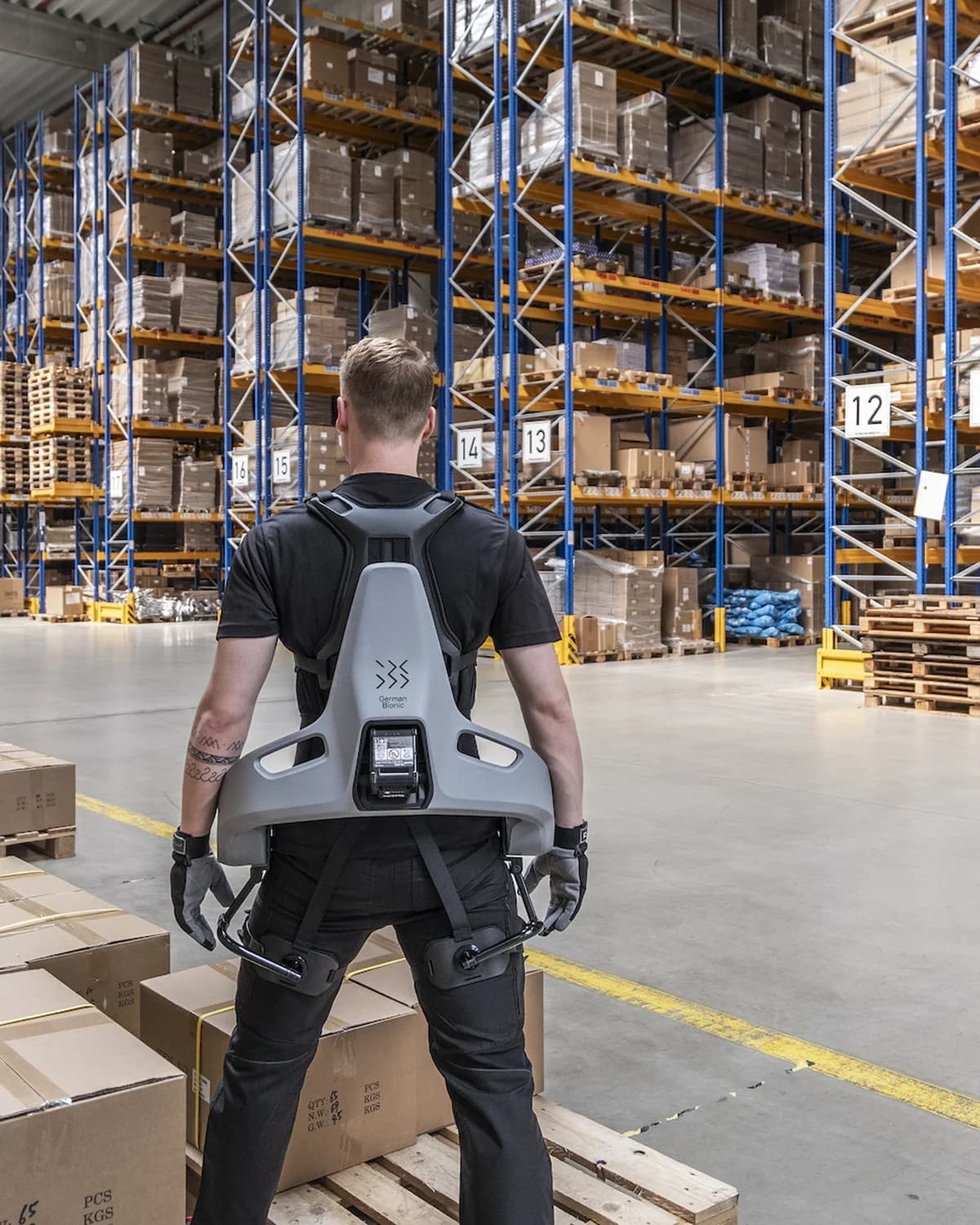
Quick answer: Lower back exoskeleton ROI in logistics is driven by reduced injury costs, improved productivity and lower absenteeism. However, a full ROI calculation requires disclosed data on price, battery life, assist force and warranty. Among the systems in our database, only H-WULF discloses a price (3,600 USD), while SafeBoost and CLOi SuitBot do not publish pricing, making direct ROI comparison incomplete without vendor quotes.
For procurement and engineering teams, the business case for lower back exoskeletons rests on quantifiable operational benefits. This guide outlines the key cost and performance factors, using only disclosed specifications from the ExoSelect database. It is intended for logistics operations evaluating wearable assistive devices for manual handling tasks.
Key takeaways
- ROI depends on injury cost avoidance, productivity gains and device total cost of ownership.
- Only H-WULF discloses a price (3,600 USD); SafeBoost and CLOi SuitBot pricing is not disclosed.
- Battery life, assist force and warranty terms vary significantly and affect operational availability.
- Subscription models (SafeBoost) can lower capital barriers but require recurring cost analysis.
- Certifications and standards (CE, ISO 13482) are critical for compliance and risk management.
What drives ROI for lower back exoskeletons?
Return on investment for lower back exoskeletons in logistics is primarily influenced by three factors: reduction in musculoskeletal disorder (MSD) costs, improvements in task productivity, and device lifecycle costs. MSD costs include direct medical expenses, indemnity payments and administrative overhead, as well as indirect costs such as lost productivity and retraining. Productivity gains may arise from reduced fatigue and improved lifting technique, though these must be validated in the specific workflow. Device lifecycle costs encompass acquisition (purchase or subscription), maintenance, battery replacement, training and disposal.
To build a credible ROI model, procurement teams need disclosed data on price, battery life, assist force, weight, warranty and availability. Where data is missing, assumptions must be clearly stated and sensitivity analysis performed.
Comparing disclosed specifications: SafeBoost, H-WULF and CLOi SuitBot
The table below summarises key specifications from the ExoSelect database for three lower back and waist-assist exoskeletons in logistics. Only disclosed parameters are shown; missing data is marked as not disclosed.
| Specification | SafeBoost (Verve Motion) | H-WULF (ULS Robotics) | CLOi SuitBot (LG Electronics) |
|---|
| Drive type | Active | Passive | Active |
| Price from | Not disclosed | 3,600 USD | Not disclosed |
| Weight | 2.2 kg | 3.8 kg | 5.5 kg |
| Battery life | 8 h | Not applicable (passive) | 4 h |
| Assist force / torque | 80 N | Not disclosed | 25 Nm |
| Lift support | 15 kg | 30 kg | 30 kg |
| User weight limit | 115 kg | 100 kg | 100 kg |
| Height range | 155–195 cm | 160–190 cm | Not disclosed |
| Certifications | CE | CE | Not disclosed |
| Standards | ISO 13482 | Not disclosed | Not disclosed |
| Warranty | 12 months | Not disclosed | Not disclosed |
| Availability | Subscription programme | Available on inquiry | Limited availability |
| Regions | North America, Europe | Asia-Pacific | Asia-Pacific |
For more detailed comparisons, visit our comparison tool.
Cost of ownership: purchase vs subscription
SafeBoost is offered via a subscription programme, which converts capital expenditure into operating expenditure. This can be attractive for organisations seeking to preserve capital, but the total cost over the subscription period must be compared with outright purchase. The subscription fee is not disclosed; procurement should request a quote. H-WULF has a disclosed price of 3,600 USD, but warranty and maintenance terms are not disclosed. CLOi SuitBot pricing is not disclosed and availability is limited.
Battery replacement is a significant cost for active devices. SafeBoost has an 8-hour battery life and 2-hour charge time with swappable batteries, which may reduce downtime. CLOi SuitBot has a 4-hour battery life and 2-hour charge time, also with swappable batteries. The cost of replacement batteries is not disclosed for any system.
Productivity and ergonomic impact
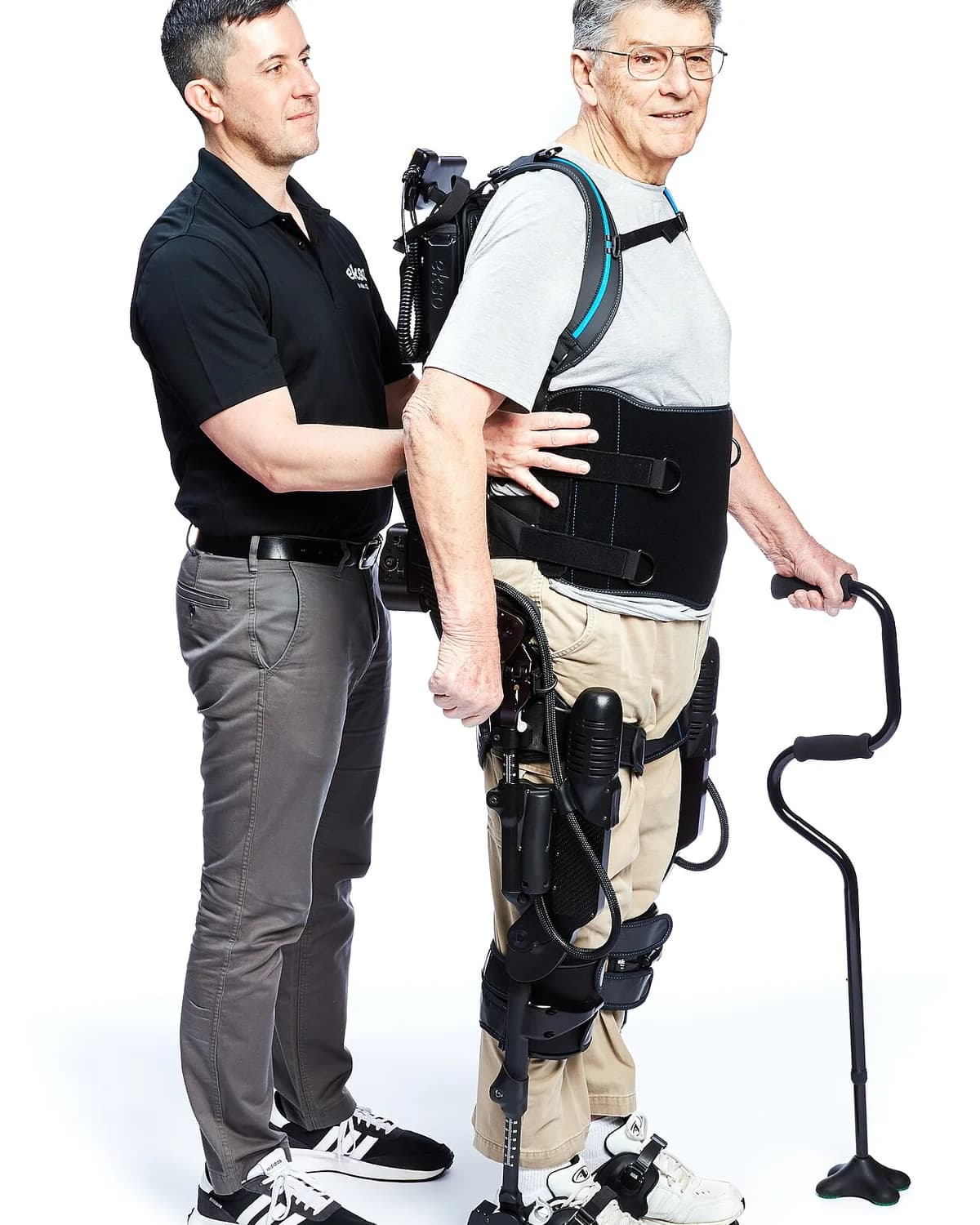
Productivity gains from exoskeletons are highly context-dependent. SafeBoost provides 80 N assist force and 15 kg lift support, targeting hip extension during frequent lifting. H-WULF provides 30 kg lift support passively, with no battery or sensors. CLOi SuitBot offers 25 Nm assist torque and 30 kg lift support, with walking and standing assist modes. These specifications suggest different use cases: SafeBoost for dynamic lifting, H-WULF for sustained lifting support, and CLOi SuitBot for mobility assistance. However, no clinical or productivity outcomes are disclosed in the database. Buyers should conduct their own trials to measure impact.
For a broader view of available systems, see our logistics exoskeleton category page.
Regulatory and certification considerations
SafeBoost is certified to CE and complies with ISO 13482, which covers personal care robots. H-WULF is CE marked but does not disclose compliance with ISO 13482. CLOi SuitBot does not disclose certifications or standards. For procurement in regulated environments, lack of disclosed certification may require additional due diligence. ISO 13482 is relevant for safety and liability, and buyers should verify compliance directly with vendors.
Building the ROI model: a step-by-step approach
1. Quantify current injury costs: gather data on MSD incidents, days lost, and associated costs. 2. Estimate potential reduction: use published studies or pilot data, but note that no clinical claims are made here. 3. Calculate device costs: obtain quotes for purchase or subscription, including batteries, training and maintenance. 4. Model productivity changes: measure task times and fatigue in a pilot. 5. Perform sensitivity analysis: vary assumptions on injury reduction and productivity gains. 6. Include certification and compliance costs. 7. Consider regional availability and support. For a tailored discussion, contact our team.
Frequently asked questions
What is the typical payback period for a lower back exoskeleton?
Payback period varies widely and depends on injury cost savings and device cost. With only H-WULF disclosing a price (3,600 USD), a precise payback cannot be calculated without assumptions on injury reduction. Buyers should model scenarios using their own injury data.
Are active exoskeletons more cost-effective than passive ones?
Active exoskeletons like SafeBoost and CLOi SuitBot offer battery-powered assistance but incur battery replacement and charging costs. Passive devices like H-WULF have lower complexity but may offer less assist force. Cost-effectiveness depends on task requirements and total cost of ownership.
What certifications should I look for?
CE marking is essential for European markets. ISO 13482 compliance indicates safety for personal care robots. SafeBoost discloses both; H-WULF discloses CE only; CLOi SuitBot does not disclose certifications. Always verify with the vendor.
Next steps for procurement
To advance your evaluation, request detailed quotes and trial units from vendors. Use our SafeBoost product page, H-WULF product page and CLOi SuitBot product page for full specifications. For a side-by-side comparison, visit our compare tool. For inquiries, contact us.
 ExoSelect research