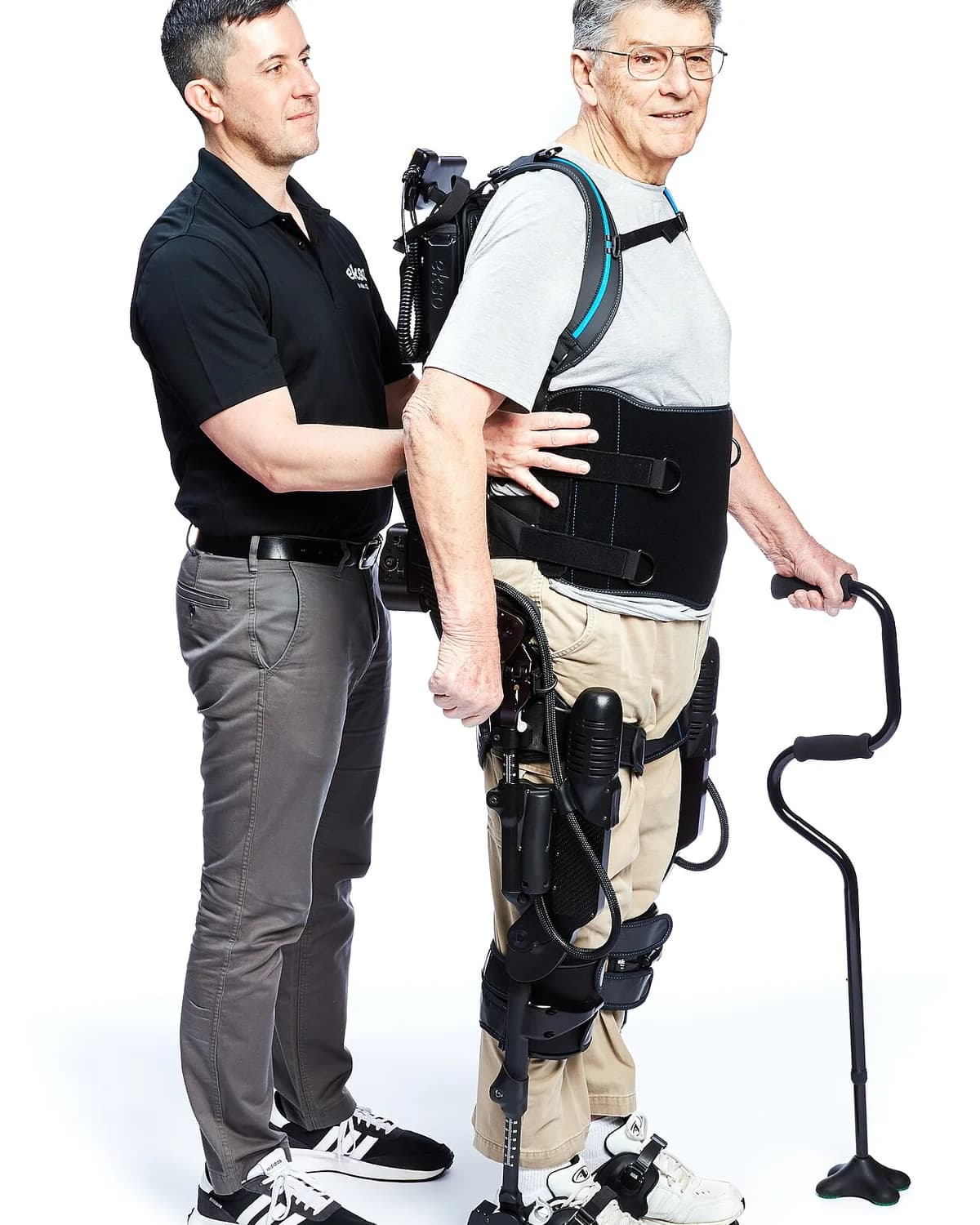
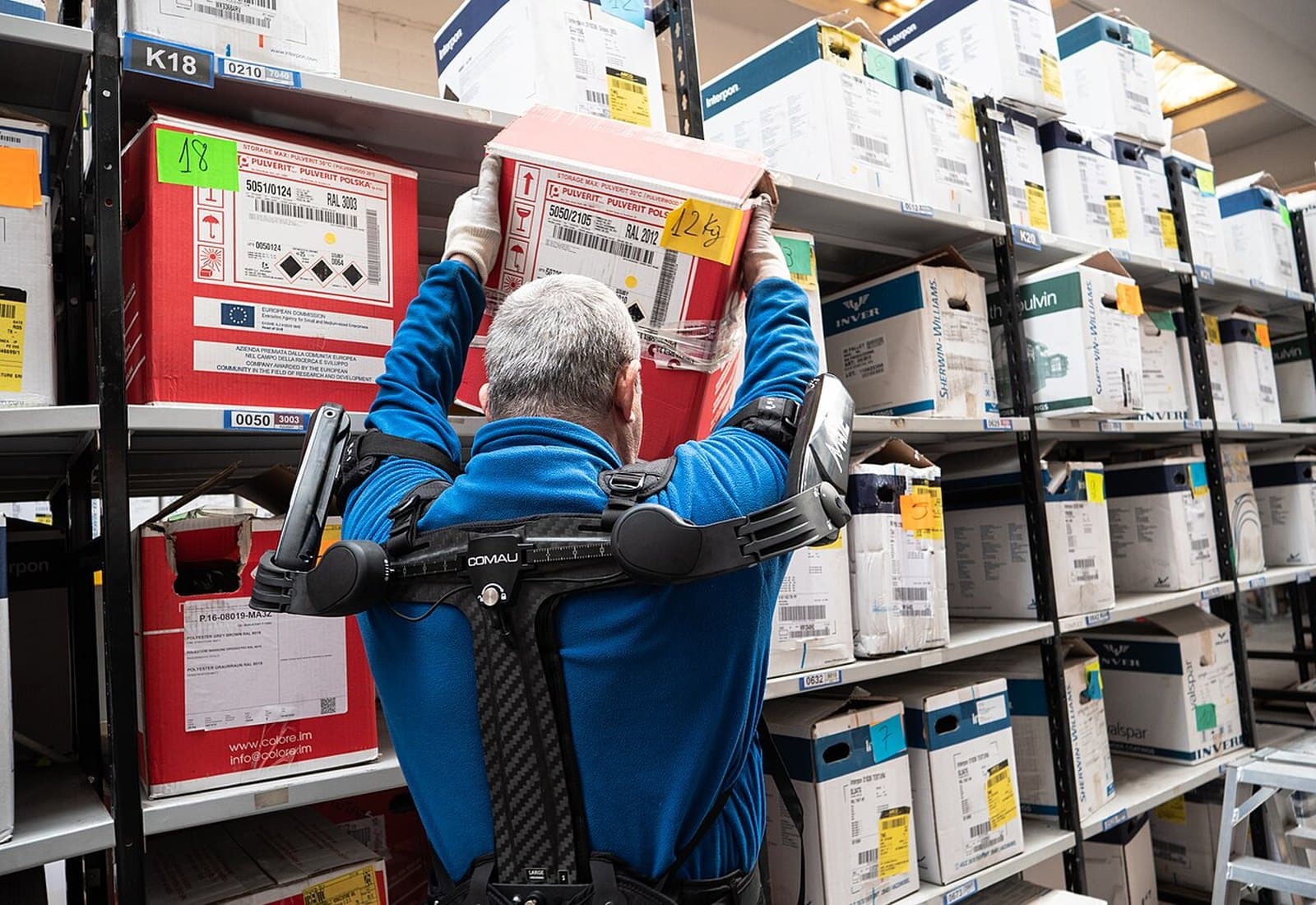
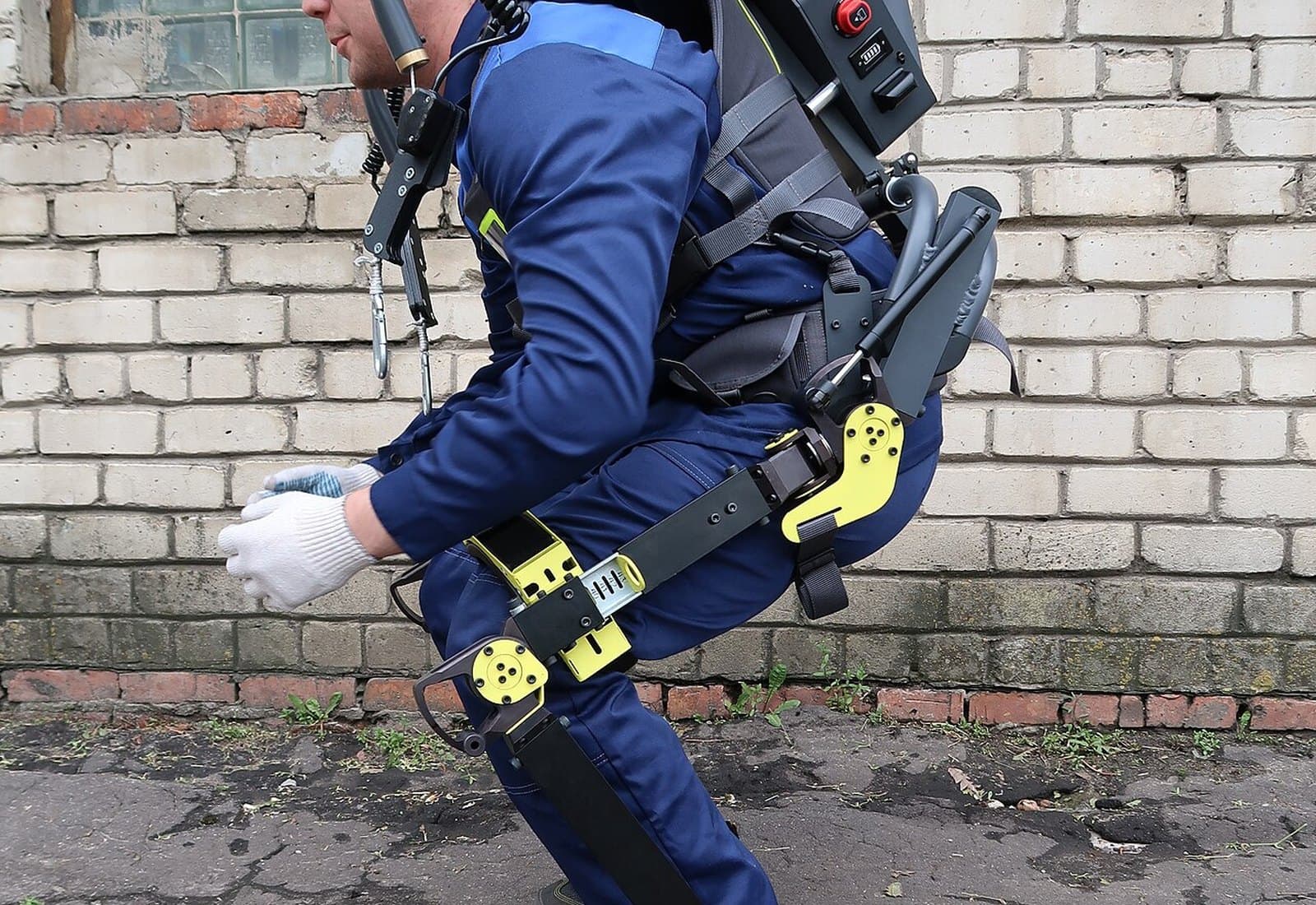
Quick answer. We rank passive and powered back-assist systems on published evidence, fit and parameter disclosure — not on marketing claims.
This ranking is deliberately narrow: systems whose primary function is lower-back assistance during bending, lifting or carrying in manufacturing and logistics. It is ordered by data transparency first, then by task fit. It is not a claim that one device is universally best.
1. Cray X — the most complete powered dossier
Cray X publishes weight, assistance envelope, runtime and connectivity in enough detail to build a pilot. The connected telemetry is useful for fleet management, but also creates data-governance questions. The device is heavier than passive options and needs charging infrastructure.
2. Apex 2 — the adoption-friendly passive option
Apex 2 weighs around 1.2 kg and uses a textile architecture. Its advantage is wear time: workers are more likely to keep a soft exosuit on for a full shift. The trade-off is a lower assistance ceiling and a task-specific benefit.
3. ExoHeaver — low cost, thin public data
ExoHeaver is a rugged passive system with a clear use case and a low indicative price. Its public dossier is incomplete, which is why it ranks below better-documented systems despite a plausible cost advantage. Request the technical file before a pilot.
4. H-WULF — regional value, limited international support
H-WULF targets repetitive lifting at a competitive price. English-language documentation and international service coverage are limited. It may be a strong regional option, but the procurement risk is higher.
How to use a ranking
Do not copy the order. Use it to build a shortlist, then weight the criteria for your task. A warehouse with high staff turnover may prioritise donning time over assistance ceiling. A heavy-machinery plant may prioritise load capacity and service response.
Record the weights before the pilot. A ranking that changes when the weights change is not evidence; it is a preference.
From evidence to a selection decision
An exoskeleton analysis is only useful if it changes what a buyer does next. The purpose of a dossier is not to declare a winner in the abstract, but to make the next conversation more specific: which task, which users, which environment, which constraints and which evidence is still missing.
The first step is to translate the task into a written requirement. Describe the posture, load, repetition, duration, reach height, floor surface and clothing. Add the practical constraints that decide adoption: donning time, heat, tool clearance, cleaning and storage. A system that performs well in a demonstration but interferes with the actual workflow will not be worn after the pilot team leaves.
The second step is to separate the system from the deployment. A device can be well engineered and still fail because the service network is thin, the training is inadequate or the spare-parts lead time is measured in months. Ask for the service model in writing, including response time, replacement units and the cost of consumables.
- Write the requirement as an outcome, not a product category.
- Record the intended use and the tasks that fall outside it.
- Check the certification scope against the actual deployment.
- Define pilot success before the first device is fitted.
- Put every missing value on a written question list.
Data quality should be scored explicitly. A dossier that publishes weight, runtime, user limits and certification scope is easier to pilot than one that leaves those values unknown. Missing values are not automatically disqualifying, but they are a cost: someone has to resolve them before a purchase order, and that work belongs in the project plan.
A documented path to the next conversation
Use the product index to narrow the field by category, drive type, weight, runtime and region. Treat the filters as a way to structure the question, not as a substitute for reading the parameter states. A system that disappears from a weight band because its weight is not disclosed is telling you something about the dossier.
Place the shortlisted systems side by side in the comparison tool and focus on the rows where they diverge. Differences are useful; similarities are useful too. If two systems are identical on the parameters that matter, the decision may turn on service, fit or commercial terms rather than engineering.
Check the manufacturer profile for verification level, product line and company documentation. A maker with a clear primary source for each claim is easier to audit than one whose brochure is the only available reference. Where a claim matters to safety, ask for the declaration of conformity and the technical file summary.
Finally, write the brief. Include the task, environment, user profile, deployment volume, region and budget range. A good brief lets the research desk separate sourced values from open questions, so the next conversation starts with evidence rather than a demonstration.
Training is part of the system, not an afterthought. Ask who delivers the first session, how competency is assessed and what happens when a new operator joins the team. A device that requires a specialist to fit it every morning has a different operating cost from one that a trained supervisor can deploy independently.
Keep a decision log beside the shortlist. Record what was verified, what was assumed and who owns each open question. When the recommendation goes to a capital committee, the log is often more persuasive than another product demonstration because it shows exactly which risks have been retired.
Send the requirement when the shortlist is ready. The response should make the gaps visible, not hide them behind a polished recommendation. That is the standard this index is built to support.
FAQ
What should buyers verify first?
Start with the intended use, the certification scope and the service model. Those three items decide whether a system can be deployed, not just demonstrated.
Can published data replace a pilot?
No. Published parameters support shortlisting, but fit, comfort, training quality and local service response require a structured evaluation with the intended users.
How does ExoSelect handle missing parameters?
Missing values are recorded as Unknown or Not disclosed and are never inferred from a similar product. Each dossier shows the date of the last update and links to its primary sources.
 ExoSelect research