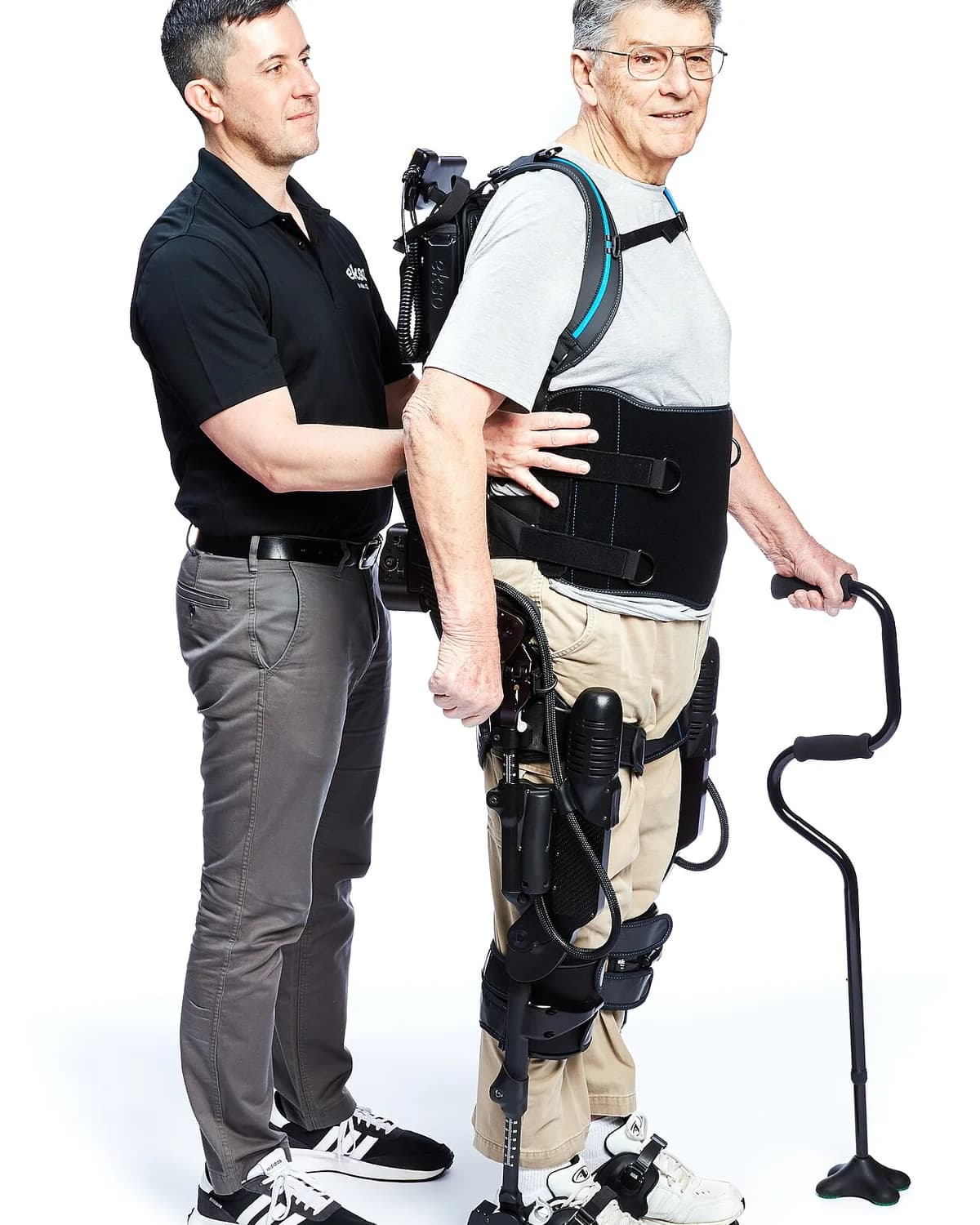
Quick answer: For defense load carriage, Lockheed Martin's ONYX is the only system in this dataset explicitly described as a powered lower-body exoskeleton for load carriage, with a 6.3 kg weight, 90 kg max user weight, 45 kg lift support and 8 h runtime. Sarcos Guardian XT is a teleoperated material-handling system with a 55 kg weight and 45 kg lift support, but it is not a wearable load-carriage exoskeleton. Neither system has a public price, certification list or assist-force figure, so a comparison must be built on disclosed specs and programme constraints, not marketing claims.
What the data actually compares
The search intent is commercial: buyers want to know which defense exoskeleton to shortlist for load carriage. The honest answer is that this dataset contains only one system built for that task — ONYX — and one adjacent system, Guardian XT, that handles heavy material remotely rather than augmenting a dismounted soldier. The industrial systems Cray X, Skelex 360 and Apex 2 appear in the database but are not defense load-carriage products; they are useful only as benchmark references for weight, assist force and cost transparency.
ONYX is listed as a Lockheed Martin defense programme, active drive, 2 degrees of freedom, aluminium and composite construction, adjustable sizing, 45 kg lift support and lithium-ion battery with 8 h runtime and swappable packs. Guardian XT is a Sarcos enterprise programme, active, 14 DOF, 55 kg, aluminium and steel, 45 kg lift support, teleoperation and motion mapping, tetherless, North America only. Those are the only defense rows.
Comparison table: disclosed defense specs
| Parameter | ONYX (Lockheed Martin) | Guardian XT (Sarcos) |
|---|
| Category | Defense | Defense |
| Drive | Active | Active |
| Weight | 6.3 kg | 55 kg |
| Max user weight | 90 kg | Not applicable (mobile base) |
| Degrees of freedom | 2 | 14 |
| Lift support | 45 kg | 45 kg |
| Battery type | Lithium-ion | Lithium-ion |
| Runtime | 8 h | Unknown |
| Swappable battery | Yes | Yes |
| Control modes | Powered load-carriage assistance | Teleoperation, motion mapping |
| Sensors | Unknown | Stereo cameras, force feedback, joint encoders |
| Connectivity | Unknown | Tetherless teleoperation |
| Availability | Defense programme | Enterprise programme |
| Regions | North America | North America |
| Price | Undisclosed | Undisclosed |
| Certifications | Unknown | Unknown |
Source basis: ExoSelect database records for ONYX and Guardian XT, compiled from manufacturer programme information. Neither maker publishes a commercial datasheet with certification or assist-force figures.
Key takeaways
- ONYX is the only system in this dataset described as a powered lower-body exoskeleton for load carriage; Guardian XT is a teleoperated material-handling platform, not a wearable.
- Both list 45 kg lift support, but ONYX achieves it at 6.3 kg system weight versus 55 kg for Guardian XT — a different use case, not a better one.
- ONYX discloses 8 h runtime and 90 kg max user weight; Guardian XT runtime, assist force and certification are unknown.
- No public price exists for either defense system; both are programme-based and North America only.
- Industrial benchmarks in the same database (Cray X at 9,900 USD, Apex 2 at 1,195 USD) show what price transparency looks like — defense buyers do not get it.
The load-carriage gap: assist force is missing
The single most important number for load carriage is peak assist force or assist torque. Neither ONYX nor Guardian XT discloses it. ONYX lists lift support at 45 kg, but lift support is a structural rating, not the force the actuator applies to the wearer. A 45 kg lift-support figure can coexist with a modest assist profile or an aggressive one; without the assist-force number, a programme office cannot model fatigue reduction or metabolic cost.
By contrast, the industrial rows in the same database show what disclosure looks like: Cray X lists 300 N assist force and 30 Nm assist torque; Apex 2 lists 220 N and 22 Nm; Skelex 360 lists 70 N and 12 Nm. A defense buyer comparing ONYX against those figures has no equivalent number. That is a procurement risk, not a marketing detail.
Runtime and battery logistics
ONYX discloses 8 h runtime and a swappable lithium-ion pack. Charge time is unknown. For a dismounted load-carriage programme, charge time determines how many spare packs a squad must carry and whether field charging is feasible. Guardian XT discloses swappable lithium-ion but no runtime and no charge time. The Cray X industrial row shows 8 h runtime and 2 h charge time — a useful reference for what a complete battery disclosure looks like, but it is not a defense system and should not be substituted into a defense requirement.
Both defense systems are North America only. European defense buyers have no disclosed route to either platform through this dataset.
What the datasheet doesn't tell you
Peak assist force and torque (ONYX, Guardian XT): unknown for both. Without these, load-carriage performance cannot be compared to industrial benchmarks or modelled for fatigue. This is the first parameter to request in writing.
Certifications and standards (ONYX, Guardian XT): unknown for both. Defense programmes often rely on military-specific qualification rather than CE or ISO 13482, but the dataset does not name any standard. A buyer cannot assume CE marking or ISO 13482 compliance from the industrial rows; those apply to Cray X, Skelex 360 and Apex 2 only.
User height range (ONYX): unknown. Guardian XT is not applicable because it is a mobile base. For a wearable lower-body system, height range determines how much of a unit can be issued across a squad. ONYX lists adjustable sizing but no numeric range.
Warranty (both): unknown. Defense programmes typically negotiate sustainment contracts, but the absence of a disclosed warranty term means total cost of ownership cannot be estimated from public data.
Price (both): undisclosed. Guardian XT is an enterprise programme; ONYX is a defense programme. Neither has a list price. Any budget figure would be invented.
Sensor suite and connectivity (ONYX): unknown. Guardian XT discloses stereo cameras, force feedback and joint encoders with tetherless teleoperation. ONYX discloses neither, which matters if the programme requires data logging or integration with soldier systems.
Who should not choose this
Do not shortlist Guardian XT for dismounted load carriage. It is a 55 kg teleoperated mobile-base system with 14 DOF, stereo cameras and force feedback; it is designed for remote hazardous material handling, not for a soldier carrying a rucksack. A programme that needs a wearable lower-body exoskeleton should not treat Guardian XT as an alternative to ONYX just because both list 45 kg lift support.
Do not shortlist ONYX if your requirement includes a disclosed assist-force figure, a certification list or a public price. None exists in this dataset. If your procurement gate requires a documented assist torque or a named standard before a demonstration, ONYX cannot clear that gate on public data alone. And do not use the industrial rows — Cray X, Skelex 360, Apex 2 — as substitutes for a defense load-carriage requirement; they are different categories with different duty cycles and certification bases.
Industrial benchmarks are not defense answers
The database includes three industrial systems with far higher completeness scores: Cray X at 96, Skelex 360 at 95 and Apex 2 at 94, versus 56 for ONYX and 61 for Guardian XT. That gap is the story. Industrial buyers can compare assist force, torque, certification, warranty and price. Defense buyers cannot. A procurement team that wants to understand what a complete load-carriage datasheet should contain can use the ExoSelect comparison tool to see the industrial rows side by side, then request the same fields from Lockheed Martin and Sarcos.
For category context, see the defense exoskeleton category page. For a documented parameter request, use the ExoSelect inquiry desk.
FAQ
Is ONYX a load-carriage exoskeleton?
Yes. The database describes ONYX as a powered lower-body exoskeleton developed to support load carriage and reduce fatigue, with 45 kg lift support, 6.3 kg system weight and 8 h runtime.
Can Guardian XT be used for load carriage?
Not as a wearable. Guardian XT is a teleoperated dexterous robotic system on a mobile base, 55 kg, 14 DOF, for hazardous and remote material handling. It lists 45 kg lift support but is not a lower-body wearable.
What is the price of a defense exoskeleton?
Undisclosed for both ONYX and Guardian XT. Both are programme-based systems with no public list price. Any figure quoted without a manufacturer document should be treated as unverified.
Next step
Request the peak assist force and torque figures for ONYX in writing from Lockheed Martin, and ask Sarcos to confirm whether Guardian XT has any wearable load-carriage configuration. Then compare the returned documents against the Cray X datasheet, which discloses 300 N assist force, 30 Nm torque, CE and ISO 13482 — not because Cray X is a defense system, but because it shows the disclosure standard a defense programme should demand.
 ExoSelect research