Quick answer: Exoskeleton weight and wear time are directly linked: heavier powered systems like the 7.6 kg Cray X typically run 8 hours per battery, while lighter passive devices such as the 1.2 kg Apex 2 have no battery limit but rely on user tolerance. For procurement, match device weight to task duration and check battery swap logistics for active systems.
Exoskeleton weight and wear time are two of the most practical specifications for industrial buyers, because they determine whether a device will actually be worn for a full shift. Weight affects fatigue and acceptance, while wear time is governed by battery capacity in active systems and by physical tolerance in passive ones. This FAQ analyses the available data from five industrial exoskeletons to help procurement and engineering teams specify realistically.
Key takeaways
- Active exoskeletons like the Cray X (7.6 kg) have a defined battery life of 8 hours and hot-swappable batteries, while passive devices such as the Skelex 360 (1.6 kg), MATE-XT (4.2 kg), Apex 2 (1.2 kg) and AIRFRAME (1.5 kg) have no battery constraint but depend on user comfort.
- Weight varies widely: from 1.2 kg for the Apex 2 to 7.6 kg for the Cray X, a more than six-fold difference that influences wear time and task suitability.
- Battery swap time and charging logistics are critical for active systems; the Cray X offers hot-swappable lithium-ion batteries with a 2-hour charge time.
- Passive exoskeletons have no declared wear-time limit in the supplied data; wear time is therefore unknown and must be assessed through user trials.
- For tasks lasting beyond 8 hours, plan for battery rotation or consider passive alternatives if the task allows.
How does exoskeleton weight affect wear time?
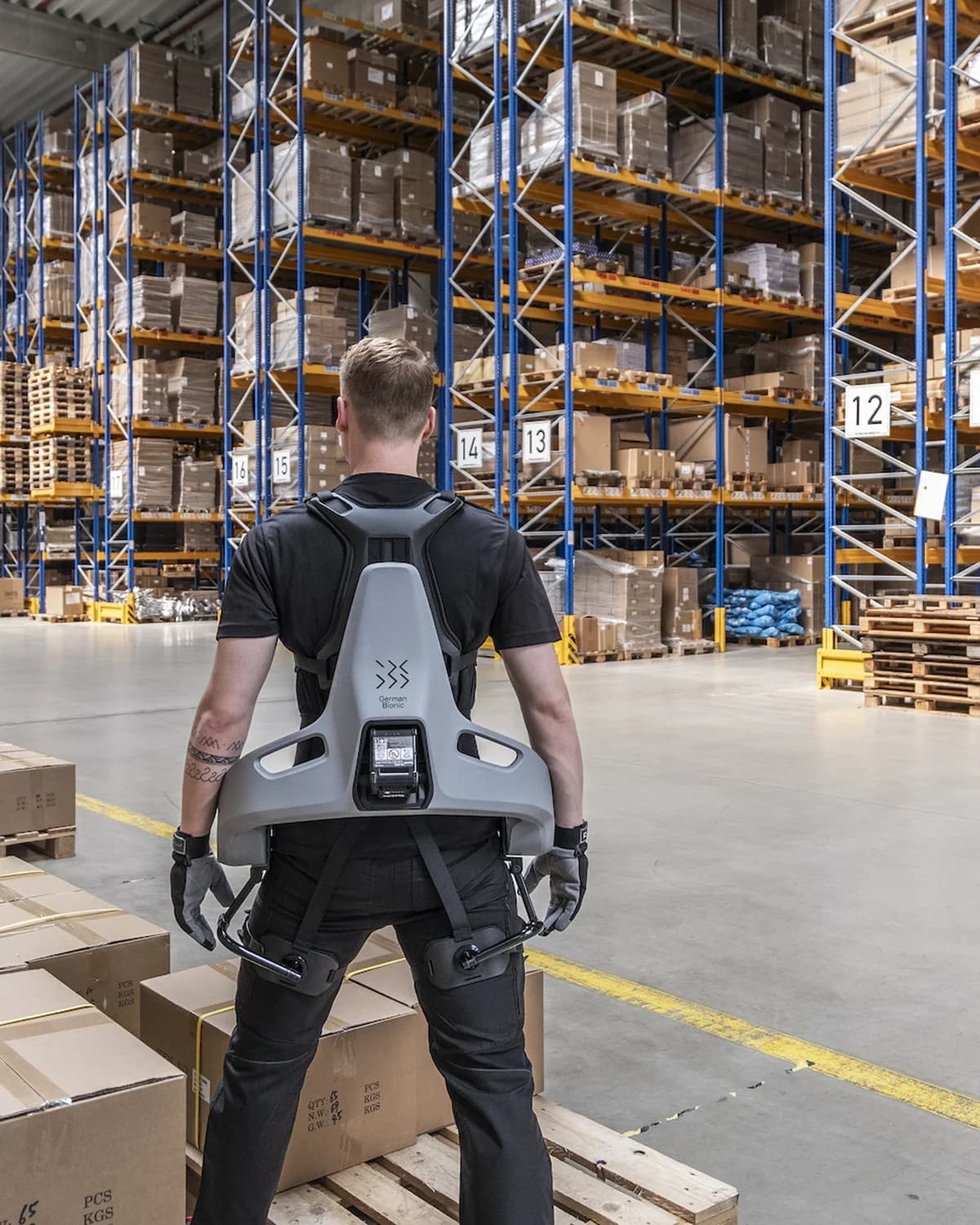
Weight is a primary driver of wear time because it contributes to user fatigue. In the supplied dataset, the lightest device is the Apex 2 at 1.2 kg, a passive exosuit from HeroWear. The heaviest is the Cray X at 7.6 kg, an active back exoskeleton from German Bionic. Between them sit the AIRFRAME (1.5 kg), Skelex 360 (1.6 kg) and MATE-XT (4.2 kg). For passive devices, wear time is not specified in the data; it is limited by the user's endurance and the task's physical demands. For active devices, wear time is additionally constrained by battery life. The Cray X specifies 8 hours of battery life, which aligns with a typical shift, but heavier weight may reduce user willingness to wear it continuously. Procurement teams should consider that a heavier device may require more frequent breaks or shorter wear periods, even if the battery lasts 8 hours.
What are the battery and wear-time specifications of active exoskeletons?
Only one active exoskeleton is included in the supplied data: the Cray X from German Bionic. It uses a lithium-ion battery that is hot-swappable, with a stated battery life of 8 hours and a charge time of 2 hours. Hot-swapping means a depleted battery can be replaced without powering down the device, potentially extending wear time beyond 8 hours if spare batteries are available. No other active devices are in the dataset, so comparisons are limited. Buyers considering active systems should verify battery life and swap logistics for their specific shift patterns. For the Cray X, the 8-hour battery life covers a standard shift, but double shifts would require at least one battery swap. The 2-hour charge time implies that a spare battery can be recharged within a break period.
How do passive exoskeletons compare on weight and wear time?
Passive exoskeletons do not rely on batteries, so their wear time is not limited by power. However, the supplied data does not specify wear-time limits for any passive device. Weight becomes the main proxy for potential wear duration: lighter devices are generally less fatiguing. The Apex 2 (1.2 kg) and AIRFRAME (1.5 kg) are the lightest, followed by the Skelex 360 (1.6 kg) and MATE-XT (4.2 kg). The MATE-XT is notably heavier than the other passive devices, which may affect comfort over long periods. None of the passive devices list a battery, so wear time is effectively unknown from the data and should be evaluated in user trials. Procurement should request wear-time data from makers or conduct own trials, as the database does not disclose this information.
Comparison table: weight and wear-time specifications
| Model | Maker | Drive | Weight | Battery life | Battery type | Swappable | Charge time |
|---|
| Cray X | German Bionic | Active | 7.6 kg | 8 h | Lithium-ion | Yes | 2 h |
| Skelex 360 | Skelex | Passive | 1.6 kg | Not applicable | Not applicable | Not applicable | Not applicable |
| MATE-XT | Comau | Passive | 4.2 kg | Not applicable | Not applicable | Not applicable | Not applicable |
| Apex 2 | HeroWear | Passive | 1.2 kg | Not applicable | Not applicable | Not applicable | Not applicable |
| AIRFRAME | Levitate Technologies | Passive | 1.5 kg | Not applicable | Not applicable | Not applicable | Not applicable |
Note: “Not applicable” indicates that the parameter is not relevant for passive devices. For passive devices, wear time is not disclosed in the supplied data.
What should procurement teams ask about weight and wear time?
When evaluating exoskeletons, procurement should ask: What is the device weight, and how does it compare to the task's duration? For active systems, what is the battery life, and are batteries hot-swappable? What is the charge time, and how many spare batteries are needed for a full shift? For passive systems, what wear-time data does the maker provide, and can trials be conducted? The Cray X, for example, offers hot-swappable batteries and an 8-hour life, but its 7.6 kg weight may be a barrier for some users. The Apex 2, at 1.2 kg, is lightweight but passive, so its wear time depends on user tolerance. Buyers should also consider the availability of spare batteries and charging infrastructure. The comparison tool can help shortlist devices by weight and battery specifications.
How can buyers verify wear-time claims?
The supplied data provides battery life for the Cray X only. For passive devices, wear time is not disclosed. Buyers should request documented wear-time studies or conduct supervised trials. The inquiry form can be used to request additional information from makers. It is important not to assume wear time from weight alone; while lighter devices may be more comfortable, actual wear time depends on task, user fitness and device design. For active devices, battery life is a hard limit, but user fatigue may reduce effective wear time. Procurement should plan for battery rotation and user breaks accordingly. The industrial exoskeleton category page lists devices with available data.
FAQ
Does a heavier exoskeleton always mean shorter wear time?
Not always, but weight contributes to fatigue. The Cray X at 7.6 kg has an 8-hour battery, but users may need breaks. Lighter passive devices like the Apex 2 (1.2 kg) have no battery limit, but wear time is not specified.
Can I wear a passive exoskeleton for a full 8-hour shift?
The supplied data does not specify wear-time limits for passive exoskeletons. Wear time depends on user comfort and task demands. Trials are recommended.
What is the battery life of the Cray X, and can it be extended?
The Cray X has an 8-hour battery life and hot-swappable lithium-ion batteries, so wear time can be extended with spare batteries. Charge time is 2 hours.
For more detailed specifications, see the product pages for Cray X, Skelex 360, MATE-XT, Apex 2 and AIRFRAME.
 ExoSelect research