Quick answer
Medical exoskeleton prices are generally not disclosed by manufacturers, and no list price is published for the Atalante X from Wandercraft. Buyers should expect a capital cost driven by active actuation, clinical certification and service contracts, and must request a formal quotation through an inquiry rather than relying on public figures. The total cost of ownership includes training, maintenance and battery replacement, which are often quoted separately.
For procurement and engineering teams, the question “how much does an exoskeleton cost” cannot be answered with a single number. The database shows that none of the leading medical systems—Atalante X, EksoNR, HAL Lower Limb, Indego or ExoMotus M4—publishes a price from figure. What can be compared are the specifications that drive cost: weight, degrees of freedom, battery life, certifications and clinical evidence. This spotlight explains how to structure a budget conversation and what to ask suppliers.
Why medical exoskeleton prices are not public
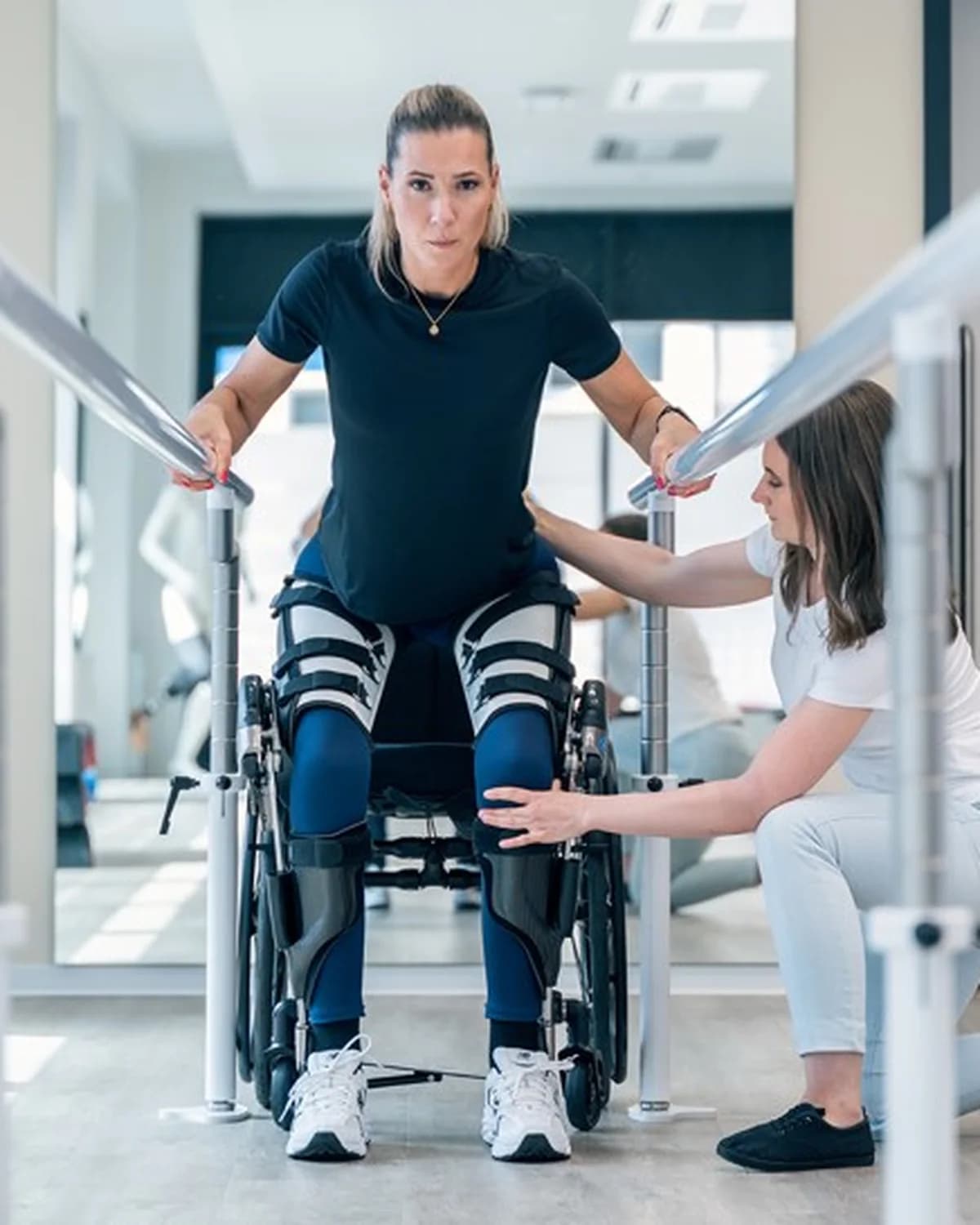
Medical exoskeletons are regulated devices sold through clinical channels. Pricing depends on configuration, region, service level and whether the purchase includes a treatment programme. Cyberdyne, for example, lists HAL Lower Limb availability as “lease or treatment programme”, which shifts cost from capital to operating expense. Wandercraft lists Atalante X as “available on inquiry” with lead time “contact maker”. Ekso Bionics quotes a lead time of 8–12 weeks for EksoNR but no price. This opacity is normal in capital medical equipment and means buyers must run a structured request for quotation.
Key takeaways
- No public price is disclosed for Atalante X, EksoNR, HAL Lower Limb, Indego or ExoMotus M4 in the supplied database.
- Active systems with higher degrees of freedom and self-balancing control, such as Atalante X with 12 DoF, typically sit at the higher end of the capital range.
- Certification scope matters: Atalante X carries CE medical and cites IEC 60601-1 and ISO 13482; EksoNR carries FDA and CE.
- Battery and service terms affect total cost of ownership; Atalante X has a 4 h battery life, 3 h charge time and swappable packs.
- Always request a formal quotation and clarify what is included: training, warranty, spare parts and software licences.
What drives the price of a medical exoskeleton
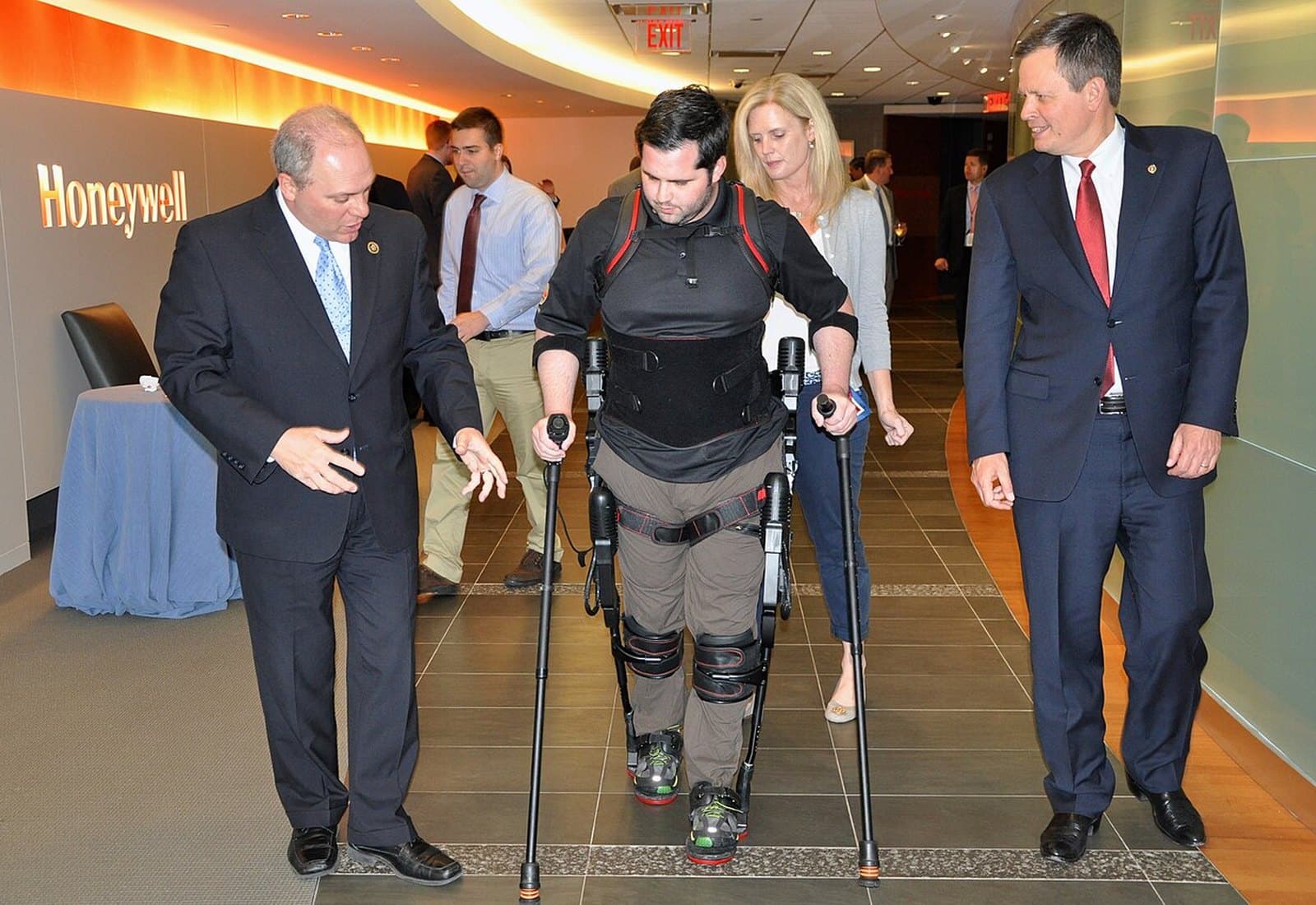
Cost is a function of engineering complexity and regulatory burden. The Atalante X is a self-balancing robotic exoskeleton for overground gait rehabilitation, built from aluminium and carbon fibre, weighing 65 kg and offering 12 degrees of freedom. Self-balancing control requires force plates, joint encoders and IMUs, all listed in its sensor set. By contrast, the EksoNR has 4 degrees of freedom, weighs 23.6 kg and uses joint encoders, force sensors and inertial measurement units. More actuation and sensing generally means higher hardware cost, but the database does not disclose prices, so buyers should not infer a ranking from specifications alone.
Regulatory certification is another cost driver. Atalante X lists CE medical, IEC 60601-1 and ISO 13482. EksoNR lists FDA and CE plus IEC 60601-1 and IEC 60601-1-2. HAL Lower Limb lists CE medical and ISO 13485. Indego lists FDA and CE. ExoMotus M4 lists NMPA and CE. Each certification regime carries different testing and quality-system costs, which are reflected in the commercial offer rather than a public price list.
Specification comparison of five medical exoskeletons
The table below uses only the supplied database fields. Price is omitted because it is not disclosed for any system.
| System | Maker | Drive | Weight | Degrees of freedom | Battery life | Certifications | Availability |
|---|
| Atalante X | Wandercraft | Active | 65 kg | 12 | 4 h | CE medical | Available on inquiry |
| EksoNR | Ekso Bionics | Active | 23.6 kg | 4 | 4 h | FDA, CE | Available on inquiry |
| HAL Lower Limb | Cyberdyne | Hybrid | 17 kg | 2 | 3 h | CE medical, ISO 13485 | Lease or treatment programme |
| Indego | Parker Hannifin | Active | 12.3 kg | 4 | 4 h | FDA, CE | Available on inquiry |
| ExoMotus M4 | Fourier Intelligence | Active | 23.5 kg | 4 | 3 h | NMPA, CE | Available on inquiry |
For a side-by-side view of additional parameters, use the comparison tool. The medical exoskeleton category lists further systems and their disclosed specifications.
Atalante X in cost context
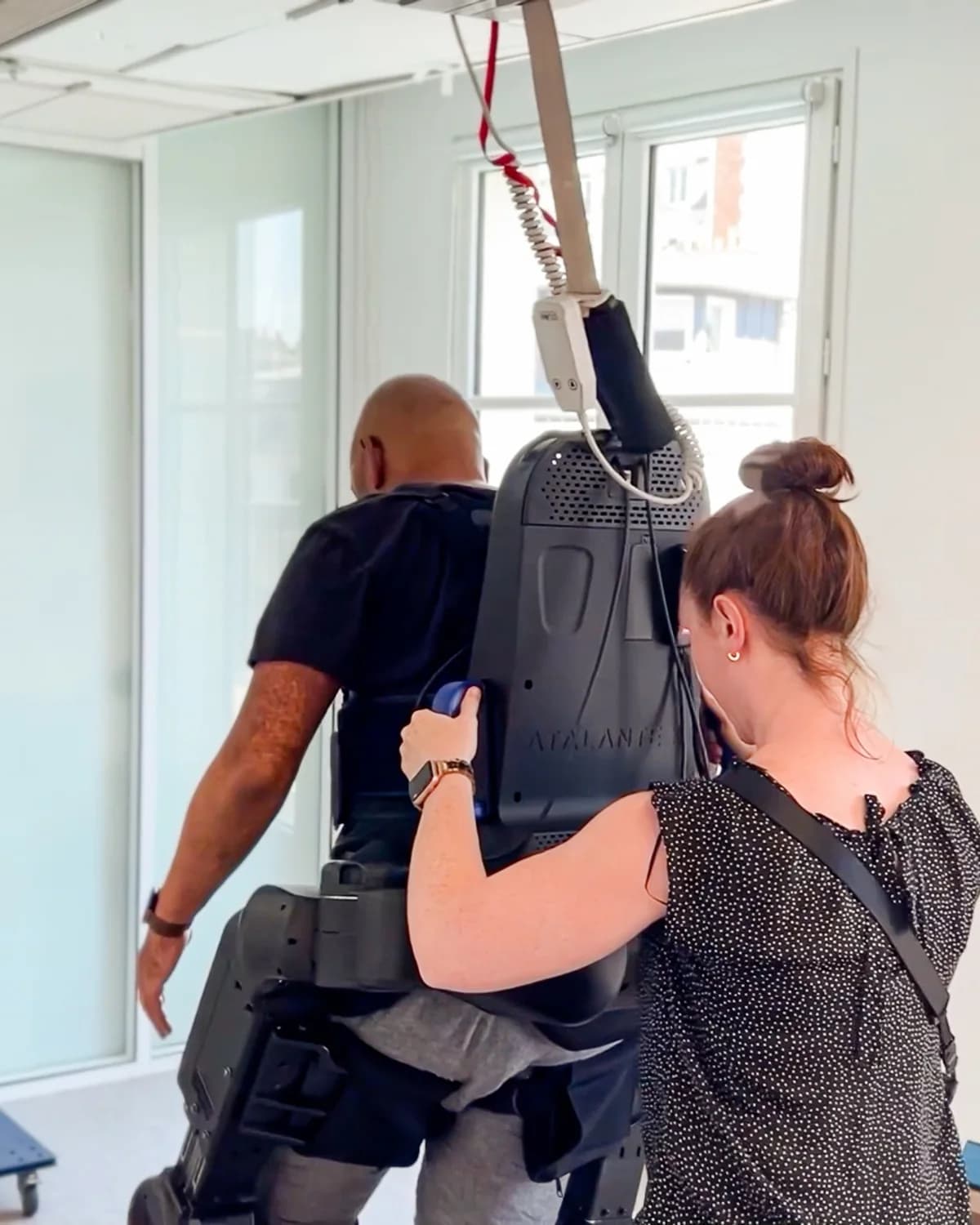
Atalante X is a self-balancing system with 12 degrees of freedom, a 65 kg frame and a user weight limit of 100 kg. It supports level ground and slopes but not stairs. Its battery is lithium-ion with 4 h life, 3 h charge time and swappable packs. Connectivity is a clinical dashboard, and the warranty is 12 months. Clinical evidence is described as clinical studies in neurological rehabilitation. These attributes define a high-complexity rehabilitation platform. Because Wandercraft does not disclose a price, procurement should request a quotation that itemises the base unit, therapist training, software access, spare batteries and service level. The lead time is listed as “contact maker”, so schedule risk should be assessed separately from price.
Compare this with the EksoNR, which has a published lead time of 8–12 weeks and a 40 Nm assist torque. The HAL Lower Limb is offered as a lease or treatment programme, which may reduce capital outlay but creates recurring fees. Indego is modular with hip, thigh and shank sizes and a 113 kg user weight limit. ExoMotus M4 is an adjustable-frame system with NMPA and CE certification. None of these data points translate into a price without a supplier quote.
Total cost of ownership beyond the capital price
Procurement teams should model costs that sit outside the purchase order. Training is required for therapist-operated systems such as EksoNR and Atalante X. Consumables and wear parts may include harnesses, cuffs and batteries; all five systems list swappable batteries, so spare packs are a likely line item. Service contracts and software subscriptions are not priced in the database. Warranty is 12 months for all five systems, so extended coverage should be negotiated. For a deeper treatment of these variables, see the related analysis on medical exoskeleton cost of ownership, and submit requirements through the inquiry form to receive structured quotes.
How to request and compare quotations
Build a request that asks for: base unit price, included training days, warranty extension cost, spare battery price, software licence terms, service response times and lead time. Ask whether the vendor offers lease or programme pricing, as Cyberdyne does for HAL Lower Limb. Ask for the certification documents relevant to your region: CE medical for Europe, FDA for the United States, NMPA for China. Confirm the patient population limits, such as the 100 kg user weight on Atalante X, EksoNR, HAL Lower Limb and ExoMotus M4, and 113 kg on Indego. Confirm height range: Atalante X supports 145–190 cm, EksoNR 152–193 cm, HAL Lower Limb 145–190 cm, Indego 155–195 cm and ExoMotus M4 155–190 cm. These constraints affect clinical eligibility and therefore the value of the investment.
FAQ
How much does the Atalante X cost?
The price is not disclosed in the supplied database. Wandercraft lists Atalante X as available on inquiry, so a formal quotation is required.
Are medical exoskeletons available to lease?
HAL Lower Limb from Cyberdyne lists availability as “lease or treatment programme”. The other systems in the database are listed as available on inquiry, which may include rental or lease options not captured in the data.
What is included in the warranty?
All five systems list a 12-month warranty. The database does not specify what parts or labour are covered, so buyers must confirm coverage in the contract.
For procurement context, see the Atalante X product page, the EksoNR page and the Indego page. Use the compare tool for specification-level analysis and the inquiry form to request pricing.
 ExoSelect research