Quick answer
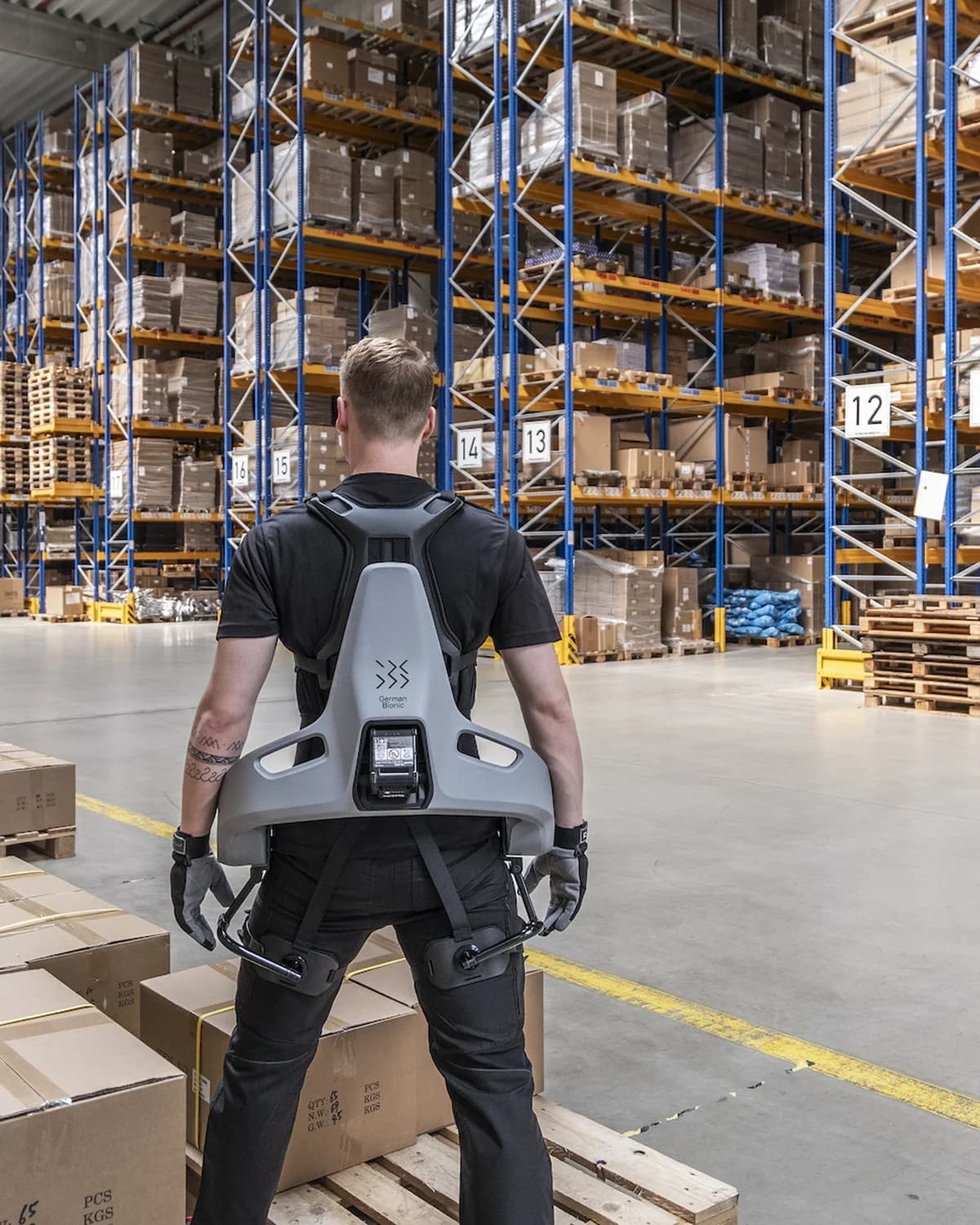
No system in the ExoSelect industrial database is a true full-body exoskeleton. The closest entry is Cray X from German Bionic, a powered back exoskeleton with 2 degrees of freedom, 300 N assist force and 30 kg lift support — it covers the torso and hips, not the arms or legs. Every other industrial system listed here (Skelex 360, MATE-XT, Apex 2, AIRFRAME) is a single-region device. Buyers searching for a full-body unit should treat the category as a specification target to be verified, not a product label to be trusted.
Key takeaways
- The database contains zero full-body exoskeletons; "full-body" claims in vendor marketing usually describe a multi-region or torso-plus-hip device.
- Cray X is the only active, powered, connected system in the set, at an indicative 9,900 USD with 6–10 week lead time.
- Warranty is undisclosed for Cray X and MATE-XT, and unknown for AIRFRAME — a real total-cost gap.
- Passive shoulder systems (Skelex 360, MATE-XT, AIRFRAME) are single-region and cannot substitute for whole-body support.
- ISO 13482 appears on Cray X, Skelex 360 and MATE-XT; Apex 2 and AIRFRAME list CE only, with standards unknown.
What "full-body" means in this dataset
Procurement teams often arrive with the phrase "full-body exoskeleton" from a trade-show brochure or a tender template. The database does not support that label for any industrial product. Cray X, the most complete record at 96% completeness, is described as a powered back exoskeleton for lifting, carrying and forward-bending tasks. Its two degrees of freedom sit at the hip and torso. It does not actuate the shoulder, elbow, knee or ankle.
The passive systems are narrower still. Skelex 360 and MATE-XT are shoulder exoskeletons with 0 degrees of freedom and 5 kg lift support. AIRFRAME is a shoulder-support device. Apex 2 is a hip-extension exosuit. If a tender specifies full-body coverage, none of these bids should be scored as compliant without a documented scope statement from the maker.
Comparison table: supplied specifications only
| System | Maker | Drive | Weight | Assist force | Lift support | DoF | Price from | Certifications | Warranty |
|---|
| Cray X | German Bionic | Active | 7.6 kg | 300 N | 30 kg | 2 | 9,900 USD | CE, ISO 13482 | Undisclosed |
| Skelex 360 | Skelex | Passive | 1.6 kg | 70 N | 5 kg | 0 | 4,900 USD | CE | 24 months |
| MATE-XT | Comau | Passive | 4.2 kg | 100 N | 5 kg | 0 | 5,900 USD | CE, ISO 13482 | Undisclosed |
| Apex 2 | HeroWear | Passive | 1.2 kg | 220 N | 20 kg | 0 | 1,195 USD | CE | 12 months |
| AIRFRAME | Levitate Technologies | Passive | 1.5 kg | 60 N | 5 kg | 0 | 2,950 USD | CE | Unknown |
Read the table by region, not by headline number. Apex 2's 220 N and 20 kg lift support apply to hip extension during bending, not to overhead work. Cray X's 300 N is torso assistance. Comparing assist force across regions is meaningless; use the comparison tool to keep like-for-like tasks aligned.
The trade-off between power and portability
Cray X weighs 7.6 kg and needs an 8-hour lithium-ion battery with a 2-hour charge time and hot-swap capability. That is the price of 300 N of active assistance and 2 degrees of freedom. The passive systems weigh between 1.2 kg and 4.2 kg and need no charging at all, but deliver fixed mechanical support and no telemetry.
For a procurement team, this is a shift-design decision. A powered back exoskeleton requires battery logistics, charging infrastructure and a fleet dashboard (Cray Visor app, cloud fleet dashboard, Bluetooth). A passive exosuit requires none of that but also gives you no usage data. Neither is a full-body solution, and the powered option is the only one where a data-governance conversation is even necessary.
What the datasheet doesn't tell you
Three gaps matter most in a full-body procurement exercise.
Warranty on the flagship powered unit. Cray X warranty is listed as undisclosed. At an indicative 9,900 USD per unit, an undisclosed warranty means the buyer cannot model years two through five of ownership. Ask German Bionic for the warranty term, what is excluded (battery, frame, textile), and whether fleet service contracts replace or extend it.
Standards on the low-cost passive devices. Apex 2 lists CE but standards referenced are unknown. AIRFRAME lists CE with standards unknown and clinical evidence unknown. CE alone does not tell a safety manager which harmonised standard was applied. For a procurement file, request the declaration of conformity and the standard list before sign-off.
Walking speed and stair/slope capability. These are marked not applicable across the dataset, including Cray X. That is a real constraint for any buyer imagining a full-body device that follows a worker across a mezzanine or ramp. The data does not support that use case, and no vendor document in this record claims it.
Also missing: clinical evidence for Skelex 360 and AIRFRAME is unknown, and warranty for MATE-XT is undisclosed. None of these gaps can be filled by inference.
Who should not choose this
Do not buy Cray X, or any system in this set, if your requirement is genuine whole-body assistance — arm, torso and leg actuation in one device. No product here meets that, and a procurement that awards on a "full-body" label will end up with a torso device and an unhappy workforce.
Do not choose Cray X if you operate in Asia-Pacific. The database lists its regions as Europe and North America only. MATE-XT is the only system here with stated Asia-Pacific availability.
Do not choose a passive shoulder system if the task is lifting from the floor. Skelex 360, MATE-XT and AIRFRAME are built for sustained arm elevation, with 5 kg lift support. For bending and lifting, Apex 2 at 20 kg lift support or Cray X at 30 kg is the defensible shortlist.
And do not choose any system here on price alone. Apex 2 at 1,195 USD is the cheapest entry, but its 12-month warranty and unknown standards list mean the lowest sticker price is not the lowest risk.
Compliance and regional notes
ISO 13482 is the personal-care-robot safety standard cited for Cray X, Skelex 360 and MATE-XT. Apex 2 and AIRFRAME do not list it. German Bionic also references EN 614-1 for Cray X, which is an ergonomic design standard rather than a robot safety standard — useful in an ergonomics business case, not a substitute for the safety file. Buyers should check the industrial category page for the current certification record before tender close.
FAQ
Is there a true full-body exoskeleton in the ExoSelect industrial database?
No. Cray X is the broadest-coverage system, with 2 degrees of freedom at the torso and hips, but it is a back exoskeleton, not a full-body device.
Which system has the longest warranty?
Skelex 360, at 24 months. Apex 2 is 12 months. Cray X and MATE-XT are undisclosed; AIRFRAME is unknown.
Can a passive exoskeleton replace a powered one for whole-body tasks?
Not on the supplied data. Passive systems here are single-region with 5–20 kg lift support and no telemetry. Cray X is the only active, connected option, at 300 N and 30 kg lift support.
Next step
Before you shortlist, request the warranty term and the declaration of conformity from German Bionic for Cray X, and the standards list from HeroWear for Apex 2. Then run the shortlist through the ExoSelect comparison tool or send the requirement to the selection desk for a documented gap check.
 ExoSelect research