Quick answer
No exoskeleton in this database is designed for nurse patient-handling; the five systems listed—EksoNR, HAL Lower Limb, Atalante X, Indego and ExoMotus M4—are therapist-supervised gait-training devices for neurorehabilitation patients. If you are a nurse or procurement officer looking to reduce manual lifting, these products do not match that intent; they are clinical capital equipment for stroke and spinal-cord-injury rehabilitation.
The search “exoskeleton for nurses” usually means one of two things: a device to protect nurses from lifting injuries, or a device nurses operate to rehabilitate patients. The database only contains the second category. Every system here is an active or hybrid lower-limb exoskeleton intended for use by a trained therapist with a patient, not a wearable assist for the nurse’s own body. That distinction drives the entire procurement decision.
Key takeaways
- All five systems are medical gait-training exoskeletons, not nurse-wearable lifting aids.
- Prices are undisclosed for every product; lease or treatment-programme models exist for HAL Lower Limb.
- Weight ranges from 12.3 kg (Indego) to 65 kg (Atalante X) — a critical difference for clinic storage and transport.
- Certifications vary: FDA and CE for EksoNR and Indego; CE medical and ISO 13485 for HAL; NMPA and CE for ExoMotus M4; CE medical only for Atalante X.
- Peak assist force and peak assist torque are undisclosed or unknown for most systems, limiting direct comparison.
What “exoskeleton for nurses” actually returns in this database
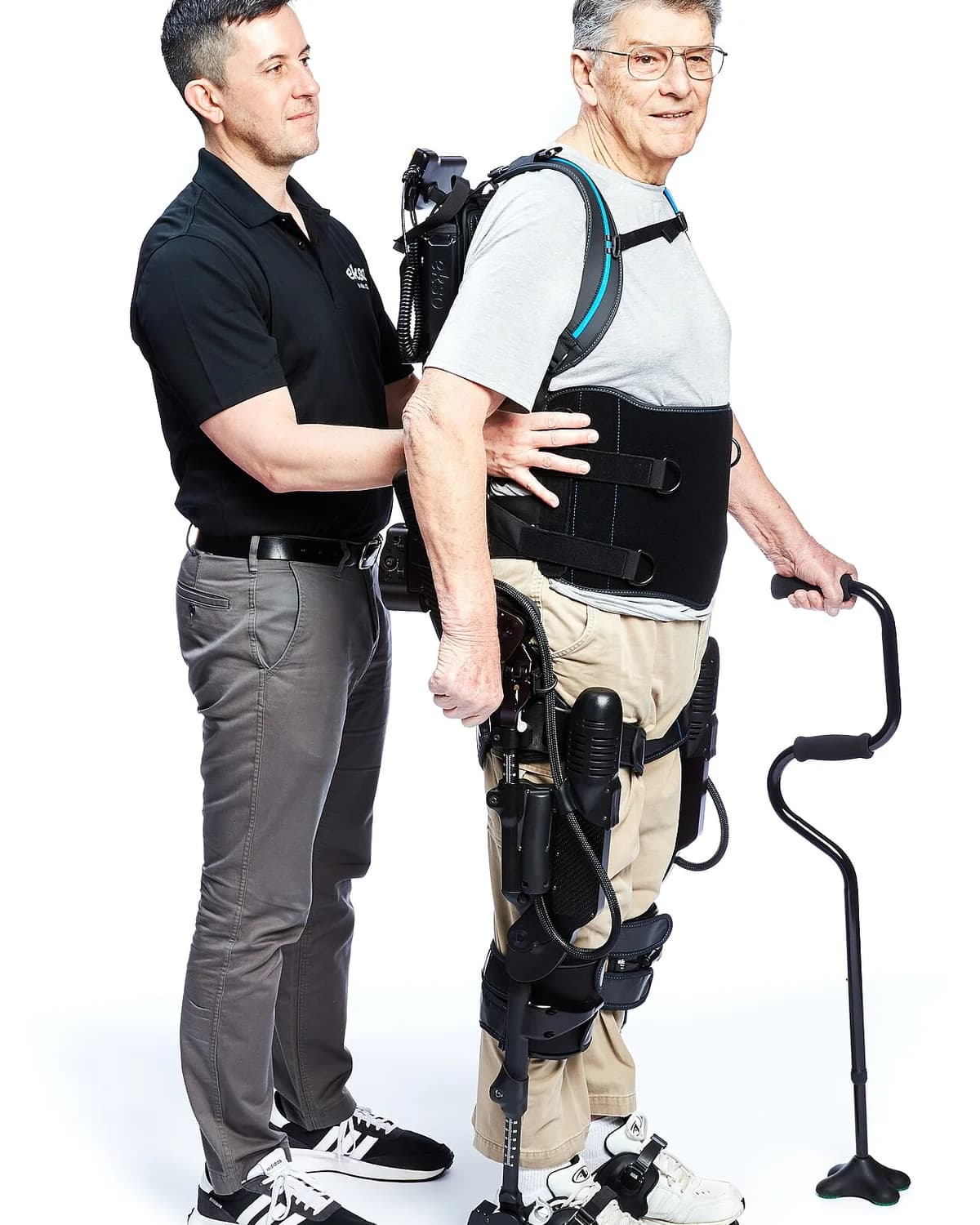
The five products are clinical rehabilitation tools. EksoNR (Ekso Bionics) is a therapist-supervised gait exoskeleton for inpatient and outpatient neurorehabilitation. HAL Lower Limb (Cyberdyne) reads bioelectric signals to support hip and knee movement and is often offered as a treatment or lease programme. Atalante X (Wandercraft) is a self-balancing overground gait-training robot. Indego (Parker Hannifin) is a modular lower-limb exoskeleton for clinical gait training and personal mobility. ExoMotus M4 (Fourier Intelligence) is a powered lower-limb exoskeleton for repeatable clinical gait training.
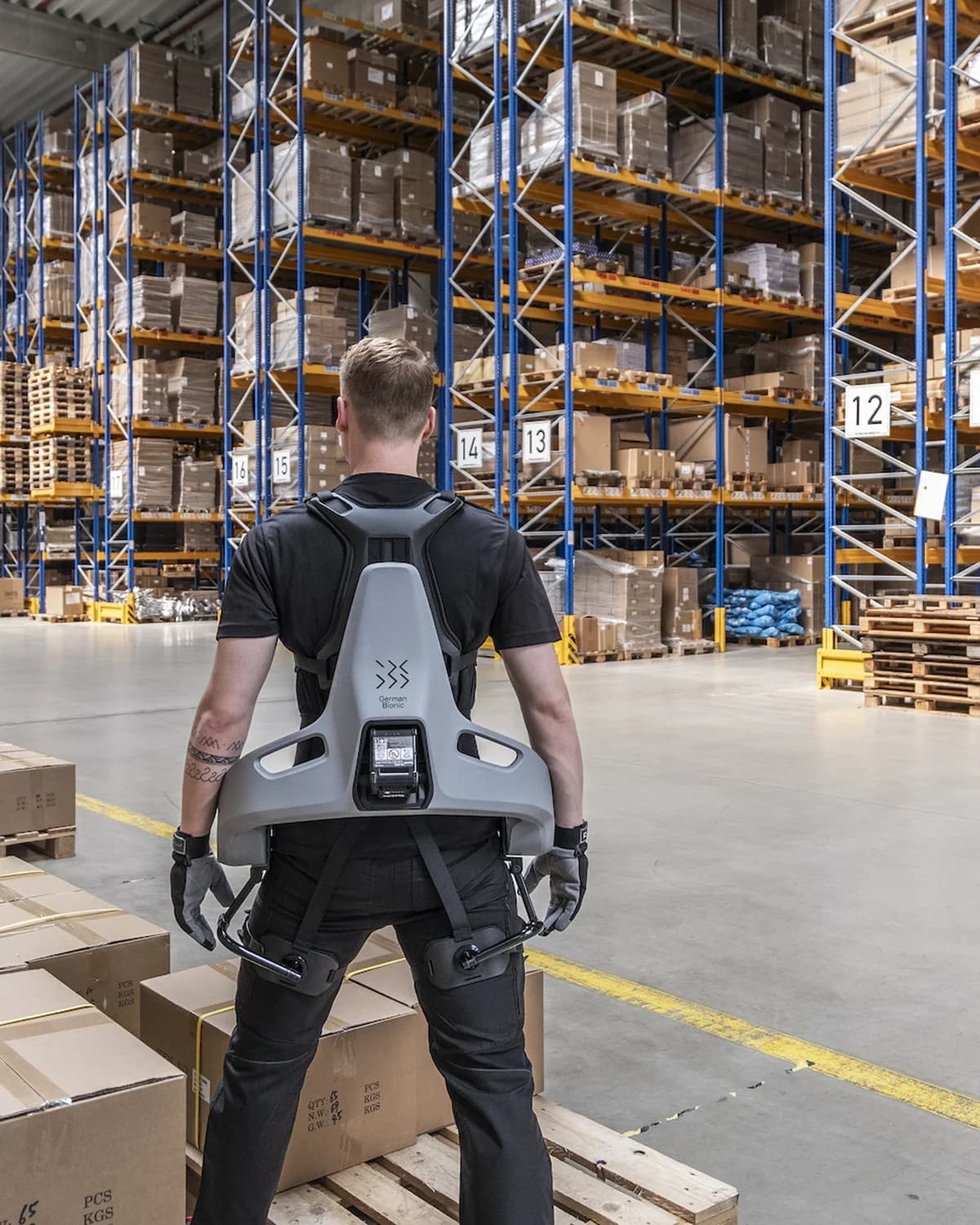
None of these is a back-assist or lift-assist exoskeleton for a nurse’s own wear. A hospital looking to reduce nurse musculoskeletal strain should not shortlist these products for that purpose. They are capital equipment for a rehabilitation gym or clinic, operated by physiotherapists and clinical staff.
Comparison table: documented specifications
| System | Maker | Drive | Weight | User weight max | Speed | Battery life | Certifications | Price |
|---|
| EksoNR | Ekso Bionics | Active | 23.6 kg | 100 kg | 1.1 km/h | 4 h | FDA, CE | Undisclosed |
| HAL Lower Limb | Cyberdyne | Hybrid | 17 kg | 100 kg | 1.5 km/h | 3 h | CE medical, ISO 13485 | Undisclosed |
| Atalante X | Wandercraft | Active | 65 kg | 100 kg | 2.5 km/h | 4 h | CE medical | Undisclosed |
| Indego | Parker Hannifin | Active | 12.3 kg | 113 kg | 2 km/h | 4 h | FDA, CE | Undisclosed |
| ExoMotus M4 | Fourier Intelligence | Active | 23.5 kg | 100 kg | 1.2 km/h | 3 h | NMPA, CE | Undisclosed |
All prices are undisclosed in the database. The table shows only supplied specifications; missing values are marked unknown or not applicable in the source data.
The deployment constraint a top-10 list ignores: who actually operates the device
These exoskeletons are not nurse-wearable. They are patient-worn devices that a therapist or trained clinician adjusts and supervises. EksoNR’s control modes are therapist-adjusted variable assistance, sit-to-stand and step initiation. HAL Lower Limb uses bioelectric signal control and autonomous gait mode, but clinical assessment is required. Atalante X offers self-balancing walk and therapist-guided movement. Indego provides intuitive movement and therapist-controlled gait. ExoMotus M4 is therapist-controlled with assisted gait.
For a nursing director, that means the device does not remove the nurse’s lifting burden; it adds a new clinical service line. The procurement question shifts from “will this protect my nurses?” to “do we have the therapist capacity, floor space and patient throughput to justify a gait-training programme?” That is a different business case, and one that most generic “exoskeleton for nurses” pages fail to make.
What the datasheet doesn't tell you
Peak assist force is undisclosed for all five systems. For a buyer comparing rehabilitation outcomes, assist force is a core performance parameter. Without it, you cannot compare EksoNR, HAL Lower Limb, Atalante X, Indego or ExoMotus M4 on the dimension that most directly affects gait support. You can only compare torque where supplied: EksoNR and HAL Lower Limb both list 40 Nm; Atalante X, Indego and ExoMotus M4 list peak assist torque as unknown.
Indicative price is undisclosed for every product. That is not a minor omission. Capital planning for a rehabilitation exoskeleton requires a total-cost view that includes training, service contracts and consumables. The database notes that EksoNR clinical configuration, training and service are quoted by the maker; HAL Lower Limb is often offered as a treatment or lease programme rather than a capital purchase; Atalante X is a capital purchase and service programme quoted by the maker; Indego pricing depends on regional reimbursement and configuration; ExoMotus M4 uses regional distributor pricing with training and service quoted separately. None of these gives a budget figure. A buyer must request a formal quote and clarify what is included.
Rated lift support is not applicable for four systems and 80 kg for Atalante X. That single disclosed value matters if patient transfer is part of the intended use, but the database does not state whether Atalante X’s 80 kg lift support is a patient-weight limit or a device-lifting capacity. The distinction is clinically and commercially significant, and it is not resolved in the supplied data.
Regional compliance differences that affect deployment
Certification is not uniform. EksoNR and Indego carry FDA and CE. HAL Lower Limb carries CE medical and ISO 13485. Atalante X carries CE medical only. ExoMotus M4 carries NMPA and CE. For a hospital group operating across regions, that means the shortlist changes by geography: an FDA-cleared device may not be available or cleared in every market, and a CE-only device may not satisfy a US procurement requirement. The database also lists regional availability: EksoNR in North America, Europe and Asia-Pacific; HAL Lower Limb in Japan, Europe and Asia-Pacific; Atalante X in Europe and North America; Indego in North America and Europe; ExoMotus M4 in Asia-Pacific, Europe and the Middle East. Lead times vary from 8–12 weeks for EksoNR to “contact maker” or “contact regional distributor” for others.
Who should not choose this
If your goal is to reduce nurse lifting injuries on a medical ward, do not choose any of these systems. They are not designed, certified or priced for that use. A back-assist or lift-assist exoskeleton is a different product category, and this database does not contain one for nursing. Buying a gait-training exoskeleton for a nursing unit would be a misapplication of capital and a clinical governance risk.
If you are a rehabilitation clinic with therapist capacity and a patient population that includes stroke or spinal-cord-injury gait training, the shortlist is credible. But even then, do not choose a system solely on weight or speed. The undisclosed assist force and price mean you must request documented parameters before comparing. For a lighter, modular option, Indego at 12.3 kg is the outlier; for a self-balancing overground system, Atalante X is the only one in this set with that control mode, but at 65 kg it is also the heaviest and least portable.
FAQ
Is there an exoskeleton designed specifically for nurses to wear?
Not in this database. All five systems are patient-worn gait-training exoskeletons operated by therapists, not nurse-wearable lifting aids.
Which exoskeleton is lightest for a clinic with limited storage?
Indego is listed at 12.3 kg, the lightest in this set. HAL Lower Limb is 17 kg; EksoNR and ExoMotus M4 are around 23.5 kg; Atalante X is 65 kg.
Can I get a price for these systems from the database?
No. Indicative price is undisclosed for all five. You must request a quote from the maker or regional distributor, and clarify whether training and service are included.
Next step
If you are evaluating a rehabilitation exoskeleton, start by comparing the documented specifications of EksoNR, Indego and Atalante X on our comparison tool. Then request the undisclosed peak assist force and a written price breakdown from each maker. For a structured shortlist, contact the ExoSelect selection desk and specify your region, patient population and therapist capacity. Browse the full medical exoskeleton category for context.
 ExoSelect research