Quick answer: Our database contains no passive rehabilitation exoskeleton suits; every medical system listed is active or hybrid. Buyers seeking a passive suit must therefore evaluate vendors against the same documented parameters used for active systems—weight, user weight limit, battery life (where applicable), certifications and clinical evidence—and demand written confirmation of any undisclosed specification before purchase.
This guide explains how to procure a passive rehabilitation suit when the market data is thin, using the five active and hybrid systems in our database as a benchmark for what a complete datasheet should contain. It is written for procurement and engineering teams who need to compare claims, not marketing brochures.
Key takeaways
- No passive rehabilitation suit appears in the ExoSelect medical database; all five listed systems are active or hybrid.
- Active systems disclose weight, height range, user weight, speed, degrees of freedom and battery life; passive suits often omit these.
- Peak assist force and peak assist torque are undisclosed or unknown for every system in the database—demand them in writing.
- Certification differs by region: FDA for EksoNR and Indego, CE medical for all five, NMPA for ExoMotus M4.
- Price is undisclosed for all five systems; lease or treatment programmes (HAL Lower Limb) change the total-cost model.
What “passive rehabilitation suit” means in this dataset
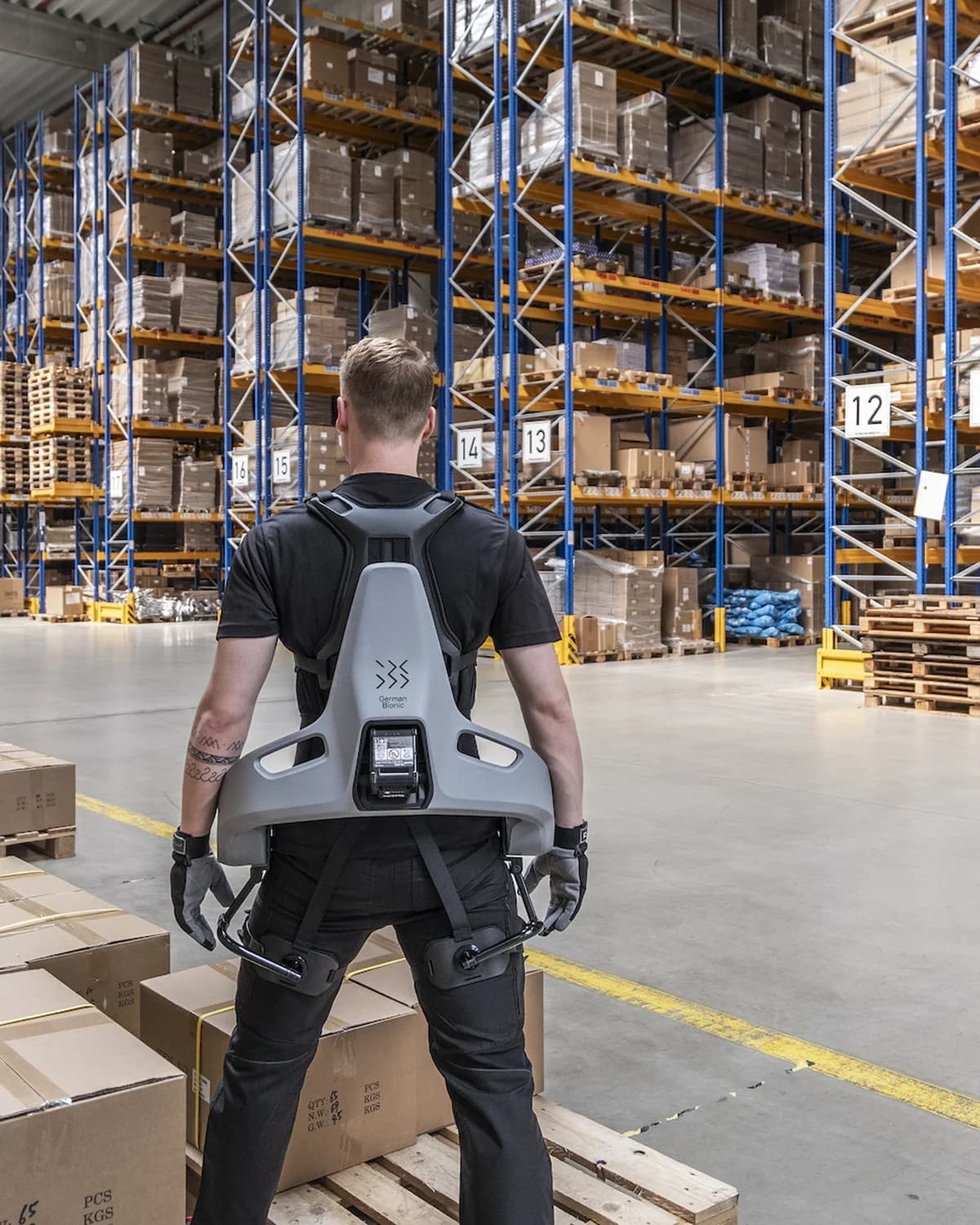
A passive exoskeleton uses springs, elastic bands or mechanical linkages to store and return energy without powered actuators. None of the five systems in the database fits that definition: EksoNR, Atalante X, Indego and ExoMotus M4 are active (powered), while HAL Lower Limb is hybrid, reading bioelectric signals to drive assistance. A buyer searching for a passive suit will not find a matching product record here, and any vendor claiming a passive rehabilitation suit should be asked to supply the same specification fields that active systems disclose.
Benchmark table: what a complete medical exoskeleton datasheet discloses
The table below uses only supplied specifications. It shows the parameters a passive suit vendor should be expected to document, even if the values differ.
| System | Drive | Weight | User weight | Speed | DOF | Battery life | Certifications |
|---|
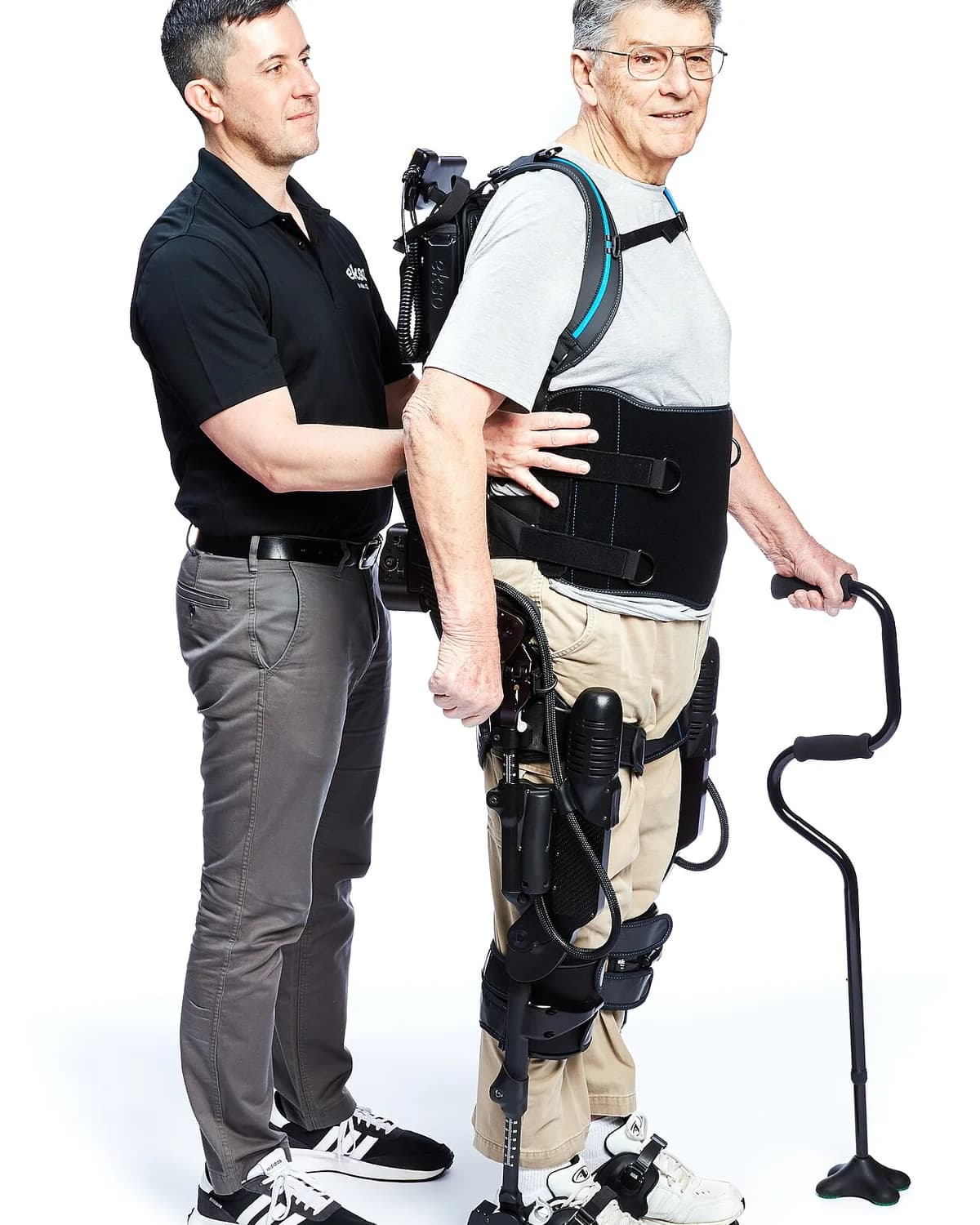
| EksoNR (Ekso Bionics) | Active | 23.6 kg | 100 kg | 1.1 km/h | 4 | 4 h | FDA, CE |
| HAL Lower Limb (Cyberdyne) | Hybrid | 17 kg | 100 kg | 1.5 km/h | 2 | 3 h | CE medical, ISO 13485 |
| Atalante X (Wandercraft) | Active | 65 kg | 100 kg | 2.5 km/h | 12 | 4 h | CE medical |
| Indego (Parker Hannifin) | Active | 12.3 kg | 113 kg | 2 km/h | 4 | 4 h | FDA, CE |
| ExoMotus M4 (Fourier Intelligence) | Active | 23.5 kg | 100 kg | 1.2 km/h | 4 | 3 h | NMPA, CE |
For a passive suit, battery life is not applicable, but weight, user weight limit, degrees of freedom and certifications remain essential. None of the database systems lists a passive drive, so no direct comparison is possible.
Deployment constraints the brochure will not mention
Three constraints matter more than the headline specifications. First, lead time: EksoNR quotes 8–12 weeks, while Indego and ExoMotus M4 direct buyers to regional distributors, and HAL Lower Limb is programme-dependent. A passive suit vendor should state lead time in writing. Second, regional availability: EksoNR covers North America, Europe and Asia-Pacific; HAL Lower Limb covers Japan, Europe and Asia-Pacific; Atalante X covers Europe and North America; Indego covers North America and Europe; ExoMotus M4 covers Asia-Pacific, Europe and the Middle East. A passive suit sold in only one region may carry different certification and service support. Third, training and service: price notes for EksoNR, Atalante X and ExoMotus M4 state that training and service are quoted separately, which affects total cost of ownership.
What the datasheet doesn't tell you
Peak assist force is undisclosed for EksoNR, HAL Lower Limb, Atalante X, Indego and ExoMotus M4. Peak assist torque is unknown for Atalante X, Indego and ExoMotus M4, while EksoNR and HAL Lower Limb list 40 Nm. Indicative price is undisclosed for all five. For a passive suit, peak assist force is the single most important mechanical parameter because it determines how much body weight or limb load the suit can offset; without it, a buyer cannot compare a passive suit to an active system or calculate the physiological benefit. Rated lift support is not applicable for EksoNR, HAL Lower Limb, Indego and ExoMotus M4, but Atalante X lists 80 kg—a passive suit vendor should state whether lift support applies. Finally, no system in the database discloses a measured wear-time limit or a maintenance schedule, both of which affect clinical workflow and cost.
Who should not choose this
Do not choose a passive rehabilitation suit if your clinical protocol requires powered gait training with therapist-adjusted variable assistance, sit-to-stand or step initiation—functions documented for EksoNR and Indego. Do not choose a passive suit if you need FDA clearance for US clinical use: only EksoNR and Indego list FDA among their certifications, and no passive suit in this database holds any certification. Do not choose a passive suit if you require peer-reviewed clinical evidence specific to the device; the database lists published stroke and spinal cord injury studies for EksoNR and peer-reviewed gait training studies for Indego, but no equivalent evidence for a passive suit. If your procurement requires a disclosed peak assist force or torque, no system in this database meets that bar, and a passive suit vendor must be held to the same standard.
Total cost of ownership: what to ask before signing
Price is undisclosed for every system, so total cost cannot be calculated from the database. However, the price notes reveal the commercial models: EksoNR, Atalante X and ExoMotus M4 are quoted by the maker with training and service separate; HAL Lower Limb is often offered as a treatment or lease programme rather than a capital purchase; Indego pricing depends on regional reimbursement and configuration. A passive suit buyer should ask for the same breakdown: capital cost, training, service contract, spare parts, and whether a lease or per-treatment model is available. Without these figures, any comparison is incomplete.
Certification and standards: a regional checklist
All five systems list IEC 60601-1; EksoNR also lists IEC 60601-1-2, Atalante X lists ISO 13482, and HAL Lower Limb lists ISO 13485. Regionally, FDA appears for EksoNR and Indego, CE medical for all five, and NMPA for ExoMotus M4. A passive suit vendor should state which certifications apply in your jurisdiction and provide the certificate numbers. Do not accept “CE marked” without confirming the medical device directive or regulation under which it was issued.
How to compare a passive suit against active systems
Use the compare tool to line up EksoNR, Indego and Atalante X on weight, user weight, speed and degrees of freedom. Then request the same fields from any passive suit vendor. If the vendor cannot supply peak assist force, user weight limit, certifications and a named clinical study, treat the product as unverified. Our medical exoskeleton category page lists all five systems with their official manufacturer links, including EksoNR, Indego and HAL Lower Limb.
FAQ
Is there a passive rehabilitation exoskeleton in the ExoSelect database?
No. All five medical systems listed are active or hybrid. A passive suit would need to be evaluated against the same specification fields.
What is the peak assist force of the listed systems?
Undisclosed for all five. Peak assist torque is 40 Nm for EksoNR and HAL Lower Limb, and unknown for Atalante X, Indego and ExoMotus M4.
Which system has FDA clearance?
EksoNR and Indego list FDA among their certifications. Atalante X, HAL Lower Limb and ExoMotus M4 do not list FDA.
Next step
Request a documented peak assist force and user weight limit from any passive suit vendor, then compare those figures with the disclosed specifications of EksoNR and Indego. If the vendor cannot supply them, contact the ExoSelect selection desk for a provenance check.
 ExoSelect research