Quick answer: For load carriage in defense, the documented powered options are Lockheed Martin ONYX (6.3 kg, 8 h battery, 45 kg lift support) and Sarcos Guardian XT (55 kg, 45 kg lift support, teleoperated). Neither has a public price, and both lack disclosed assist force, torque, speed, and certifications, so procurement must request these parameters directly from the makers before any award.
Load carriage exoskeletons for defense are not off-the-shelf products; they are enterprise or defense programmes with undisclosed pricing and incomplete public specifications. The Lockheed Martin ONYX and Sarcos Guardian XT are the two systems in the ExoSelect database, and both leave critical procurement parameters unknown. This FAQ answers the questions buyers actually ask when evaluating these systems.
Key takeaways
- ONYX is a 6.3 kg powered lower-body exoskeleton with 8 h battery life and 45 kg lift support; Guardian XT is a 55 kg teleoperated system with 45 kg lift support.
- Neither system has a public price, warranty, certification, or standards reference in the database.
- Assist force, assist torque, and walking speed are unknown for both, making performance comparison impossible without direct data requests.
- Both are available only in North America under defence programme terms, with programme-dependent lead times.
- Procurement should treat missing parameters as red flags and require documented values before down-selection.
What load carriage exoskeletons are documented for defense?
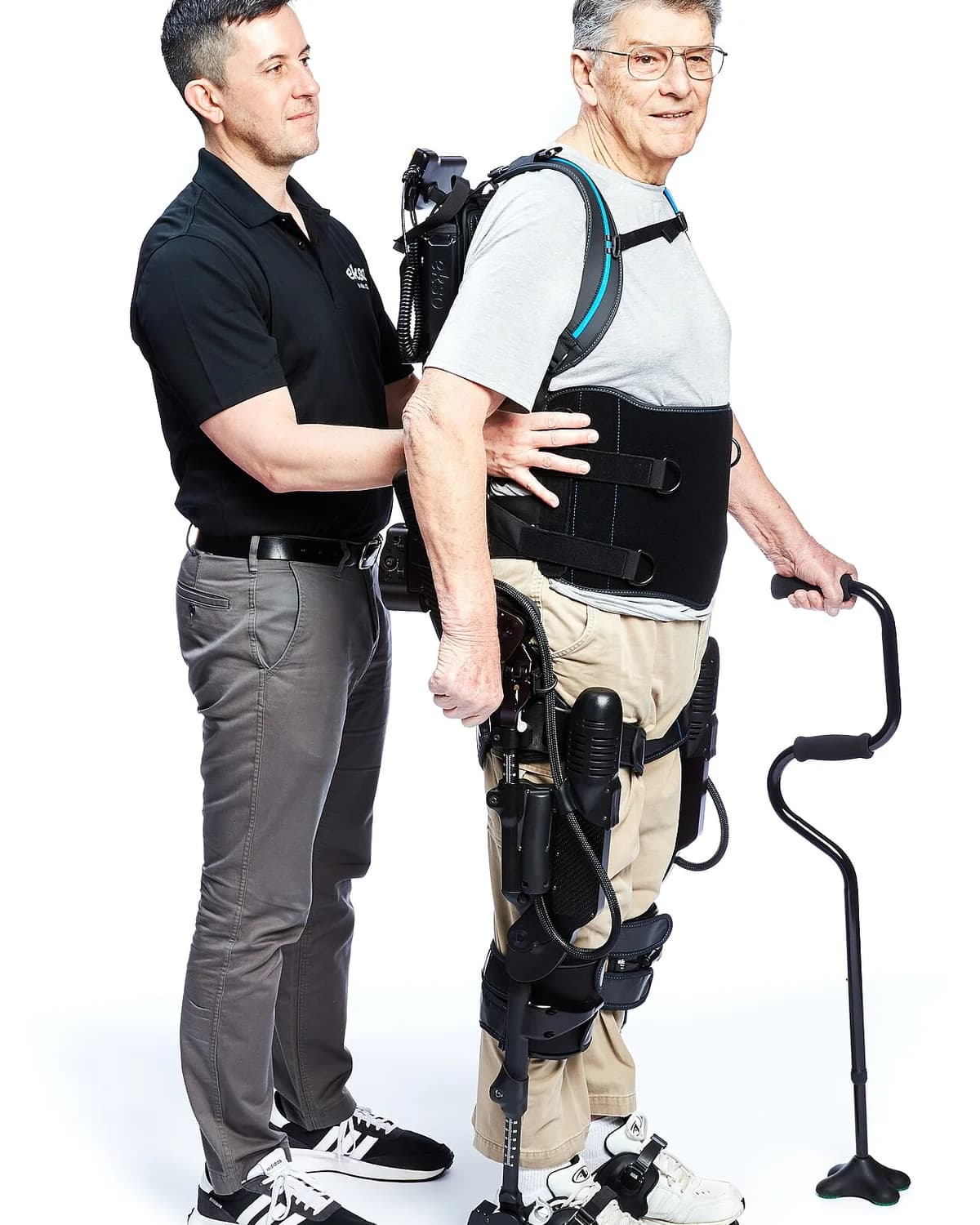
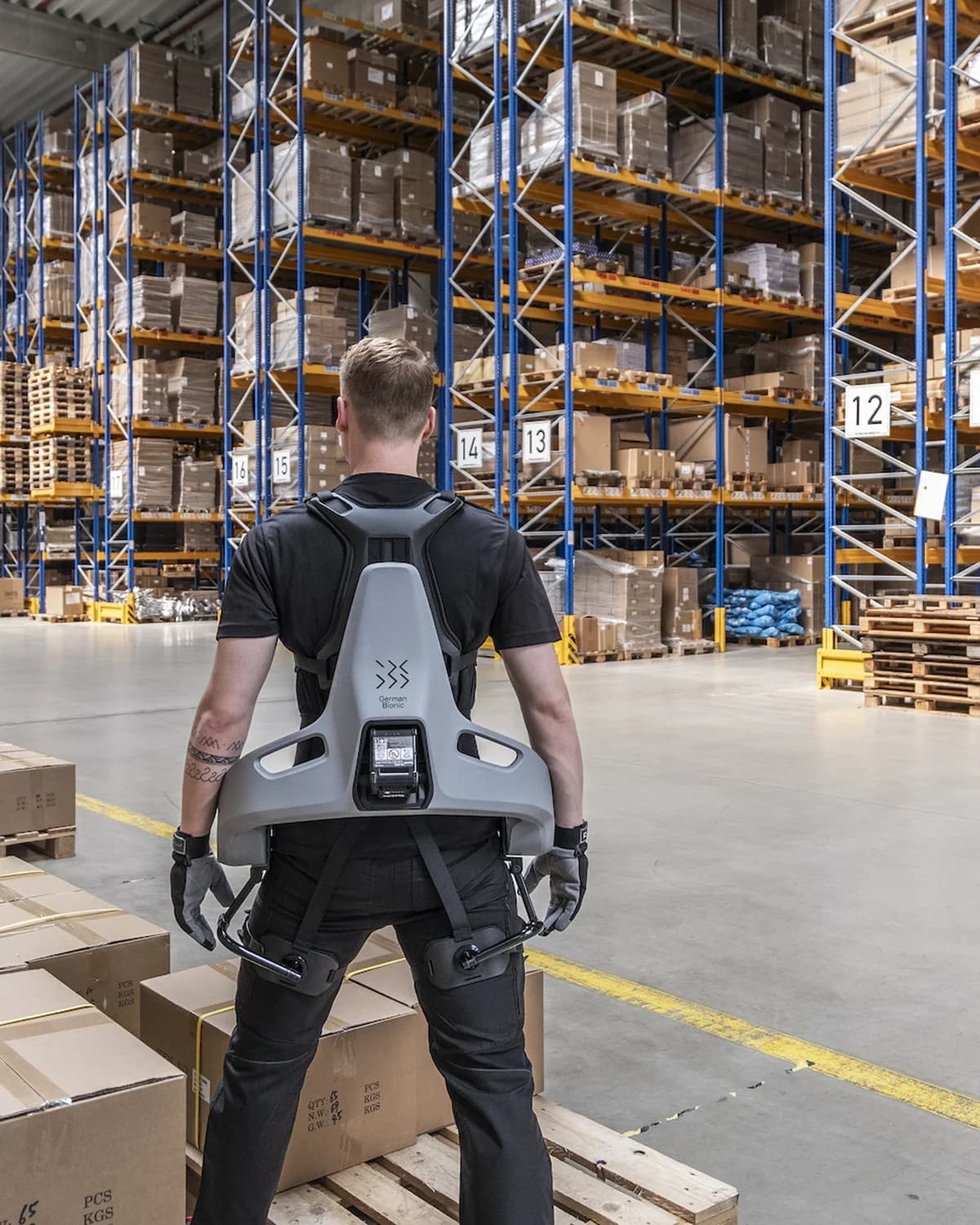
The ExoSelect defense category lists two systems: Lockheed Martin ONYX and Sarcos Guardian XT. ONYX is described as a powered lower-body exoskeleton developed to support load carriage and reduce fatigue. Guardian XT is a teleoperated dexterous robotic system for hazardous and remote material handling. Both are active-drive systems with lithium-ion batteries and swappable packs. Neither is a commercial off-the-shelf product; both are enterprise or defense programmes.
Comparison table: documented specifications
| Parameter | Lockheed Martin ONYX | Sarcos Guardian XT |
|---|
| Weight | 6.3 kg | 55 kg |
| Drive | Active | Active |
| Lift support | 45 kg | 45 kg |
| Battery life | 8 h | Unknown |
| Battery type | Lithium-ion | Lithium-ion |
| Swappable battery | Yes | Yes |
| Max user weight | 90 kg | Not applicable |
| Degrees of freedom | 2 | 14 |
| Control modes | Powered load-carriage assistance | Teleoperation, Motion mapping |
| Sensors | Unknown | Stereo cameras, Force feedback, Joint encoders |
| Connectivity | Unknown | Tetherless teleoperation |
| Certifications | Unknown | Unknown |
| Price | Undisclosed | Undisclosed |
| Availability | Defense programme | Enterprise programme |
| Regions | North America | North America |
| Lead time | Programme-dependent | Programme-dependent |
Source: ExoSelect database, compiled from manufacturer information. Unknown or not applicable as indicated.
What the datasheet doesn't tell you
Both systems have critical gaps that a generic top-10 page would miss. For ONYX, the database does not disclose peak assist force, peak assist torque, maximum walking speed, charge time, sensor suite, connectivity, certifications, standards, warranty, or price. For Guardian XT, the unknowns are peak assist force, peak assist torque, maximum walking speed, runtime, charge time, certifications, standards, warranty, and price. These are not minor omissions. Without assist force and torque, you cannot verify whether the system meets mission-specific load and terrain requirements. Without walking speed, you cannot assess tactical mobility. Without certifications and standards, you cannot confirm compliance with military or occupational safety frameworks. Without warranty, you cannot model total cost of ownership. Without price, you cannot budget. The absence of these parameters means any procurement decision must be preceded by a formal request for information (RFI) to the manufacturer.
Who should not choose this
Do not choose either ONYX or Guardian XT if your procurement requires a fixed price, a published certification list, or a warranty term before contract award. These systems are programme-based and will not fit a standard commercial purchase. Also, if your operational theatre is outside North America, both systems are listed as available only in North America, so you should not select them without confirming regional availability. Finally, if you need a system with documented assist force and torque for comparative tender evaluation, neither system currently provides those figures, and you should not proceed until the maker supplies them.
What are the deployment constraints?
ONYX is a lower-body exoskeleton with a 90 kg maximum user weight and 2 degrees of freedom, designed for field terrain with operator training. Guardian XT is a 55 kg teleoperated system with a mobile base, 14 degrees of freedom, and terrain-dependent climbing. The weight difference is significant: ONYX is worn, while Guardian XT is a mobile base configuration. Deployment therefore depends on whether the mission requires a wearable exoskeleton or a remote material-handling robot. Both have swappable lithium-ion batteries, but only ONYX discloses an 8 h runtime. Guardian XT runtime is unknown, which complicates mission planning for extended operations.
How should procurement handle undisclosed pricing?
Neither system has a public list price. ONYX is a defense programme with no public commercial price; Guardian XT is an enterprise programme with no public list price. Procurement should not attempt to estimate pricing from other exoskeleton categories. Instead, issue a request for information (RFI) that asks for indicative pricing, volume discounts, training costs, spare parts, and warranty terms. Use the ExoSelect inquiry form to contact the makers directly. For a broader view of defense exoskeletons, see the defense category page.
What certifications and standards apply?
The database does not list any certifications or standards for ONYX or Guardian XT. This is a critical gap because defense procurement often requires compliance with MIL-STD or occupational safety standards. By contrast, industrial systems like the Cray X list CE and ISO 13482, and the Skelex 360 lists CE and ISO 13482. Buyers should ask each maker for a declaration of conformity and a list of referenced standards. Without this, you cannot assess legal and safety compliance.
How do these systems compare to industrial exoskeletons?
Industrial exoskeletons such as the Cray X (7.6 kg, 300 N assist force, 30 Nm torque, 8 h battery, CE and ISO 13482) and the Apex 2 (1.2 kg, 220 N assist force, 22 Nm torque, CE) have more disclosed specifications and published prices (Cray X from 9900 USD, Apex 2 from 1195 USD). However, they are not designed for defense load carriage. The ONYX and Guardian XT are defense-specific but lack comparable data. Procurement should weigh the need for defense-specific design against the transparency of industrial alternatives. For a direct comparison, use the ExoSelect compare tool.
FAQ
What is the price of the Lockheed Martin ONYX?
The price is undisclosed. ONYX is a defense programme with no public commercial price. You must request pricing directly from Lockheed Martin.
What is the battery life of the Sarcos Guardian XT?
Runtime is unknown. The database does not disclose battery life for Guardian XT, although it uses lithium-ion batteries and has swappable packs.
Are these exoskeletons certified to ISO 13482?
Certifications are unknown for both ONYX and Guardian XT. The database does not list any certifications or standards for either system.
Next step
Request a documented parameter sheet from Lockheed Martin for ONYX and from Sarcos for Guardian XT, specifically asking for assist force, assist torque, walking speed, certifications, warranty, and indicative price. Use the ExoSelect inquiry form to start the request, and compare these systems side-by-side with the compare tool.
Sources: Lockheed Martin official website (lockheedmartin.com); Sarcos official website (sarcos.com). Specifications as per ExoSelect database.
 ExoSelect research