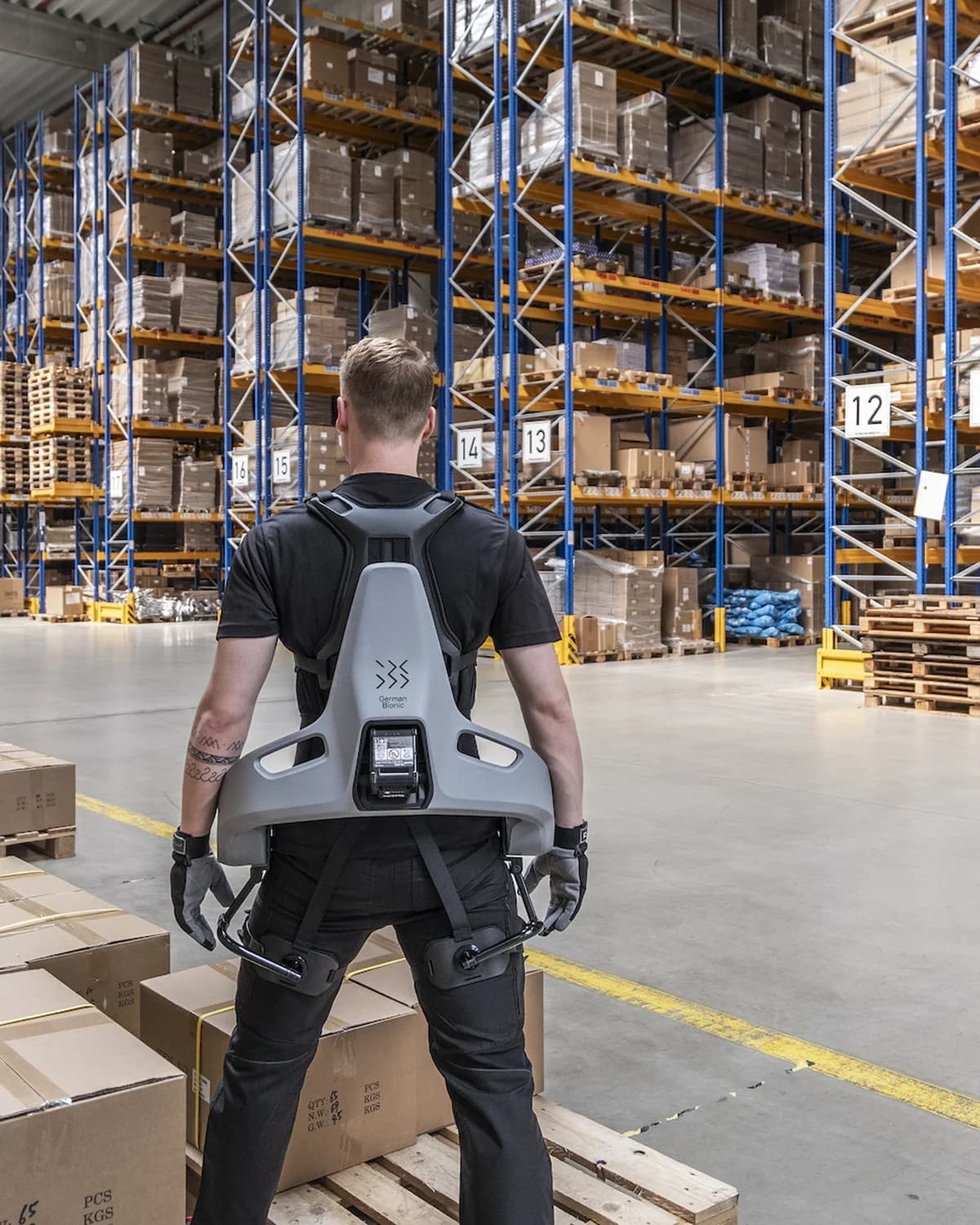
Quick answer: A mechatronic orthosis is a powered or hybrid exoskeleton that combines sensors, actuators and control software to support or replace lost motor function. For procurement, the critical questions are not just torque and weight but undisclosed parameters like peak assist force, lift support, and total cost of ownership—especially since none of the leading medical systems publish an indicative price.
Key takeaways
- Peak assist force is undisclosed for all five systems in our database; peak assist torque is only published for EksoNR and HAL Lower Limb (40 Nm each).
- Atalante X is the only system with a disclosed lift support (80 kg), but it weighs 65 kg—five times more than the Indego (12.3 kg).
- HAL Lower Limb is often offered as a lease or treatment programme, not a capital purchase; this changes the procurement model entirely.
- Certifications vary: EksoNR and Indego carry FDA and CE; HAL has CE medical and ISO 13485; Atalante X has CE medical; ExoMotus M4 has NMPA and CE.
- No system lists a price. All require a quote, and lead times range from 8–12 weeks (EksoNR) to programme-dependent (HAL).
What is a mechatronic orthosis, and how does it differ from a passive exoskeleton?
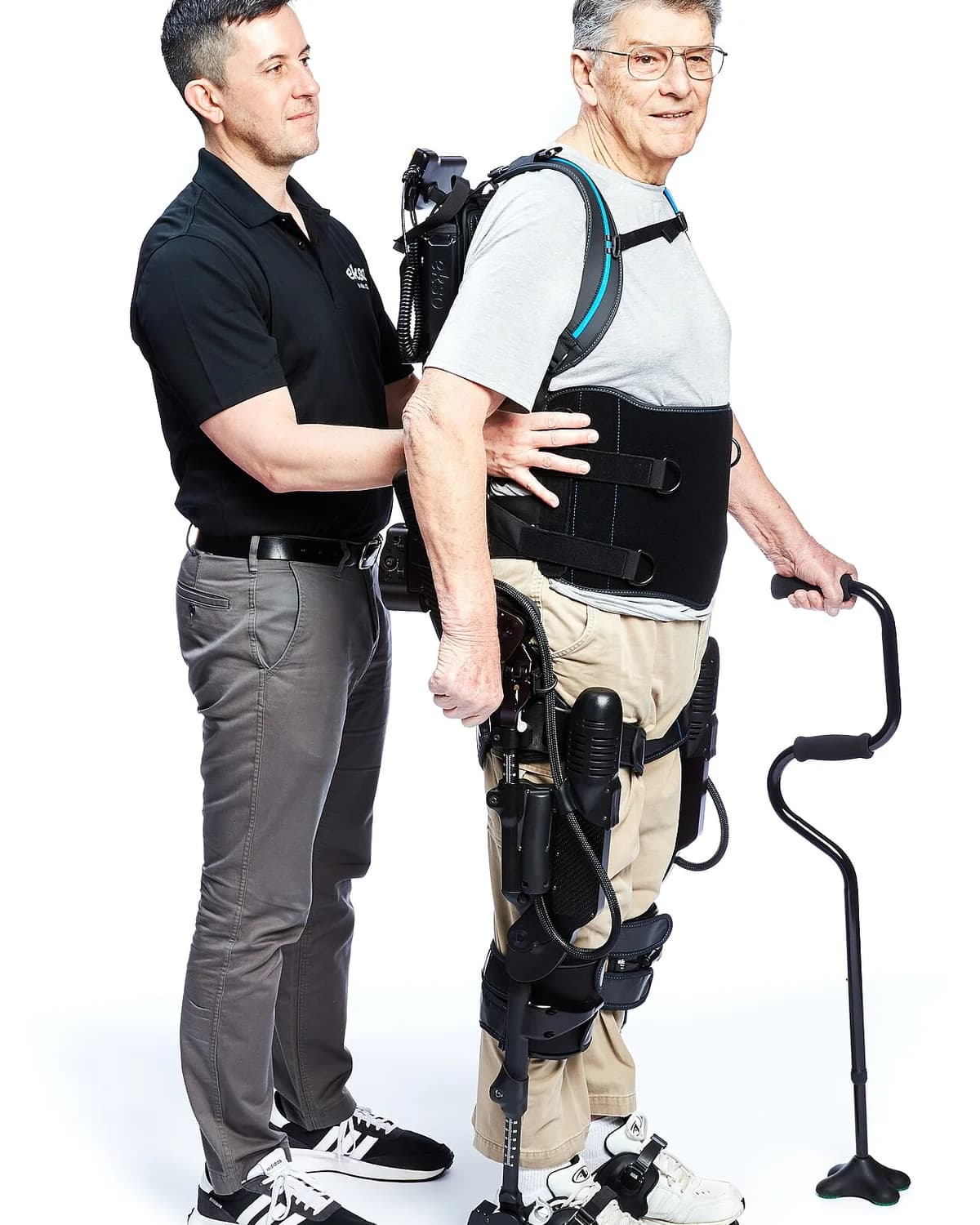
A mechatronic orthosis is an active or hybrid system that uses sensors, actuators and control algorithms to assist movement, whereas a passive exoskeleton relies on springs or mechanics without powered assistance. In our database, EksoNR, Atalante X, Indego and ExoMotus M4 are active; HAL Lower Limb is hybrid, reading bioelectric signals to drive assistance. This distinction matters for procurement because active systems introduce battery life, charging time, control modes and clinical supervision requirements that passive systems do not.
Which medical exoskeletons are in the ExoSelect database?
Five systems meet the medical category criteria: EksoNR (Ekso Bionics), HAL Lower Limb (Cyberdyne), Atalante X (Wandercraft), Indego (Parker Hannifin) and ExoMotus M4 (Fourier Intelligence). All are lower-limb or gait-oriented devices, and all are quoted on inquiry rather than sold off a price list. For a broader comparison, see our comparison tool and the medical exoskeleton category page.
Comparison table: documented specifications
| System | Drive | Weight | Assist torque | Lift support | Speed | Battery life | Certifications |
|---|
| EksoNR | Active | 23.6 kg | 40 Nm | Not applicable | 1.1 km/h | 4 h | FDA, CE |
| HAL Lower Limb | Hybrid | 17 kg | 40 Nm | Not applicable | 1.5 km/h | 3 h | CE medical, ISO 13485 |
| Atalante X | Active | 65 kg | Unknown | 80 kg | 2.5 km/h | 4 h | CE medical |
| Indego | Active | 12.3 kg | Unknown | Not applicable | 2 km/h | 4 h | FDA, CE |
| ExoMotus M4 | Active | 23.5 kg | Unknown | Not applicable | 1.2 km/h | 3 h | NMPA, CE |
All data from ExoSelect database, sourced from manufacturer documents. Where a value is unknown or not applicable, it is stated as such.
What the datasheet doesn't tell you
Three parameters are consistently missing or unverified across the dataset, and each has direct procurement consequences:
- Peak assist force (undisclosed for all five systems): Without this, you cannot match device capability to patient strength deficits or compare therapeutic intensity across systems. It also affects reimbursement arguments where functional gain must be demonstrated.
- Peak assist torque (unknown for Atalante X, Indego and ExoMotus M4): Only EksoNR and HAL publish 40 Nm. Torque is a key determinant of gait support, so its absence forces buyers to rely on clinical evidence or trial data—neither of which is standardised.
- Indicative price (undisclosed for all): Total cost of ownership cannot be modelled without a quote. Lease or treatment programmes (HAL) may shift costs from capital to operating budgets, but the absence of list prices makes budget approval harder.
Additionally, warranty is uniformly 12 months, but service contract terms and spare-part pricing are not disclosed. Lead times vary from 8–12 weeks (EksoNR) to programme-dependent (HAL), which affects deployment planning.
Who should not choose this
If your clinic needs stair training, do not choose EksoNR or Atalante X: both explicitly state that stairs are not supported. If you require a system with published peak assist force to compare against patient needs, none of these five qualify—consider waiting for updated disclosures or requesting the data directly from makers. If your budget model requires a capital purchase with a known price, HAL Lower Limb’s lease/treatment programme may be unsuitable. And if portability is critical, Atalante X at 65 kg is not a device you move between rooms without planning; the Indego (12.3 kg) is far more mobile.
How do certification and regional availability affect procurement?
Certifications differ: EksoNR and Indego hold both FDA and CE, making them viable in North America and Europe. HAL Lower Limb has CE medical and ISO 13485 but is listed in Japan, Europe and Asia-Pacific—not North America. Atalante X has CE medical and is available in Europe and North America. ExoMotus M4 has NMPA and CE, with availability in Asia-Pacific, Europe and the Middle East. Buyers must confirm that the certification matches their jurisdiction; for example, FDA clearance is absent for HAL and ExoMotus, which may limit use in the US.
What clinical evidence is available?
All five systems cite clinical studies, but the depth varies. EksoNR references published stroke and spinal cord injury rehabilitation studies; HAL cites studies in stroke, SCI and neuromuscular conditions; Atalante X mentions clinical studies in neurological rehabilitation; Indego points to peer-reviewed gait training studies; ExoMotus M4 refers to clinical rehabilitation studies in China. None of the database entries provide effect sizes or trial registrations, so buyers should request full clinical dossiers from makers.
How should I structure a procurement inquiry?
Start by requesting the undisclosed parameters: peak assist force, peak assist torque (where unknown), indicative price, service contract terms, and spare-part pricing. Ask for certification documents and clinical evidence summaries. For a structured template, use our inquiry form to contact makers directly. Compare responses side-by-side using our comparison tool, and review individual product pages for EksoNR, HAL Lower Limb, Atalante X, Indego and ExoMotus M4.
FAQ
What is the difference between a mechatronic orthosis and a powered exoskeleton?
The terms are often used interchangeably. In our database, all systems are mechatronic orthoses because they integrate sensors, actuators and control software; “powered exoskeleton” emphasises the active drive. HAL Lower Limb is hybrid, using bioelectric signals, while others are fully active.
Why is peak assist force undisclosed for all systems?
Manufacturers may consider it proprietary or clinically sensitive. For buyers, this means you cannot compare devices on force output; you must rely on torque (where published) and clinical evidence. Request it explicitly in your inquiry.
Can I buy any of these systems outright?
EksoNR, Atalante X, Indego and ExoMotus M4 are available on inquiry, typically as capital purchases. HAL Lower Limb is often offered as a lease or treatment programme. No system lists a price, so all require a quote.
Next step
Request a documented peak assist force and total cost of ownership quote from at least two makers. Use our inquiry desk to send a structured request, or compare the EksoNR and Indego side-by-side first.
 ExoSelect research